



Architectural Stone Ornaments
Architectural stone ornaments are solid survivors of past masonry, built to anchor gardens and buildings with enduring weight and carved presence.
Architectural Stone Ornaments
Architectural stone ornaments encompass a heavy range of masonry pieces built for gardens, gates and facades across multiple centuries. Buyers hunting for architectural stone ornaments encounter everything from medieval carved busts and Gothic pinnacles to Georgian staddle stones and Victorian gate lions.
The selection leans heavily toward sturdy utilitarian forms and decorative garden salvage originating from the eighteenth and nineteenth centuries. Cornish granite staddle stones, sandstone keystones, limestone mill stones and terracotta lions dominate the physical presence of the stock.
Pieces span from rustic vernacular agricultural items to formal neoclassical revival finials and Italian specimen marble obelisks. Each object carries the specific weathering of its era, often showing authentic traces of moss and lichen from long placement outdoors.
Distinctions in quality and execution
Quality rests entirely in the sharpness of the original chisel work, the integrity of the stone matrix and the proportional balance of the carving. Superior examples display confident, deep relief cutting by skilled masons rather than generic machine shaping or crude moulding.
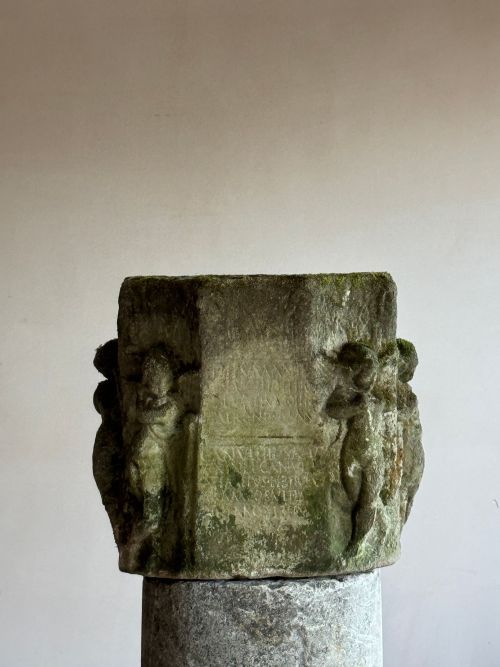
Provenance and historical context elevate certain pieces significantly, such as authentic medieval fragments salvaged from ecclesiastical buildings or documented Georgian staddle stones. The degree of desirable weathering versus structural degradation also dictates the desirability of each piece in a garden setting.
Several stone lions on this page have spent decades guarding gates, enduring British weather with stoic expressions and generous coatings of natural lichen.
The Architectural Stone Ornaments Glossary
- Staddle stone
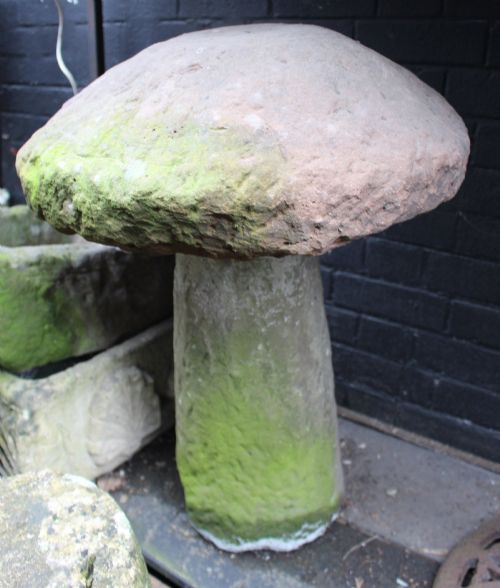
- A traditional mushroom-shaped stone support originally used to elevate granaries above damp ground and deter vermin. These granite and sandstone mushroom caps now serve as striking garden pedestals.
- Keystone
- The central wedge-shaped stone at the apex of an arch that locks the other voussoirs into place. Dated examples often feature carved initials or dates.
- Pinacles
- Architectural ornaments that typically crown piers, buttresses or roof angles in Gothic architecture. They add height and visual weight to stone assemblies.
- Obelisk
- A tall, four-sided, narrow tapering monument which ends in a pyramid-like shape at the top. Victorian examples include Grand Tour Italian specimen marble versions.
- Finial
- A decorative ornament that terminates the peak of a roof, gate pier or garden structure. Floral baskets and carved stone shapes are common variations.
Architectural Stone Ornaments: Frequently Asked Questions
How do I place heavy stone ornaments?
Most architectural stone ornaments require a solid, level foundation such as compacted gravel or paved stone to prevent sinking into soil under their massive weight.
Lifting heavy items like granite staddle stones or large marble obelisks usually requires lifting equipment or professional placement to avoid cracking the material.
Can these stone pieces stay outside in winter?
Granite, sandstone, York stone and cast stone withstand frost well if they are placed off direct wet ground using feet or gravel drainage.
Softer limestones and terracotta require closer monitoring during hard freezing conditions to prevent moisture expansion from causing surface spalling or cracking.
How do I clean moss and lichen?
Gentle brushing with water and a soft bristle brush removes loose dirt while preserving the aged patina that collectors value on old stone.
Harsh chemical cleaners and pressure washers strip away the historic surface character and accelerate stone erosion, so they should be avoided entirely.
What is a staddle stone used for?
Original staddle stones supported timber granaries and corn ricks by keeping grain stores dry and safe from rats and mice.
Modern gardens utilise them as decorative low pedestals, boundary markers or sculptural garden ornaments.