
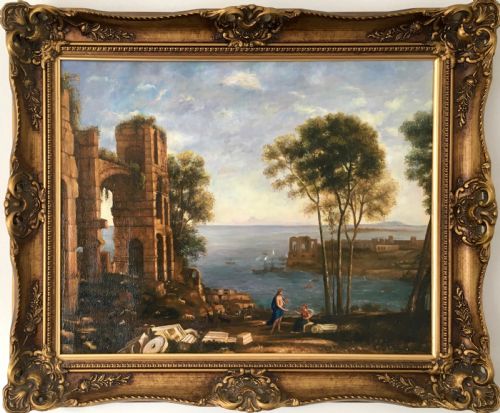
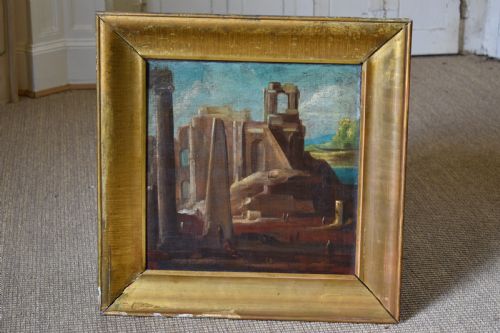


Architectural Ruin Landscape
An architectural ruin landscape captures crumbling classical remnants and weathered abbeys, offering a poignant focal point for any traditional interior.
Architectural Ruin Landscape
When you search for an architectural ruin landscape, you encounter framed watercolours, oil paintings and coloured prints depicting classical monuments, abbeys and castles. These works range from grand 18th century Italian compositions to British views of historic sites executed across the Victorian and 20th century periods.
You are most likely to meet 19th century watercolours and oil paintings on this page, often created during the Grand Tour or depicting familiar domestic ruins. These pieces frequently record classical Italian sites alongside Yorkshire abbeys and northern castles rendered in ink, pastel and watercolour pigment.
The subjects span from Neoclassical Roman forums and Pompeiian houses to medieval English monastic remains like Rievaux and Bolton. Each painting or drawing balances picturesque decay with topographical observation, reflecting the enduring romantic fascination with fallen civilisations.
Materials and methods
Artists deployed watercolour pigment and oil on canvas or panel, frequently framing these works within gilt wood moulding. Paper supports utilise fine watercolour washes and ink drawing techniques to delineate intricate stonework and architectural perspective.
Gold leaf sometimes accents the framing or enhances the decorative presence of Grand Tour paintings and prints. Works executed on wood panel or heavy paper employ layered pigments to capture the weathered textures of ancient masonry and overgrown foliage.
Listings feature paper, wood, glass, and oil on canvas, spanning the Georgian, Victorian, and 20th century periods.
Distinguishing quality in these works
The distinction between standard works and finer examples lies in the precision of the draughtsmanship and the handling of atmospheric light. Superior pieces demonstrate a confident command of perspective when rendering complex classical arches, columns and crumbling vaulting.
Execution depth separates routine topographical records from masterly compositions where figures and landscape integrate harmoniously with the decaying architecture. The sensitivity of the watercolour wash or oil brushwork dictates the overall artistic merit of the piece.
Giovanni Paolo Panini·John Sowden·Fred Lawson·Tom Dudley·William Crouch·Lamorna Birch R.A.
The Architectural Ruin Landscape Glossary
- Grand Tour
- An extended journey through Europe, particularly Italy, undertaken by wealthy young men in the 18th and 19th centuries to study classical art and antiquities. Paintings from this tradition frequently document specific Roman ruins.
- Neoclassical
- A Western cultural movement drawing inspiration from the classical art and culture of ancient Greece or Rome. Works in this style emphasise austere grandeur and archaeological accuracy.
- Watercolour pigment
- Colouring material ground with a water-soluble binder, used extensively for delicate landscape and architectural studies on paper. It allows for translucent washes that evoke atmospheric light.
- Gilt wood
- Wood coated with a thin layer of gold leaf or gold paint, commonly utilised for traditional picture frames. This finish enhances the visual weight of oil paintings and prints.
Architectural Ruin Landscape: Frequently Asked Questions
What periods do these paintings date from?
The works span from the 18th century through the Victorian era and into the early 20th century. Many pieces reflect the 19th century interest in classical antiquity and British monastic history.
Examples include Grand Tour scenes alongside Georgian romantic paintings and later depictions of Yorkshire abbeys.
How should I display these watercolours?
Watercolour paintings and drawings require protection from direct sunlight to prevent fading of the pigments on paper. Framing behind conservation glass helps preserve the integrity of the work.
Positioning them away from moisture-prone areas ensures the paper and gilt wood frames remain stable over time.
What subjects appear in these scenes?
Common subjects include Roman forums, Italian classical remains, and medieval British abbeys and castles. Artists frequently added figures to provide scale against the massive stone structures.
Views range from Pompeii and the Colosseum to Yorkshire abbeys and French fortifications.
Are these works original paintings or prints?
The selection includes both unique handmade works and period prints. Individual listings distinguish between original oil paintings, watercolour drawings and sets of coloured prints.
Signatures or attributions on the work often clarify whether the piece is a direct painting or part of a published print series.