
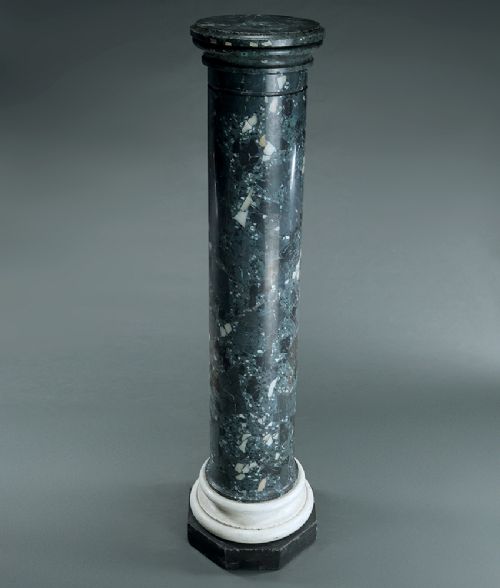


Architectural Marble Columns
Architectural marble columns bring classical dignity indoors, offering solid stone shafts and classical capitals that anchor a grand interior room.
Architectural Marble Columns
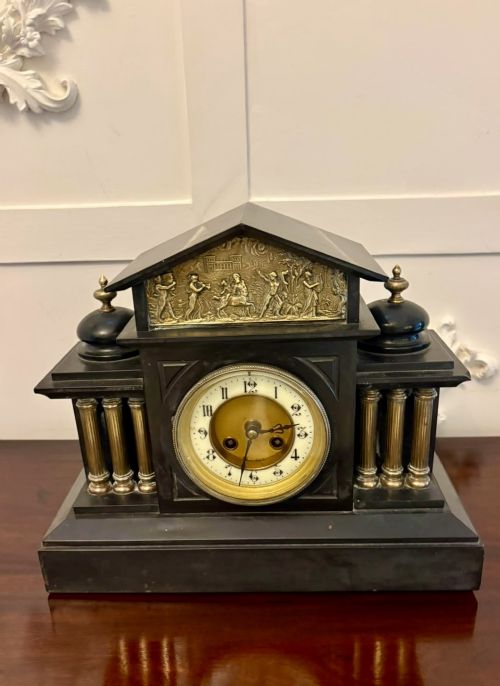
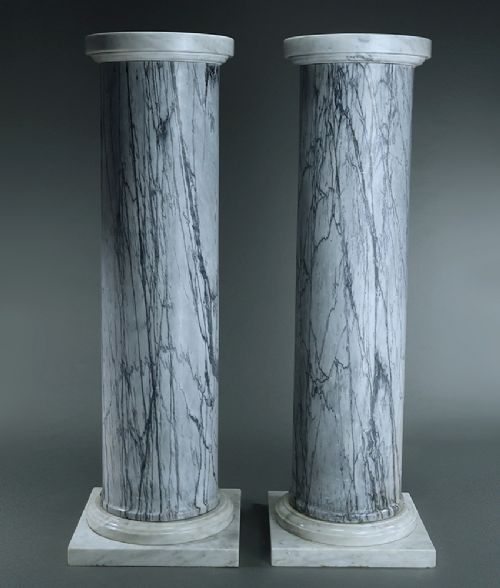
Architectural marble columns comprise solid stone shafts, display pedestals, and mantel clock housings shaped by classical revival design. Buyers seeking architectural marble columns will discover items ranging from monumental display pedestals to Grand Tour models and decorative mantel clocks.
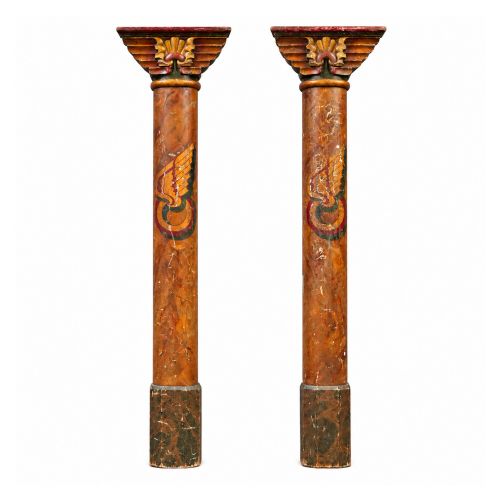
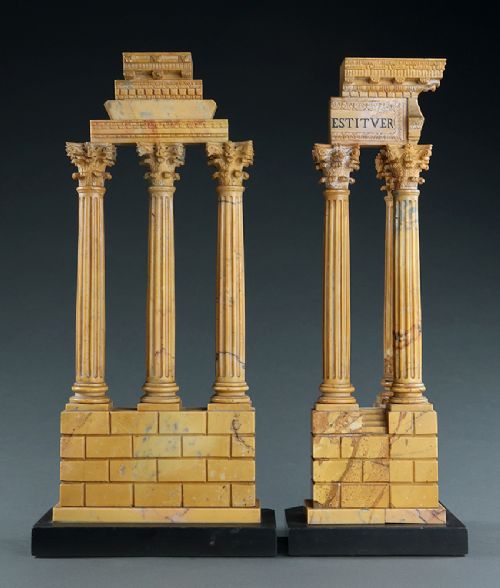
The selection includes matched pairs of early twentieth century carousel fairground columns, Neoclassical statuary pedestals, and Grand Tour temple models. Many pieces incorporate materials such as Siena marble, Bardiglio, Carrara, and Verde Antico alongside slate and brass mounts.
Makers and workshops from nineteenth century France and England produced these works within Empire, Neoclassical, and Victorian classical styles. Pieces serve varied functions from floor-standing display columns to console tables and portico clock cases.
Materials and construction methods
Makers combined stone with gilt brass mounts, bronze details, painted wood, and glass components to build architectural mantel clocks and console tables. Surface finishes range from polished natural stone veins to painted faux marble effects on wood and plaster.
The selection spans functional timepieces, display pedestals, console tables, and architectural models.
Distinctions in quality and execution
The finest examples display solid natural stones with intricate mineral veining, such as Siena or Bardiglio marble, rather than simulated painted surfaces. Superior sculptural pedestals and clock cases demonstrate precise carving of classical capitals and crisp architectural proportions.
Quality depends upon the integration of secondary materials, where heavy gilt brass mounts and bronze elements are securely fitted to the stone body. Pieces signed by known makers or retaining original mechanical movements command greater attention from collectors.
Philippes Paris·Baby and Jannings
The Architectural Marble Columns Glossary
- Grand Tour
- Nineteenth-century souvenirs and scale models acquired by travellers visiting continental historical sites. These items frequently replicate ancient temples and columns in exotic marbles.
- Portico clock
- A mantel clock housed within an architectural frame supported by columns. This form mirrors classical temple architecture using marble, wood, and metal components.
- Socle
- A short plinth or pedestal base supporting a column, bust, or sculpture. It provides a stable foundation for vertical architectural elements.
Architectural Marble Columns: Frequently Asked Questions
What materials make up these architectural columns?
The listings show natural stones including Carrara, Siena, Bardiglio, alabaster, black marble, and Rouge marble.
Additional materials include slate, scagliola, gilt brass, bronze, painted wood, and plaster.
How were these columns originally used?
Many pieces functioned as display pedestals and decorative supports for sculpture or objects within nineteenth-century interiors.
Others formed parts of architectural mantel clocks, portico clocks, console tables, and theatrical settings.
What periods do these pieces date from?
The items span the nineteenth and early twentieth centuries, covering periods from eighteen hundred through nineteen hundred and thirty.
Victorian and Edwardian eras are well represented alongside Neoclassical and Empire styles.
How do faux marble pieces differ from solid stone?
Faux marble items utilise painted wood, plaster, or scagliola to simulate the appearance of natural stone varieties like Verde Antico.
Solid stone pieces use actual quarried marble or alabaster with natural mineral veining throughout the structure.