


Italian Marble Desk Ornament
An italian marble desk ornament brings the architectural grandeur of classical Rome directly onto a study table.
Italian Marble Desk Ornament
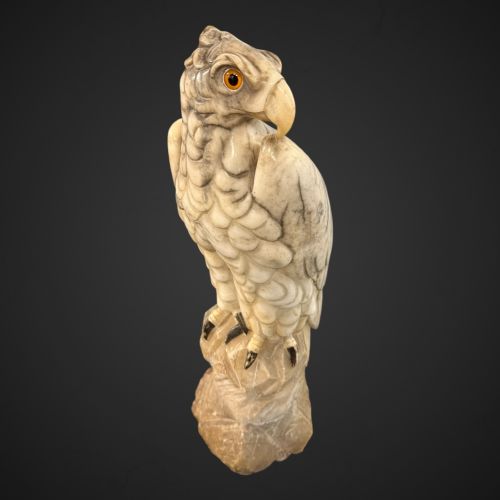
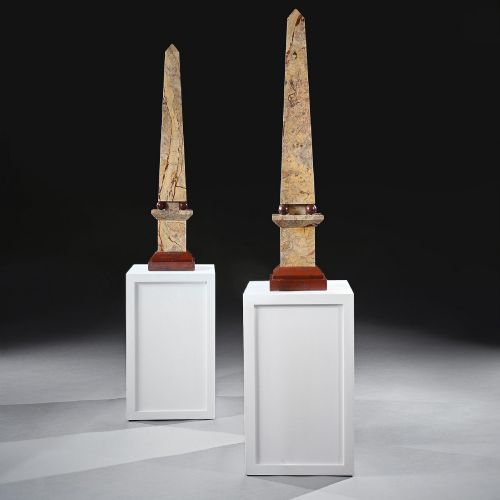
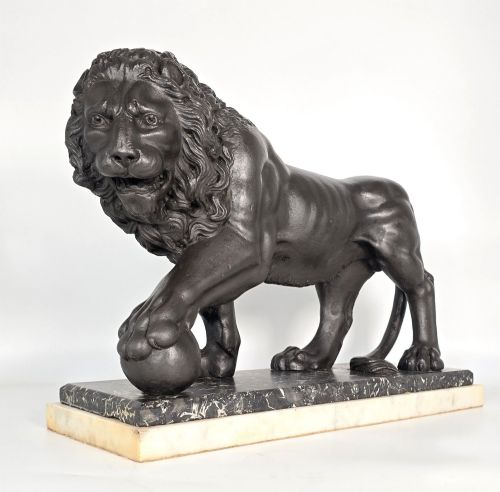
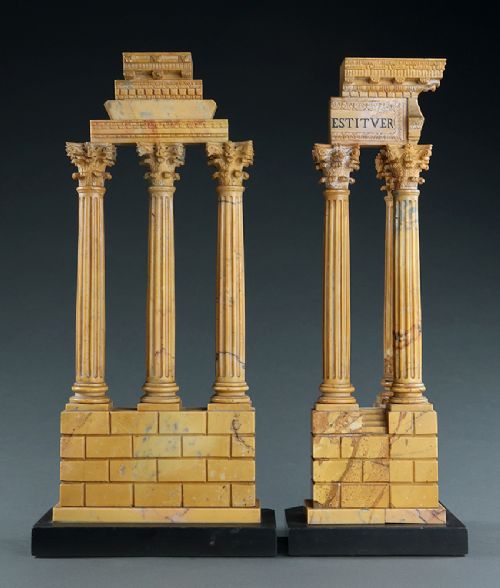
An italian marble desk ornament encompasses architectural models, animal sculptures, and decorative boxes originating largely from the nineteenth century. Buyers searching this phrase seek tangible pieces of classical antiquity, often acquired by travellers undertaking the Grand Tour. The selection commonly includes marble obelisks, temple models, and bronze figures mounted upon stone plinths.
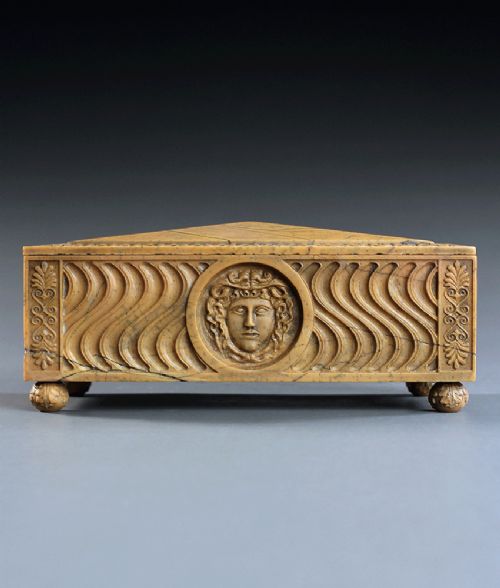
The assortment relies heavily on classical forms inspired by Roman ruins, such as miniature temples, sarcophagus caskets, and lions. Architectural models dominate the variety alongside sculpted animals and paperweights set with micro-mosaic panels. These objects served as sophisticated souvenirs for educated visitors to Italy.
Dating primarily from the eighteen-fifties through the early twentieth century, these items reflect neoclassical tastes and later revivals. Pieces span from small specimen marble obelisks to monumental pairs and equestrian studies of wild horses. Each item translates grand architectural monuments and classical sculpture into portable desktop proportions.
How they were made
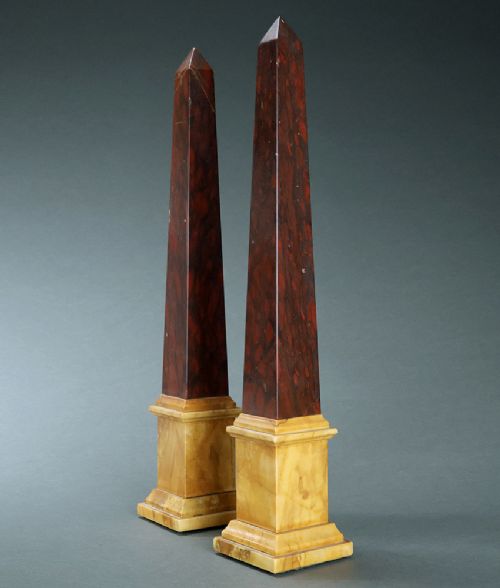
Makers utilised distinct varieties of stone, pairing white Carrara marble and golden Siena marble with striking decorative minerals like Portasanta and Rosso Antico. Stonemasons carved these dense materials manually, shaping blocks into precise geometric obelisks, fluted temple columns, and figurative sculptures. The natural veining of the stone determined the visual movement across each finished surface.
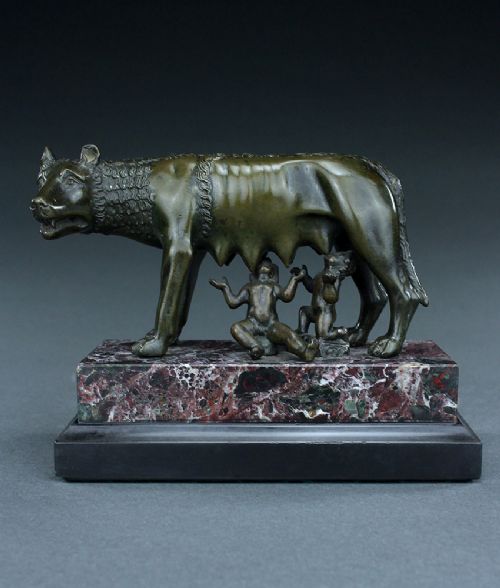
Many works combine hand-carved marble bases and structures with cast bronze elements, such as figures of wolves, lions, and mythological infants. Surface details on the stone were achieved through meticulous cutting, polishing, and occasional inlay work, including delicate micro-mosaic panels. This combination of heavy stone and cast metal demanded expert fitting to ensure stable assembly.
Carved stone wild stallions and miniature wolves quietly guard writing desks, proving that nineteenth-century scholars needed fierce company while answering correspondence.
What varies in quality
Quality rests upon the ambition of the carving and the choice of mineral specimens utilised by the workshop. Superior examples display crisp architectural lines, sharp relief in figurative elements, and harmonious colour contrast within multi-marble assemblies. Lesser pieces rely on simpler geometry and uniform stone without distinctive veining.
The integration of materials also dictates standing, as seen where cast bronze figures mount cleanly onto heavy stone plinths with precise balance. Artisanal precision in assembling miniature architectural models, such as temples and obelisks, separates standard souvenirs from exceptional sculptural studies.
The Italian Marble Desk Ornament Glossary
- Grand Tour
- A traditional trip through Europe undertaken by upper-class European young men of means in the seventeenth, eighteenth, and nineteenth centuries. These travellers collected antiquities and architectural models as cultural souvenirs.
- Specimen marble
- Stonework composed of various coloured and patterned marbles assembled together to display geological variety. This technique appears frequently in nineteenth-century Italian table articles and obelisks.
- Micro-mosaic
- A method of creating detailed miniature pictures using tiny coloured glass tesserae fused together. These panels often decorate the centre of Italian paperweights and boxes.
- Neoclassical
- A Western cultural movement drawing inspiration from the art and culture of classical antiquity. The style heavily influences the architectural models and sculptures found in this category.
- Portasanta marble
- An antique ornamental limestone featuring a reddish-brown matrix with varied brecciated fragments. Italian stonemasons valued this material for its distinct polychrome appearance.
Italian Marble Desk Ornament: Frequently Asked Questions
How were these marble items used?
In the nineteenth century, these objects served as functional or decorative desk accessories for affluent scholars and collectors. Items like marble paperweights held documents down, whilst obelisks and temple models acted as visual focal points in a study.
They also served as tangible mementos of travel through Italy, demonstrating the owner's classical education and refined taste. Today, they continue to function as sophisticated decorative objects on desks and mantelpieces.
What materials are used in these pieces?
These pieces utilise various marbles, including white Carrara, yellow Siena, Portasanta, Rosso Antico, and black marble. Many examples also incorporate cast bronze for figurative elements such as lions, wolves, and human figures.
Some specialised items further incorporate glass elements or micro-mosaic panels set directly into the stone. The contrast between different coloured minerals defines much of their visual appeal.
How do I date an antique marble obelisk?
Dating relies on examining the specific type of marble, the precision of the hand-carving, and the context of nineteenth-century Grand Tour production methods. Nineteenth-century examples often display specific weathering patterns and traditional mounting techniques for bronze components.
Later revival pieces from the early twentieth century may show subtle differences in stone selection and machine assistance in cutting. Comparing the style to documented architectural models from the eighteen-fifties helps narrow the period.
How do I style marble desk ornaments at home?
Marble desk ornaments suit traditional studies, libraries, and contemporary living spaces as sculptural focal points. Placing obelisks in pairs on a mantelpiece or grouping architectural models on a desk creates a balanced, classical arrangement.
Their neutral stone tones and metallic bronze details allow them to complement both dark wood furniture and minimalist modern interiors. Ensure they rest on stable, level surfaces due to their considerable weight.