



Arched Oak Display Cabinet
An arched oak display cabinet brings warmth and structure to a room while securely showing off your collection.
Arched Oak Display Cabinet
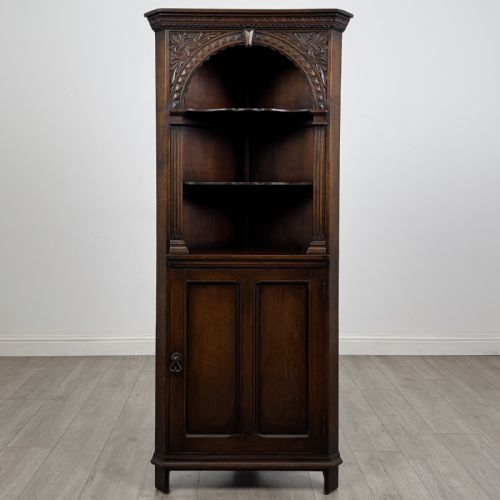
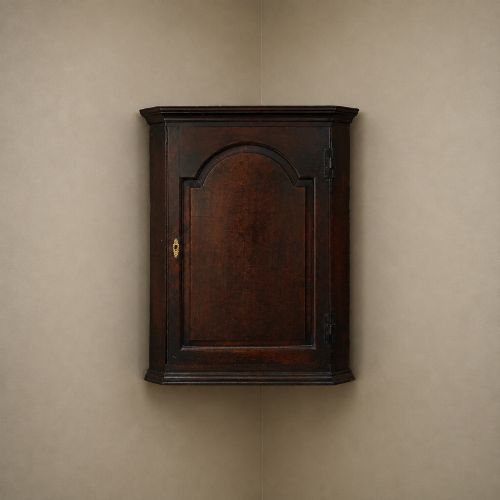
When you search for an arched oak display cabinet, you are looking for timber furniture designed to hold and protect treasured objects behind glass. These pieces range from compact wall-hanging corner cupboards to tall standing bookcases and large housekeeper's cupboards.
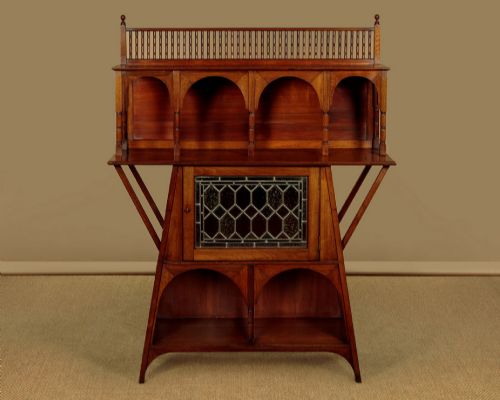
The versions you are most likely to meet on this page span several centuries and regional traditions. They include Georgian corner cupboards, 19th-century carved Liège cabinets, Arts and Crafts side cabinets, and later Art Deco bookcases.
Makers utilised the sturdy grain of oak for both domestic utility and formal display. Whether shaped with Gothic revival arches or Regency proportions, each example frames its contents within durable wooden construction.
Materials and construction methods
Makers built these cabinets primarily using solid oak timber, frequently pairing it with glazed doors to allow light inside. Brass hinges, escutcheons, and occasional lead details provided both functional reinforcement and decorative contrast.
Interior surfaces sometimes feature fabric linings to cushion displayed items. Structural techniques vary from early panelled joinery to barley twist turnings and relief carving seen in continental and Victorian revival pieces.
Arched Oak Display Cabinet Retail Price Guide 2026
Typical asking prices for arched oak display cabinet among the pieces listed under this phrase on Sellingantiques today, from the lower quarter to the upper quarter. They describe what is for sale here now, not the wider market.
The selection includes oak cabinets spanning the Georgian, Victorian, and Art Deco periods, alongside specialised Arts and Crafts examples.
Assessing quality in oak cabinetry
Quality rests upon the crispness of the timber carving and the balance of the proportions. Finer examples display thoughtful integration of the grain across panelled doors and structural cornices.
The sophistication of the glazing and the precision of the hardware distinguish standard utility cupboards from ambitious architectural display pieces. Construction integrity, seen in tightly fitted joints and original backboards, dictates the standing of the work.
Liberty & Co.
The Arched Oak Display Cabinet Glossary
- Glazed
- Fitted with glass panes to enclose shelves while keeping contents visible. This protects books or porcelain from dust.
- Corner Cupboard
- A cabinet built with a triangular footprint designed to fit snugly into a room angle. These maximise floor space in smaller interiors.
- Liège Cabinet
- A regional style of sturdy cabinetry originating from Belgium, often featuring rich relief carving. It represents continental craftsmanship in heavy hardwoods.
- Barley Twist
- A decorative turning technique resembling a spiralling rope. This detail adds movement to vertical supports and legs on 19th-century furniture.
- Housekeeper's Cupboard
- A large utility storage piece traditionally used for household linens and dry goods. They offer substantial internal capacity in solid timber.
Arched Oak Display Cabinet: Frequently Asked Questions
What fits inside these display cabinets?
These cabinets suit books, ceramics, glassware, and small curated collections. The enclosed shelving keeps delicate items safe from everyday handling.
Larger standing or wall-hanging versions accommodate taller volumes and decorative objects, making them practical for living spaces and studies.
How do I care for antique oak furniture?
Maintain oak cabinets by keeping them away from direct heat sources and strong sunlight, which can dry out the timber. Regular dusting with a soft, dry cloth preserves the finish.
Avoid silicone-based polishes that build up over time. Natural wax applied sparingly helps nourish the wood grain.
How can I tell the period of an oak cabinet?
Dating relies on construction methods, hardware types, and stylistic ornament. Early pieces often feature hand-cut joints and pegged panels, while later Victorian and Edwardian items show machine assistance.
Stylistic cues such as Gothic arches, Arts and Crafts simplicity, or Art Deco geometry also help pinpoint the era of manufacture.
Where should I place a corner cabinet?
Corner cabinets make efficient use of unused room angles without dominating floor space. They work well in dining rooms, hallways, or reception areas.
Ensure the wall angles are square and check the door swing clearance before positioning a corner unit.