

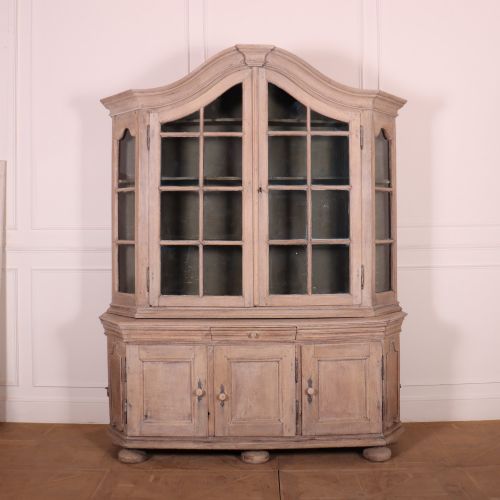
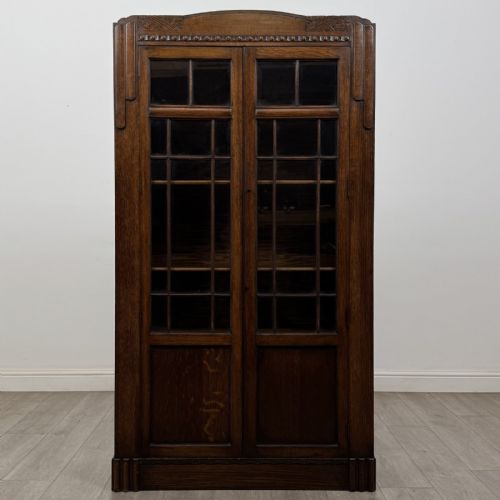
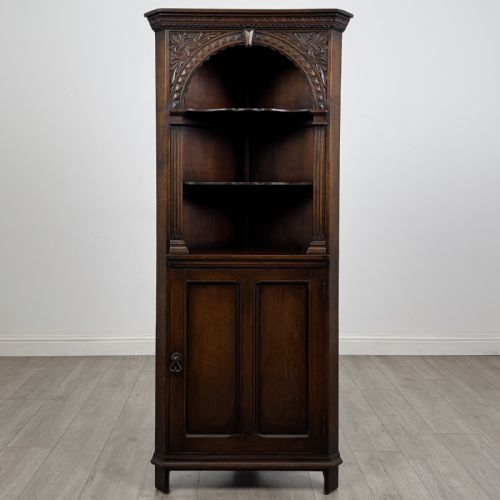
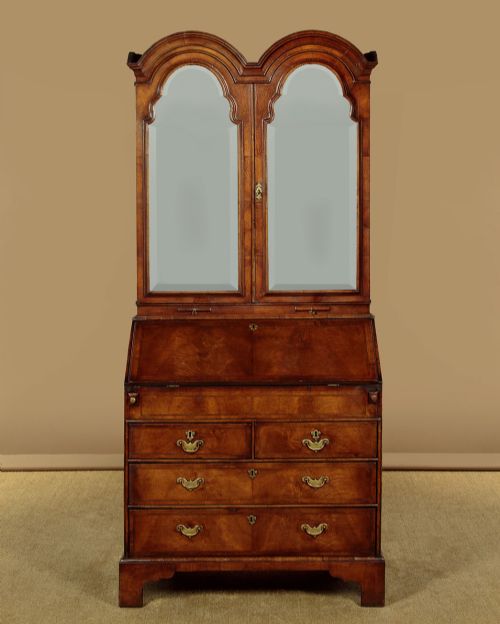
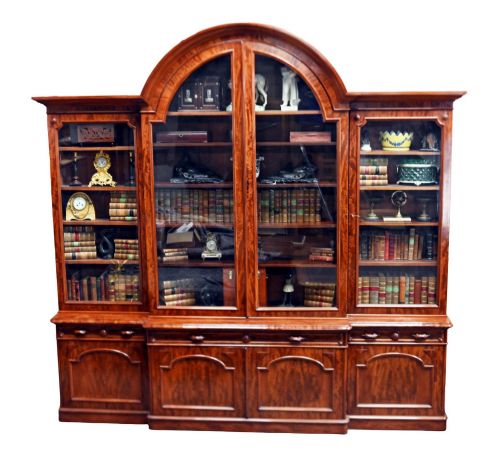
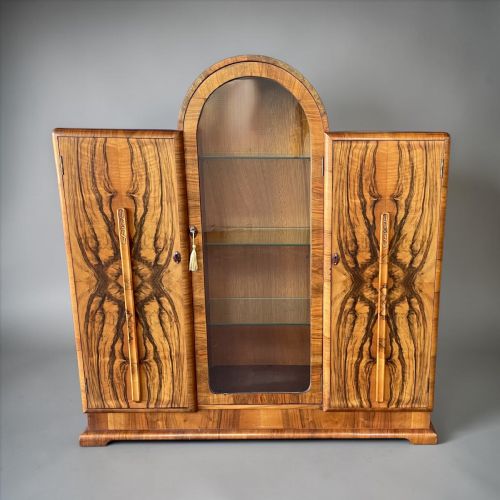
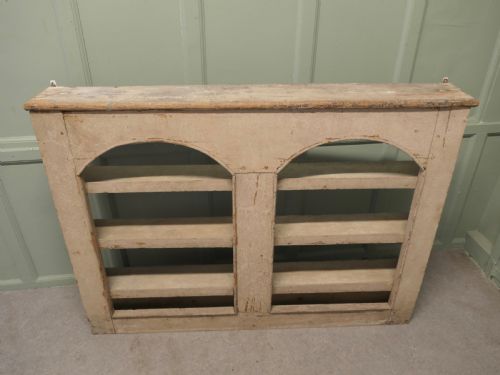
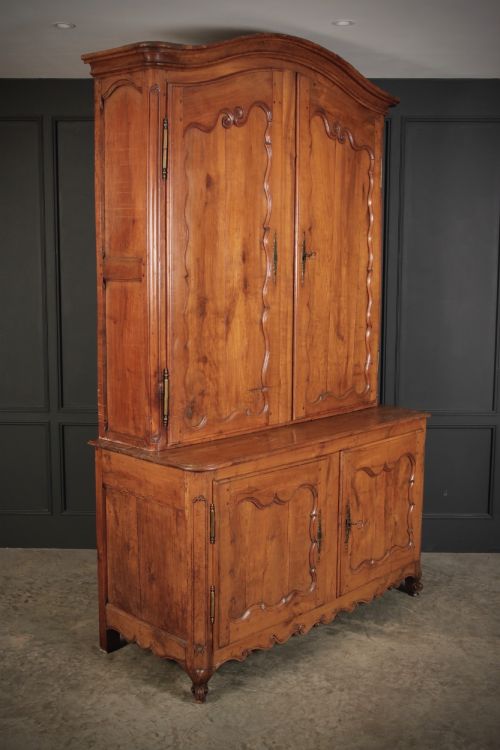


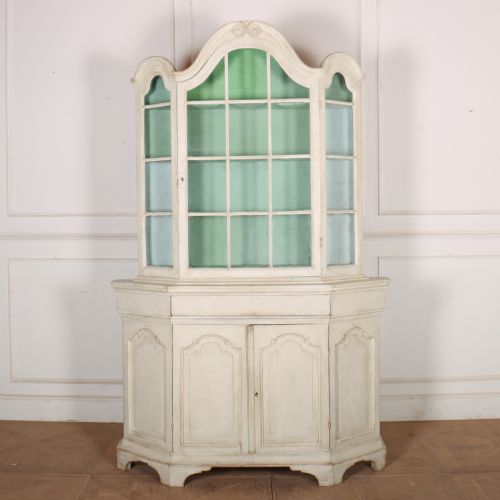


Arch Top Bookcase
An arch top bookcase brings architectural dignity to a room, framing a collection of volumes behind glazed or open shelving with a characteristic rounded pediment.
Arch Top Bookcase
When searching for an arch top bookcase, you encounter a variety of forms spanning centuries of cabinet making, from Georgian bureau cabinets to tall Victorian breakfronts and Art Deco display units. The pieces on this page encompass walnut, mahogany, oak, burr walnut, cherry wood, and painted finishes, often incorporating glass and brass hardware.
The most typical examples bridge formal library furniture and domestic display cabinets, taking the shape of upright bookcases, corner cupboards, and vitrines. These items draw on styles such as Queen Anne, Regency, Italian Baroque Revival, and French Provincial, reflecting diverse regional tastes across the eighteenth, nineteenth, and early twentieth centuries.
How they were made
Construction relies heavily on cabinet timbers like mahogany, walnut, and oak, often enhanced by decorative veneers such as burr walnut or marquetry work. Artisans shaped the characteristic curved pediments using traditional joinery methods suited to the demands of large structural frames.
Glazing bars organise the glass doors into panes, while brass fittings such as hinges and escutcheons secure the doors and drawers. Painted surfaces and specialised finishes like French polishing protect the timber while highlighting the grain.
Arch Top Bookcase Retail Price Guide 2026
Typical asking prices for arch top bookcase among the pieces listed under this phrase on Sellingantiques today, from the lower quarter to the upper quarter. They describe what is for sale here now, not the wider market.
Some bureau cabinets hide secret compartments behind miniature pigeonholes for storing private papers.
What varies in quality
Quality reveals itself in the selection of timbers and veneer matching, where superior cabinets display continuous grain patterns across large surfaces. The crispness of the curved pediment and the refinement of the joinery distinguish masterwork pieces from simpler regional production.
The integrity of the original glass, the weight and finish of the brass hardware, and the stability of the overall structure determine the standing of each piece. Finer examples maintain their original fitted interiors, such as pigeonholes and adjustable shelving.
Gillows Library·A Blain Liverpool·Giles Grendy
The Arch Top Bookcase Glossary
- Breakfront
- A cabinet whose central section projects forward from the flanking wings. This architectural arrangement creates a dynamic façade on larger library bookcases.
- Bureau cabinet
- A piece combining a sloping desk flap for writing with upper shelving enclosed by doors. It typically contains internal compartments and drawers for papers.
- Glazing bar
- A narrow strip of wood holding panes of glass within a sash door. Finer bars create delicate geometric patterns across the bookcase front.
- Vitrine
- A glass-fronted cabinet designed for displaying porcelain, books, or curiosities. These pieces often feature glazed sides to maximise light exposure.
- Marquetry
- The art of applying pieces of veneer to a structure to form decorative patterns. Dutch examples frequently employ floral or pictorial motifs.
Arch Top Bookcase: Frequently Asked Questions
What is an arch top bookcase?
An arch top bookcase is a tall storage unit featuring a curved or arched pediment above its shelving section. These pieces range from formal Georgian library furniture to later display cabinets.
Cabinet makers used timber frames and glass doors to protect books while keeping them visible. The arched profile draws the eye upward, giving the furniture an architectural presence.
How do I date an arch top bookcase?
Dating relies on identifying the underlying style, construction methods, and timber choices. Eighteenth-century pieces often feature solid walnut or mahogany with hand-cut dovetails, while nineteenth-century versions may show heavier proportions.
Revival styles from the late nineteenth and early twentieth centuries often borrow motifs from earlier periods. Examining the backboards, hardware, and secondary woods helps clarify the era of manufacture.
Where should I place a bureau bookcase?
A bureau bookcase functions well in a study, library, or spacious living room where its writing surface and upper storage can be utilised. Because many examples are tall and deep, they require adequate wall space and stable flooring.
Positioning the cabinet away from direct sunlight and heat sources protects the timber veneers and original glass from damage. Corner variations fit efficiently into unused angles in smaller rooms.
How do I care for antique walnut furniture?
Antique walnut requires stable indoor humidity levels to prevent the timber and veneers from drying out or splitting. Dusting with a soft, dry cloth maintains the surface without building up residue.
Applying specialised wax polishes sparingly helps nourish the wood and preserve the finish. Avoid using modern silicone-based sprays, which can penetrate the pores and harm the patina.