



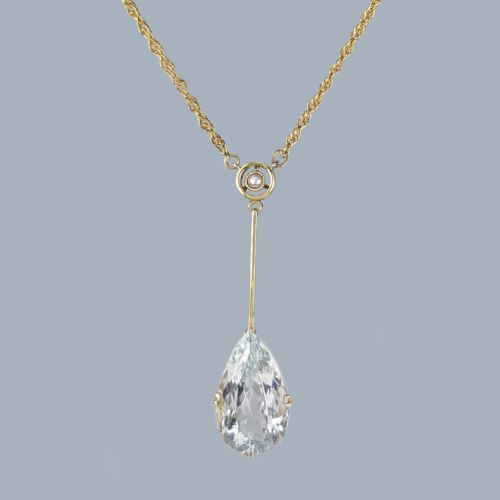
Aquamarine Pearl Pendant
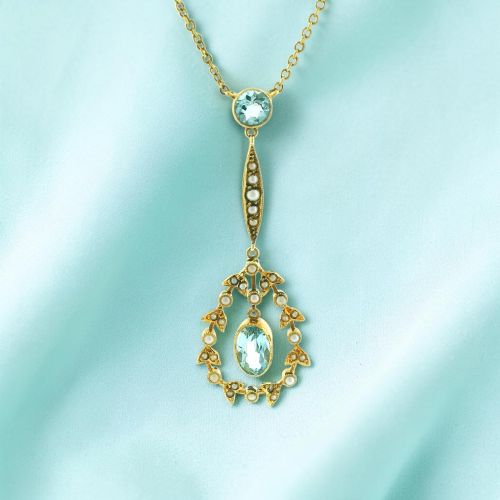
An aquamarine pearl pendant brings together pale blue stones and delicate seed pearls, most often seen in Edwardian and Art Nouveau designs.
Aquamarine Pearl Pendant
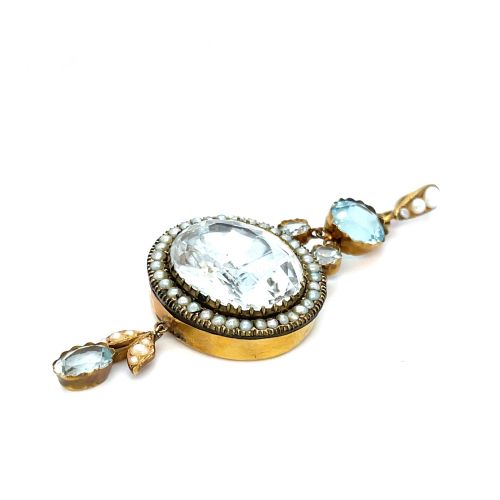
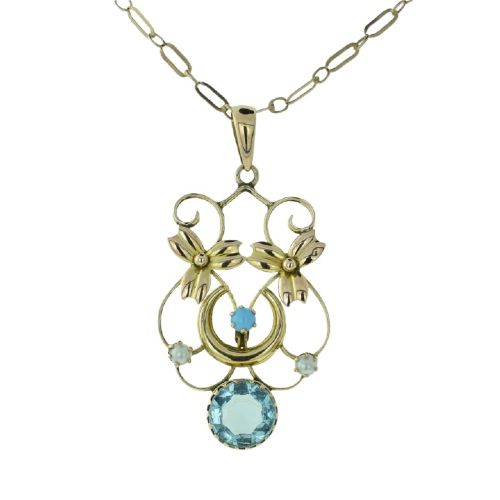
An aquamarine pearl pendant is what you look for when seeking a piece of antique jewellery defined by pale blue beryl paired with small pearls. The pieces met most often on this page belong to the Edwardian period and the early twentieth century, alongside Victorian examples.
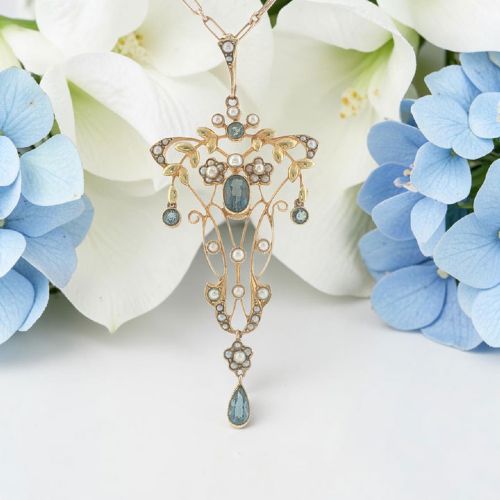
The dominant forms are drop pendants and necklace combinations shaped by Art Nouveau design sensibilities. These jewels utilise gold mounts, predominantly in nine carat and fifteen carat variants, often arranged in foliate or symmetrical configurations.
Collector interest centres on surviving examples that retain their original seed pearls and central aquamarines. The items range from modest nine carat gold settings to substantial fifteen carat gold pieces carrying significant carat weight.
How they were made
The construction relies on gold working techniques typical of the late Victorian and Edwardian eras, using both nine carat and fifteen carat gold to form delicate wirework and solid mounts. Stones are set using traditional claw or collet methods, securing the central aquamarine while seed pearls are individually positioned along the margins or suspension loops.
Art Nouveau examples employ fluid, organic lines executed in cast and chased gold, occasionally incorporating openwork frames. Seed pearls are typically threaded or pegged into position, whilst larger aquamarines are faceted in step or rectangular cuts to maximise light reflection through the pale blue material.
Aquamarine Pearl Pendant Retail Price Guide 2026
Typical asking prices for aquamarine pearl pendant among the pieces listed under this phrase on Sellingantiques today, from the lower quarter to the upper quarter. They describe what is for sale here now, not the wider market.
The archive reveals that several pendants also function as brooches through integrated pin mechanisms.
What varies in quality
Quality separates through the purity of the gold mount and the clarity of the central aquamarine. Higher tier examples utilise fifteen carat gold rather than nine carat, paired with stones possessing deeper saturation and fewer natural inclusions.
The integrity of the seed pearls and the precision of the metalwork dictate the overall standard. Pieces displaying crisp Art Nouveau casting and secure, well-matched pearl settings represent the upper tier of surviving examples.
The Aquamarine Pearl Pendant Glossary
- Seed pearl
- A very small, naturally formed or cultured pearl used in clusters or borders. These delicate elements are characteristic of Edwardian jewellery design.
- Aquamarine
- A transparent, pale blue to greenish-blue variety of beryl. It serves as the primary gemstone in these pendants.
- Lavalier
- A pendant featuring a drop element suspended from a chain or a smaller connector. This style gained popularity during the Edwardian and Art Nouveau periods.
- Foliate
- Ornamentation or design shaped like leaves or foliage. This motif is frequently observed in Art Nouveau gold settings.
- Collet
- A band of metal that holds a gemstone in place by folding over the edge of the stone. It provides a secure alternative to prong settings.
Aquamarine Pearl Pendant: Frequently Asked Questions
How do I care for an aquamarine pearl pendant?
Pearls are organic and sensitive to chemicals, perfumes and cosmetics, so they require gentle cleaning with a soft, dry cloth rather than liquid dips. Aquamarines are durable, but the delicate seed pearls and old gold settings demand careful handling during storage.
Keep the pendant in a separate lined compartment to prevent scratching from harder gemstones. Avoid ultrasonic cleaners entirely, as vibration can damage pearl settings.
Are these pendants worn on chains or ribbons?
Original pieces are typically found with fine gold link chains or associated with contemporary replacement chains suited to the period. Some examples also double as brooches, featuring a pin mechanism on the reverse.
When wearing a convertible piece as a pendant, ensure the brooch pin is securely latched to prevent snagging on clothing.
What distinguishes Edwardian pendants from Victorian ones?
Edwardian pieces tend to feature lighter, more ethereal openwork mounts in yellow or rose gold, often with distinct Art Nouveau botanical motifs. Victorian examples generally present heavier, more substantial gold work and symmetrical arrangements.
Both periods make extensive use of seed pearls, but the mounting style usually reveals the decade of manufacture.
Can I replace missing seed pearls?
Restoration is possible using vintage seed pearls matched for size, lustre and drill hole diameter. A specialist jeweller with experience in antique settings must perform the work to preserve the original gold mount.
Originality affects desirability, so retaining as many period components as possible remains important for collectors.