




Aquamarine Drop Pendant
An aquamarine drop pendant brings together cool blue stones and delicate precious metals, offering a classic piece of jewellery for daily wear.
Aquamarine Drop Pendant
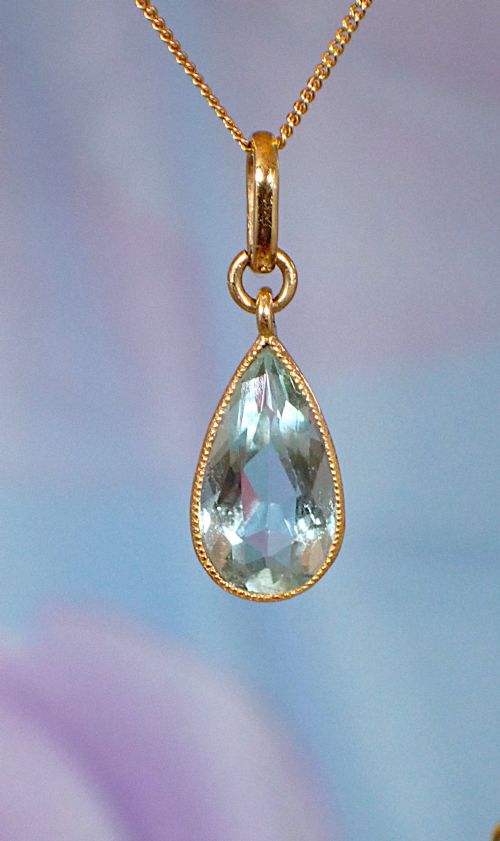
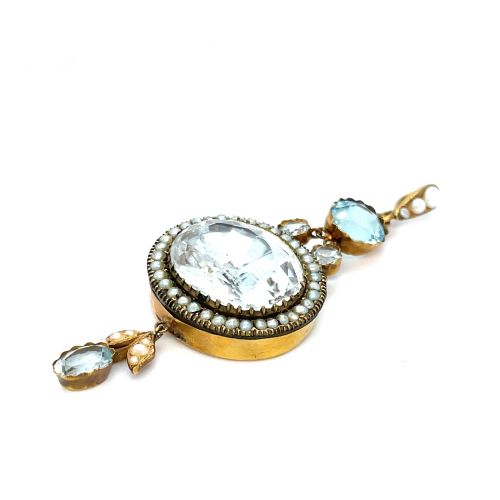
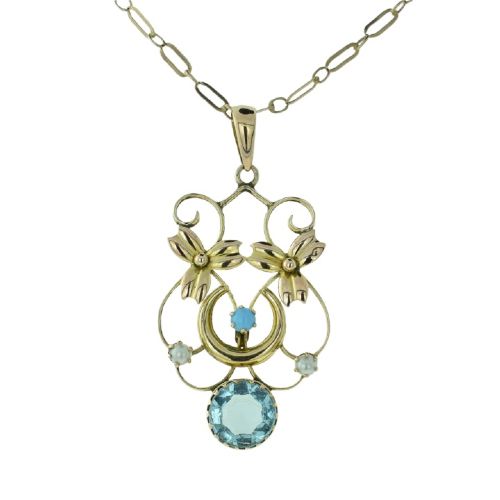
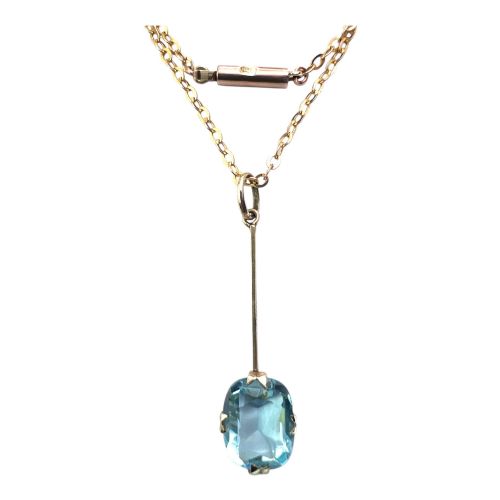
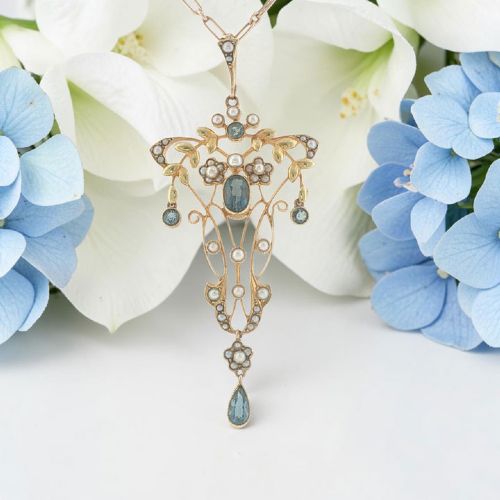
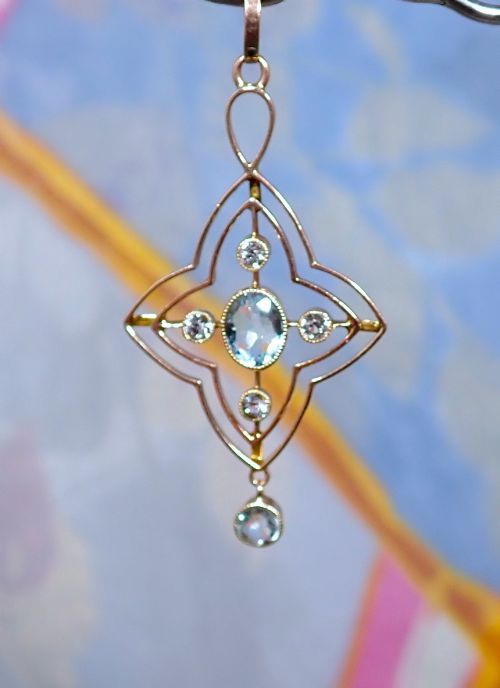
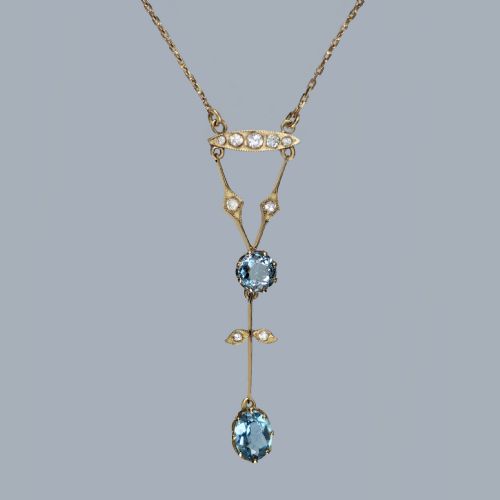
An aquamarine drop pendant suspended on a chain forms a distinct category of antique jewellery found in Edwardian and Art Deco designs. These pieces showcase pale blue beryl stones hanging below a chain or integrated fitting, often paired with smaller accent gems.
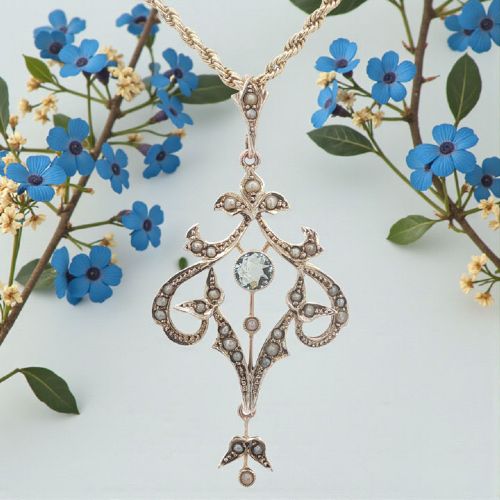
The Edwardian examples frequently combine aquamarines with seed pearls and yellow gold, creating light, openwork foliate drop shapes. Art Deco variants tend to favour platinum settings paired with diamonds and larger central aquamarines in geometric layouts.
Necklaces and pendants from this selection span several decades around the early twentieth century, originating from periods between 1900 and 1930. Buyers encounter both simple 9ct gold mounts and heavier platinum or 18ct yellow gold constructions.
Factors influencing quality
The calibre of a piece rests upon the saturation and clarity of the aquamarine itself, alongside the precision of the surrounding metalwork. Larger stone carats paired with clean diamond accents elevate the overall standard of the mounting.
The integrity of the original settings and the delicacy of the pierced gold or platinum work distinguish finer examples. Pieces retaining matching seed pearls and undisturbed original chains hold greater consistency within their period style.
Aquamarine Drop Pendant Retail Price Guide 2026
Typical asking prices for aquamarine drop pendant among the pieces listed under this phrase on Sellingantiques today, from the lower quarter to the upper quarter. They describe what is for sale here now, not the wider market.
Even the tiniest seed pearls manage to stay perfectly in place for over a century.
The Aquamarine Drop Pendant Glossary
- Aquamarine
- A pale blue variety of beryl utilised as the primary gemstone in these drop pendants. Its colour typically ranges from very light blue to greenish-blue.
- Seed pearl
- A very small natural or cultured pearl often drilled and strung or set alongside aquamarines in Edwardian jewellery. These tiny pearls add a soft white contrast to the cool blue stones.
- Platinum
- A dense, strong, and malleable white precious metal favoured in Art Deco jewellery for secure stone settings. It allows for ultra-fine wirework and claw mounts without bending.
- Foliate drop
- A pendant design element shaped to resemble leaves or plant tendrils. This style appears frequently in Edwardian gold work.
- Knife-edge
- A thin bar of gold shaped like a knife blade, used in Edwardian necklaces to give strength to drop elements while appearing almost invisible.
Aquamarine Drop Pendant: Frequently Asked Questions
How do I date an aquamarine drop pendant?
Dating relies on stylistic clues such as the presence of millegrain decoration and seed pearls typical of Edwardian pieces, versus the geometric lines of Art Deco platinum mounts.
Material choices also offer guidance, as 9ct and 15ct yellow gold dominate the earlier 1900 to 1910 pieces, while platinum becomes prevalent by the 1930s.
Are these pendants supplied with original chains?
Many listings include period chains, though some pendants are offered independently to let the buyer choose a preferred length.
When original chains are present, they typically match the metal purity and style of the pendant drop.
How should I clean an antique aquamarine pendant?
Gentle cleaning with warm water, mild soap, and a soft brush maintains the brilliance of both the aquamarine and any diamond accents.
Harsh chemical dips and ultrasonic cleaners should be avoided, particularly when seed pearls are present in the mount.
What is the difference between Edwardian and Art Deco styles?
Edwardian designs focus on light, lace-like yellow gold and platinum-topped work featuring floral, foliate, and garland motifs with seed pearls.
Art Deco items shift towards strong geometric lines, symmetric platinum settings, and prominent diamond arrangements around larger aquamarines.