
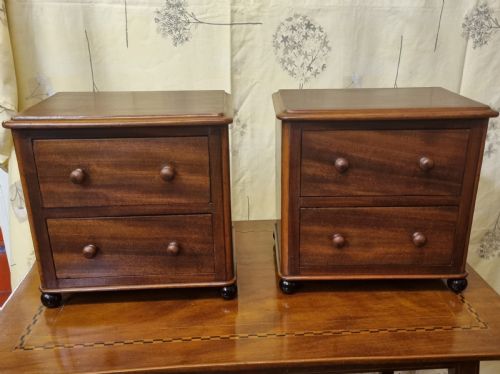
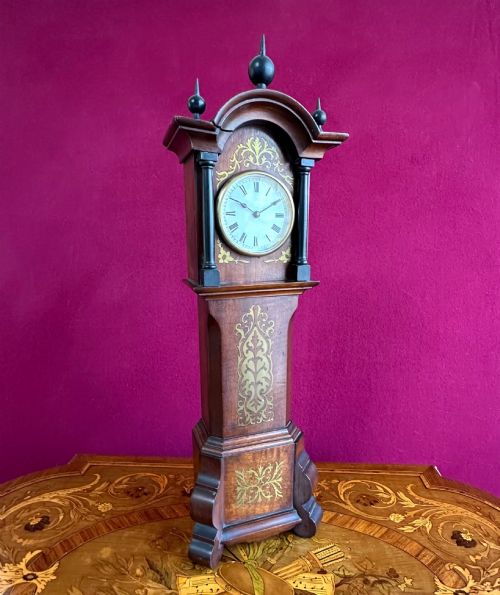
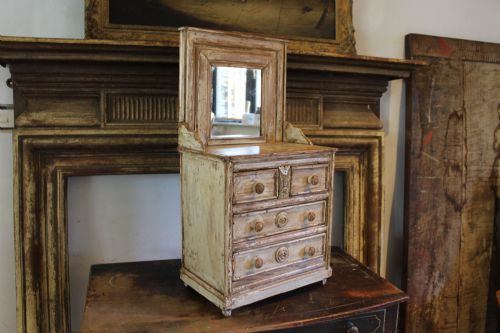


Apprentice Miniature Table
These apprentice miniature table pieces are scale models made by tradesmen or trainees, offering remarkable fine detail for collectors.
Apprentice Miniature Table
The selections span georgian, regency, and victorian periods, with mahogany and oak appearing frequently across the inventory. Makers also produced side tables and refectory forms, reflecting the dominant furniture styles of their respective eras.
You are most likely to meet mahogany examples from the nineteenth century on this page, alongside oak and walnut pieces. The forms range from simple tripod bases to detailed pedestal tables with miniature feet.
How they were made
Cabinet makers utilised dense timbers such as mahogany, oak, walnut, and yew wood to achieve stable miniature structures. These woods allowed craftsmen to plane thin sections and shape small legs without splitting the material.
Joinery methods mirrored domestic furniture construction, employing mortise and tenon joints, turned pillars, and occasionally brass fittings or glass inserts. Surfaces were finished with polish or paint to seal the wood and highlight the grain.
Listings feature mahogany, oak, walnut, yew wood, and pine across eighteenth and nineteenth century periods.
What varies in quality
The standard of proportion and fidelity to full scale design dictates the quality of each piece. Superior examples maintain exact scaling across every component, from the thickness of the top to the turnings of the central column.
Materials also separate the work, as finely figured mahogany or burr walnut paired with precise turning demonstrates greater skill than plain pine or hurried assembly. The crispness of carved details, such as hairy paw feet or edge moulding, reveals the maker's proficiency.
The Apprentice Miniature Table Glossary
- Apprentice piece
- A small scale item made by a trainee to demonstrate mastery of a trade before gaining guild or union admission.
- Tilt top
- A table top hinged to tilt vertically when not in use, allowing the furniture to be stored flat against a wall.
- Pembroke table
- A small table featuring two hinged drop leaves on opposite sides, supported by folding brackets.
- Tripod table
- A freestanding small table supported by a single central pillar resting on three separate feet.
- Tripod base
- The three-legged support system common to small occasional and breakfast tables.
Apprentice Miniature Table: Frequently Asked Questions
What is an apprentice miniature table?
These items are small scale representations of full size furniture produced by trainees to demonstrate their woodworking skill to master craftsmen.
They replicate domestic tables from various periods, maintaining accurate proportions and traditional joinery on a reduced scale.
How were these small tables used?
Cabinet makers created them as proof of competence rather than for domestic utility, though historical owners sometimes used them as decorative tabletop items.
They served as portable samples that journeymen could carry to demonstrate their capability to prospective employers.
How do I date a miniature table?
Dating relies on identifying the prevailing timber choice, turning style, and structural characteristics associated with specific eras like the regency or victorian periods.
Changes in furniture fashion, such as the shift from georgian mahogany tripod designs to arts and crafts oak, provide clear chronological markers.
How should I care for antique miniature wood?
Keep the wood away from direct sunlight and sudden temperature changes to prevent the timber from drying out or splitting.
Apply a light application of appropriate wax occasionally to maintain the finish and protect the grain of the miniature surface.