

Apprentice Cabinet Drawers
Apprentice cabinet drawers are small-scale pieces crafted by joiners to demonstrate skill, spanning periods from the eighteenth century to the twentieth.
Apprentice Cabinet Drawers
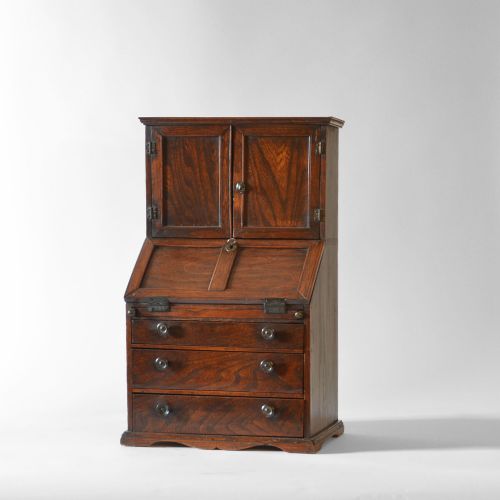
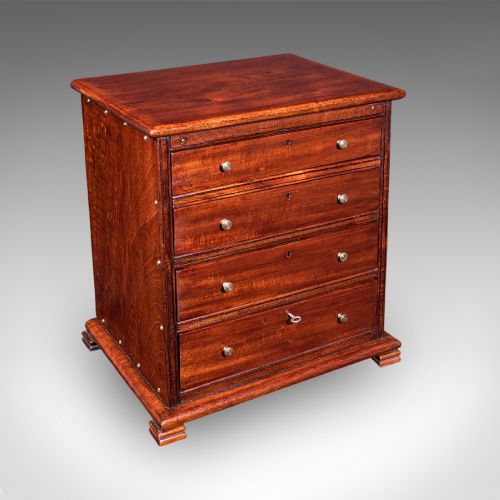
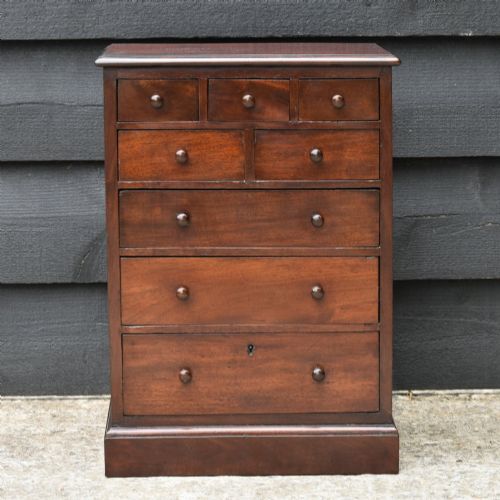
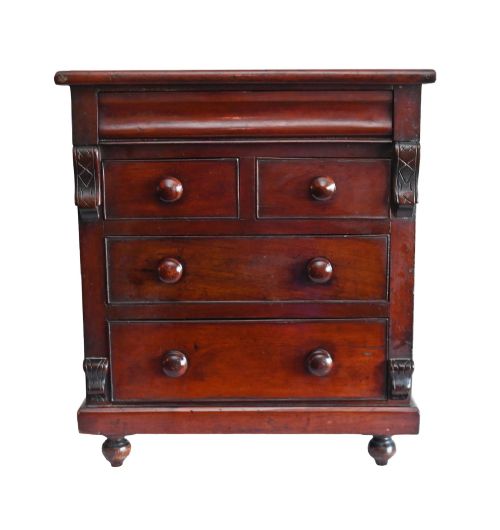
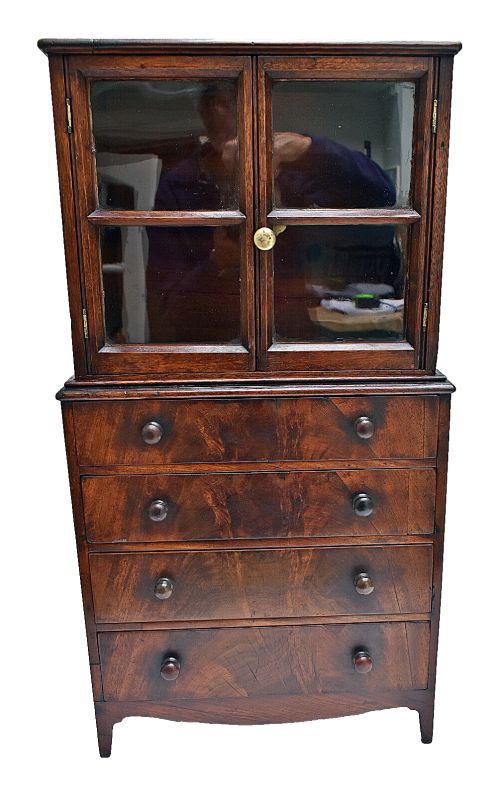
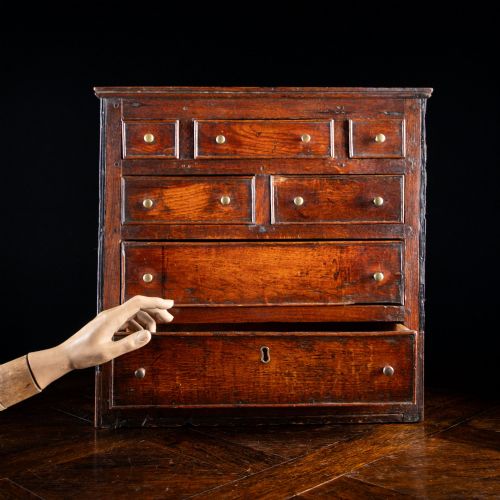
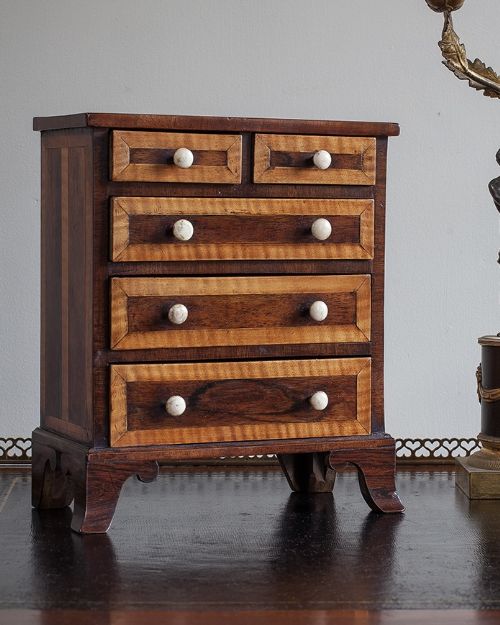
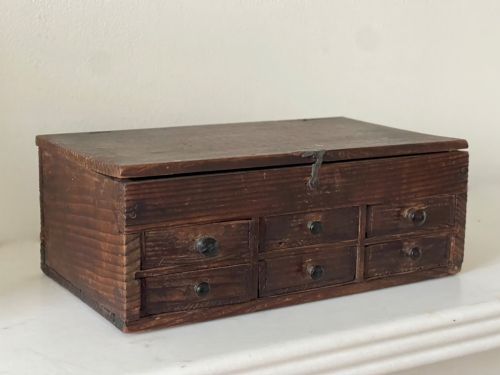
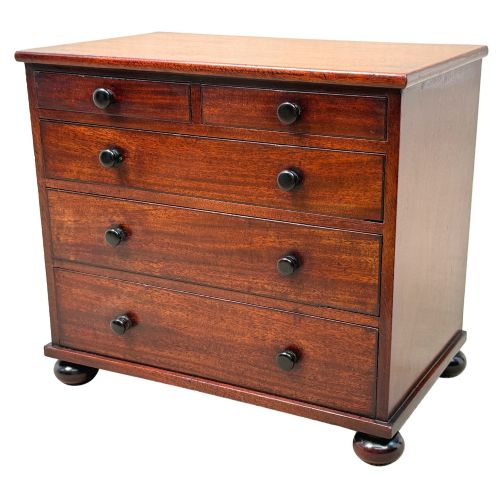
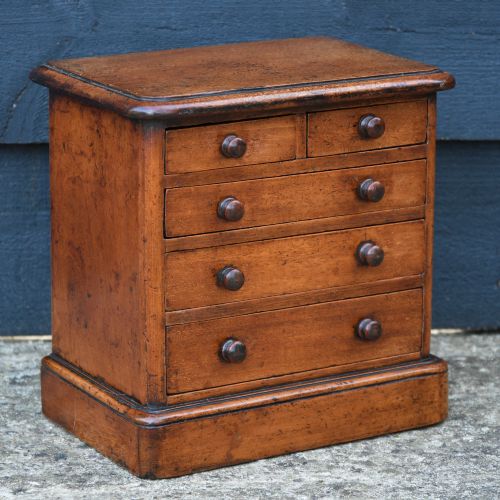
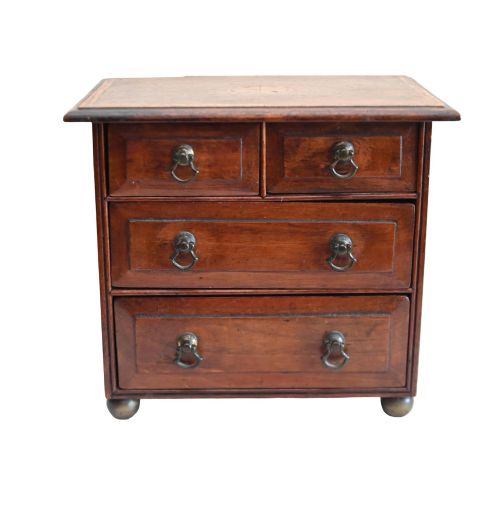
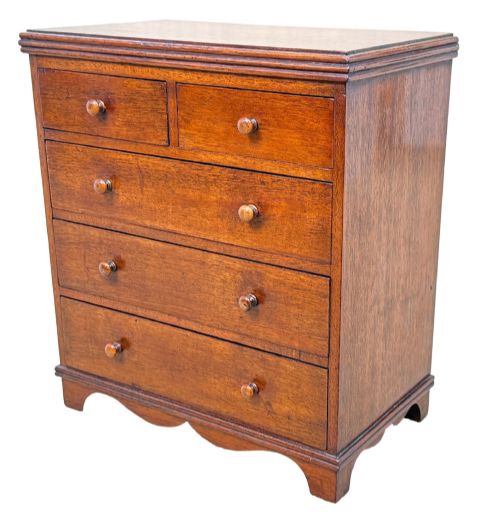
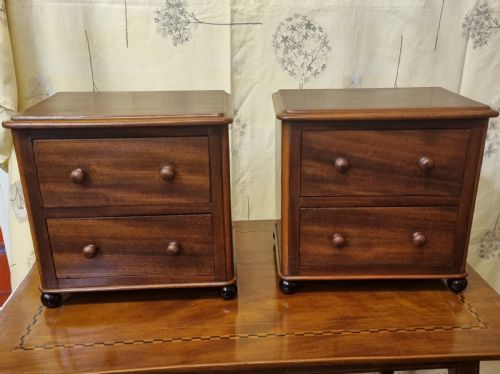
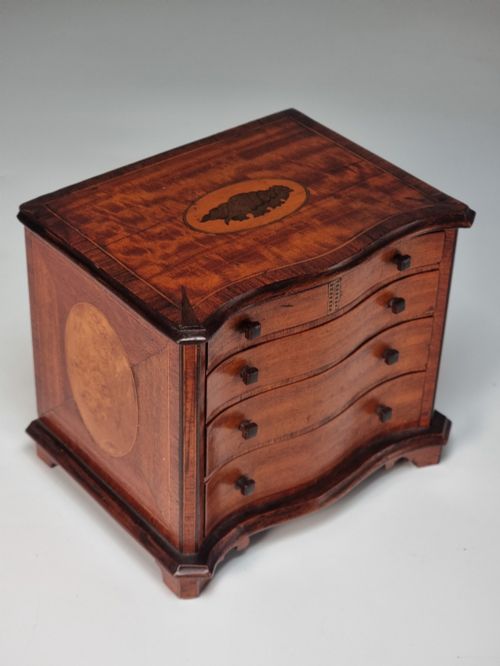
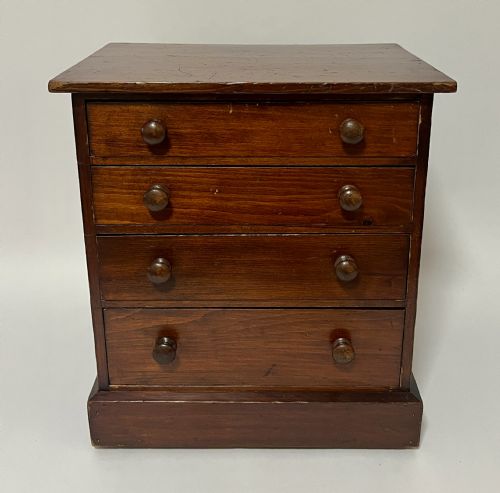
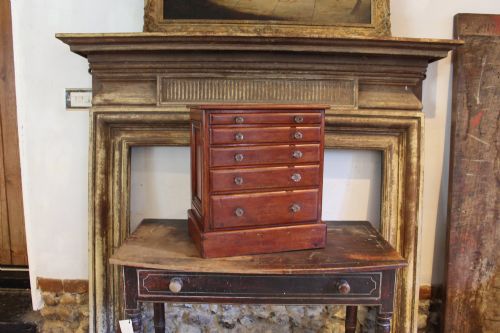
Apprentice cabinet drawers represent miniature furniture and tabletop storage units created across the eighteenth, nineteenth, and early twentieth centuries. A buyer investigating apprentice cabinet drawers encounters various forms, including miniature chests of drawers, collectors cabinets, and tabletop chests originating from Georgian, Victorian, and Edwardian eras. These small pieces mirror full-sized furniture designs in precise detail.
The most common version on this page is the nineteenth-century mahogany miniature chest of drawers, often associated with the Victorian period. Pieces span regional styles such as Scottish scotch chests, bowfronts, and French provincial examples alongside utilitarian items. Forms range from simple drawer units to glazed top cabinets and specialised calligrapher or watchmaker boxes.
Makers utilised these smaller scales to test joinery techniques or showcase proficiency to guilds. The selection includes miniature kneehole desks, Wellington chests, and wall-hanging spice boxes alongside standard drawer configurations. Each item demonstrates the domestic furniture vernacular scaled down for display, travel, or demonstration purposes.
Materials and construction
Mahogany, oak, walnut, and pine serve as the primary woods utilised in these miniature pieces, frequently complemented by secondary timbers like satinwood, rosewood, amboyna, elm, and bone. Cabinetmakers applied traditional joinery methods to build small frames, carcass boxes, and internal drawer compartments. Surfaces often display figuration in the wood grain, particularly on walnut and mahogany examples.
Brass fittings such as miniature escutcheons, ring pulls, and knob handles accent the wooden structures. Glazed doors incorporate glass panels set into timber frames, while secret compartments and removable tops appear in select Georgian and Victorian designs. Construction relies on dovetail joints for drawers and panelled backs suited to the diminutive scale.
Apprentice Cabinet Drawers Retail Price Guide 2026
Typical asking prices for apprentice cabinet drawers among the pieces listed under this phrase on Sellingantiques today, from the lower quarter to the upper quarter. They describe what is for sale here now, not the wider market.
Listings feature periods spanning from the eighteenth century through Georgian, Victorian, and Edwardian eras up to nineteen-twenty.
Factors of quality
The refinement of the timber selection and the precision of the miniature joinery distinguish finer examples from simpler workshop pieces. Mastery shows in the tightness of dovetail joints, the smooth action of small drawers, and the thoughtful matching of wood grain across drawer fronts. Figured veneers and secondary woods like satinwood or amboyna indicate higher ambition in the original making.
Proportion and fidelity to full-scale architectural styles separate skilled execution from casual production. Details such as functioning secret drawers, fine cockbeading, and well-fitted glazed tops or brass hardware elevate certain pieces. The integrity of the original structure, free from later alterations, dictates the standing of each tabletop cabinet.
A. F. Lloyd, Bideford
The Apprentice Cabinet Drawers Glossary
- Bowfront
- A convex curved cabinet front that swells outward in the centre. This curved facade appears frequently on nineteenth-century miniature chests.
- Wellington chest
- A tall, slender chest of drawers featuring a hinged vertical locking stile on one side that secures all drawers simultaneously. Named after the Duke, this form appears in miniature nineteenth-century versions.
- Kneehole desk
- A small desk or writing table featuring a recessed central space for the user's knees, flanked by pedestals of small drawers. Georgian examples utilise oak and mahogany.
- Cockbeading
- A narrow rounded moulding projecting around the edges of drawer fronts. This decorative edging protects the drawer margins and defines the joinery.
- Collectors cabinet
- A small cabinet fitted with multiple shallow internal drawers designed for housing specimens, coins, or small objects. These utilise pine, mahogany, and stained woods.
Apprentice Cabinet Drawers: Frequently Asked Questions
What were apprentice cabinet drawers used for?
These small pieces served primarily as masterwork demonstrations created by trainees proving their skill to a guild. They also functioned as tabletop storage for jewellery, specimens, or documents in domestic settings.
Craftsmen utilised the miniature format to test complex joinery techniques or showcase available timber varieties to prospective clients.
How do you date miniature chests of drawers?
Dating relies on examining the timber species, construction methods, and stylistic cues inherited from full-sized furniture periods. Georgian pieces often display specific proportions and mahogany framing, while Victorian examples introduce figured walnut and different brass hardware.
Secondary woods inside the drawers and the style of dovetailing offer further clues to the decade of manufacture.
Are apprentice pieces different from dollhouse furniture?
Apprentice pieces are fully functional, solid wood miniature furniture constructed by professional cabinetmakers or trainees using traditional joinery. They stand alone as display items or functional tabletop storage.
Dollhouse furniture is generally built to a strict smaller scale for children's play and rarely employs the complex cabinetmaking techniques found in apprentice pieces.
How should I care for antique miniature furniture?
Keep these wooden pieces away from direct sunlight and extreme humidity changes to prevent timber splitting or veneer lifting. Dust them gently with a dry, soft cloth rather than using modern liquid polishes.
Maintain stable indoor temperatures to preserve the historic brass fittings and original polish on mahogany, oak, or walnut surfaces.