



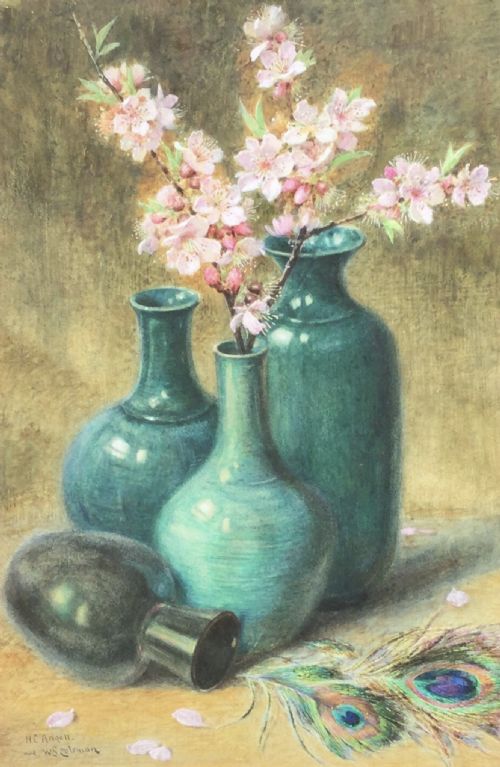


Apple Still Life
An apple still life brings the quiet weight of fruit and simple vessels onto a wall with enduring presence.
Apple Still Life
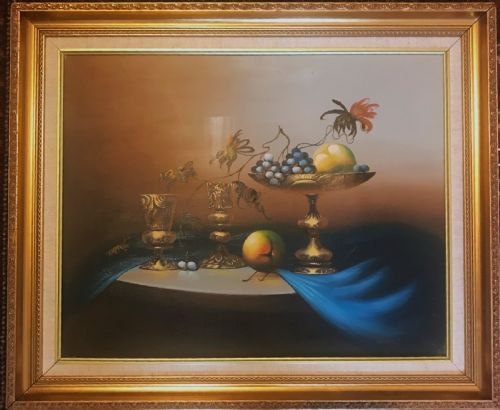
An apple still life gathers painted fruit, bowls, and rustic bread into arranged compositions that span from the eighteenth century to the mid-twentieth century. These artworks record observations of form and light, moving through academic realism, Spanish school studies, and mid-century modern interpretations.
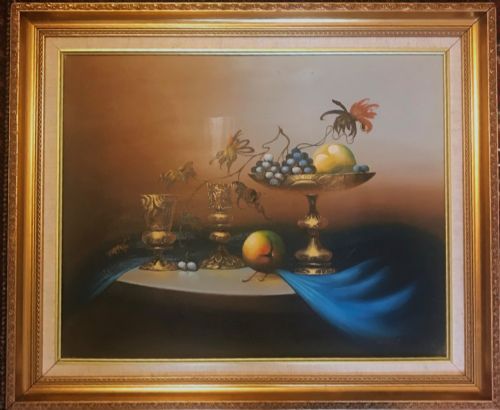
The versions most often met on this page are oil paintings on canvas or wood panel, alongside watercolours on paper. They arrive in frames of gilded wood or solid wood, reflecting the decorative tastes of the nineteenth century and earlier eras.
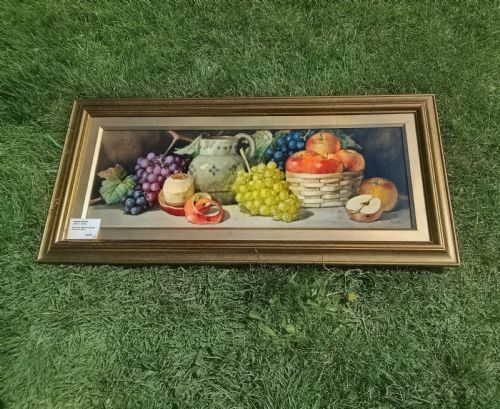
The subjects range from simple groupings of apples and grapes to complex arrangements featuring bread, pomegranates, and earthenware vessels. Each piece captures a distinct approach to domestic realism, grounded in historical painting traditions.
Materials and methods
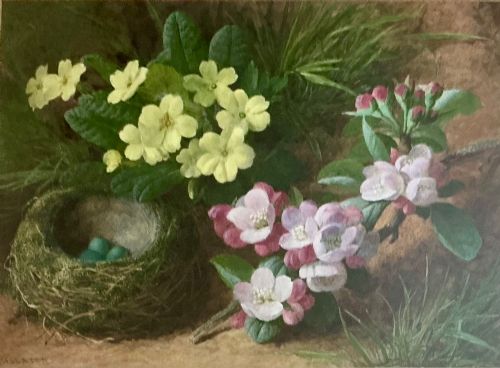
Painters utilised oil paint on stretched canvas or wooden panels, building up layers of pigment to capture the texture and rounded mass of the fruit. Watercolour on paper offered a lighter medium, applied with precise washes to record delicate apple blossoms or detailed fruit studies.
Support frames of gilded wood or solid wood were often constructed to house these works, complementing the tonal depth of the compositions. These frames protect the edges of the canvas and panel while providing a traditional architectural border.
Apple Still Life Retail Price Guide 2026
Typical asking prices for apple still life among the pieces listed under this phrase on Sellingantiques today, from the lower quarter to the upper quarter. They describe what is for sale here now, not the wider market.
Historic larders recorded in these paintings occasionally feature playing cards and dice alongside the apples and bread.
Distinctions in quality
The division between works rests upon the handling of light, shadow, and spatial depth within the composition. Masterful brushwork defines the crisp contours of an apple and the subtle play of highlights on a glazed ceramic bowl.
Condition and originality dictate the standing of a piece, particularly the preservation of the paint surface and the integrity of the period frame. Works that retain their original wooden framing without extensive restoration hold greater historical continuity.
Jozsef Molnar·Arthur Dudley·James Tower·John Sherrin·Oliver Clare·Helen Cordelia Angell
The Apple Still Life Glossary
- Academic Realism
- A style of painting governed by the strict rules of nineteenth-century art academies. It prioritises precise drawing, smooth brushwork, and lifelike representation.
- Wood Panel
- A rigid flat wooden support used as a base for oil paintings before canvas became dominant. It provides a stable surface that withstands centuries of movement.
- Watercolour Painting
- A work created using water-soluble pigments on paper. This technique relies on the white of the paper to shine through translucent colour washes.
- Gilded Wood
- Wood that has been coated with a thin layer of gold leaf or metallic powder. It adds reflective warmth to traditional picture frames.
- Spanish School
- A regional designation for artworks produced within Spanish artistic traditions. These pieces often feature dark, dramatic contrasts and rustic subject matter.
Apple Still Life: Frequently Asked Questions
What is an apple still life?
An apple still life is a painted or watercolour study focusing primarily on apples, often accompanied by other fruit, bread, and domestic objects. These works capture stationary arrangements to explore light, shadow, and texture.
Such pieces range from nineteenth-century academic studies to mid-century modern interpretations, offering a window into historical domestic interiors and artistic techniques.
How should I hang an oil painting?
Oil paintings on canvas or wood panel require stable wall spaces away from direct sunlight and sudden temperature shifts. Proper picture wire and wall fixings suited to the weight of the frame ensure secure display.
Keeping the work clear of damp environments protects both the wooden support and the layers of oil pigment from gradual degradation.
How do I identify the period of a frame?
Period frames are identified by their construction methods, such as hand-carved wooden mouldings, gesso application, and traditional gilding techniques. Subtle signs of age in the wood grain and backing boards help confirm authenticity.
Matching the frame style to the era of the painting often reveals whether the two have remained together since creation.
What is the difference between oil and watercolour?
Oil paint uses slow-drying pigments suspended in oil, allowing artists to blend colours smoothly and build rich, thick textures on canvas or wood. Watercolour uses water-soluble pigments on paper, creating translucent washes.
Watercolours require protective glass framing to prevent moisture damage, whereas oil paintings on canvas remain open to the air.