




Apothecary Mortar Bowl
An apothecary mortar bowl is a heavy vessel used for grinding, and these pieces bring sculptural weight and history to a room.
Apothecary Mortar Bowl
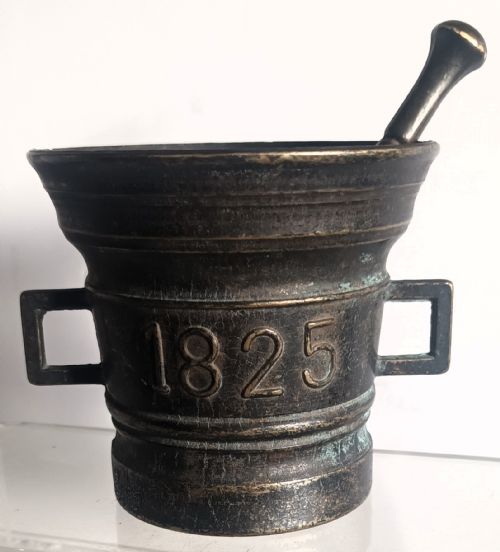
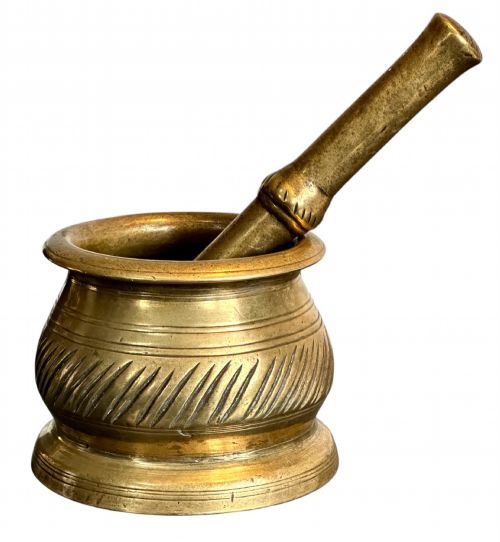
When you search for an apothecary mortar bowl, you are looking at substantial vessels designed for crushing and grinding substances in kitchens, pharmacies, and dye works. The selections available span from the seventeenth century through the Edwardian period, encompassing English, French, Spanish, and Italian origins.
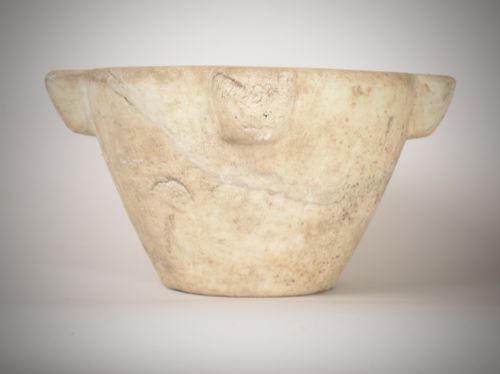
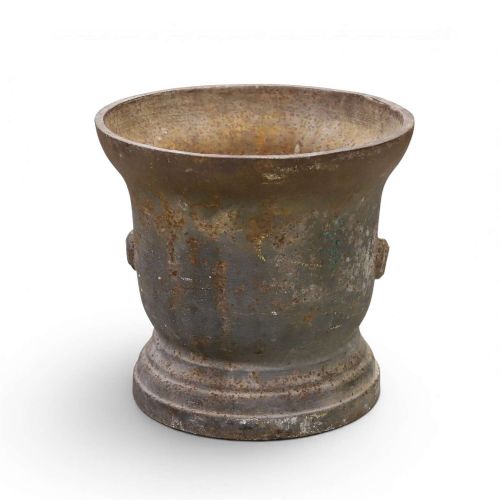
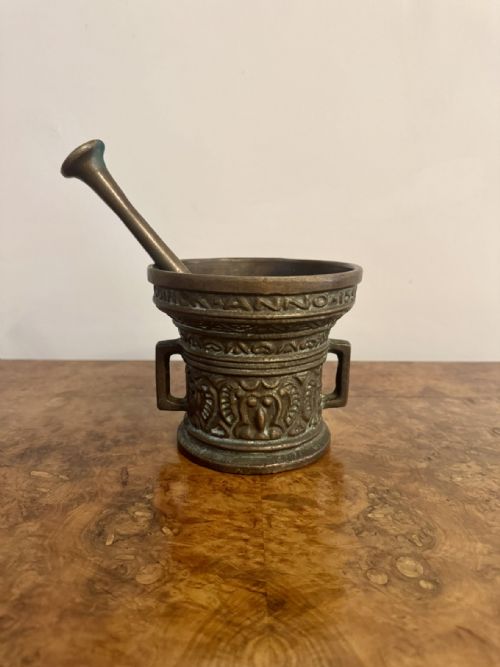
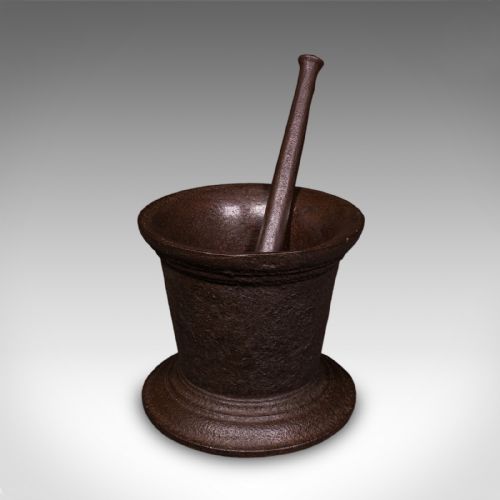
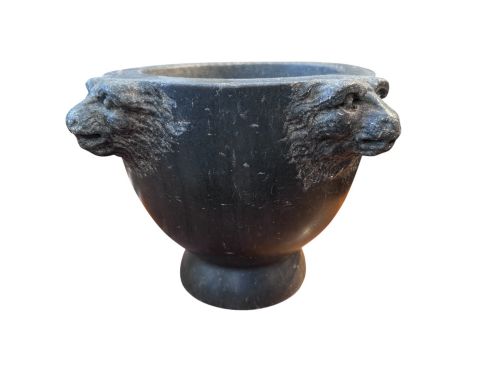
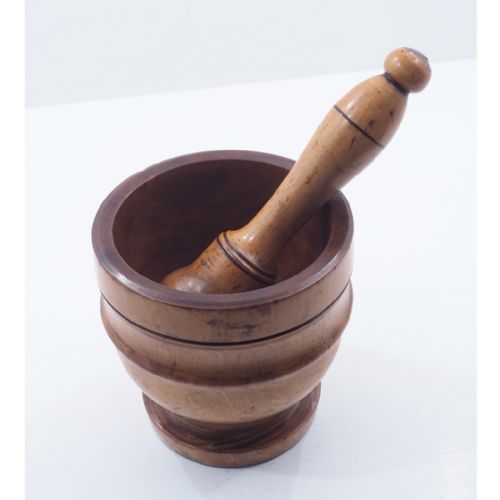
You will most frequently encounter bronze and brass examples alongside heavy white marble, stone, cast iron, and occasional turned wooden pieces like olive wood and walnut. Many of these bowls arrive accompanied by their matching pestles, though others survive as single vessels.
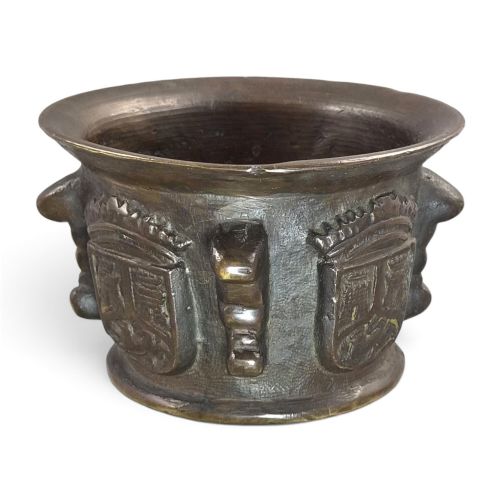
The forms range from small kitchen implements to huge dye maker vessels weighing over a hundred pounds, reflecting diverse domestic and industrial uses. Regional variations appear in Spanish cast bronze pieces bearing armorial details and French chateau cast iron designs.
Materials and construction methods
Metal vessels such as bronze, brass, and cast iron were produced using traditional casting methods, often resulting in thick, robust walls designed to withstand heavy impact. Some bronze examples feature decorative raised motifs like the Tudor rose or Gothic architectural details.
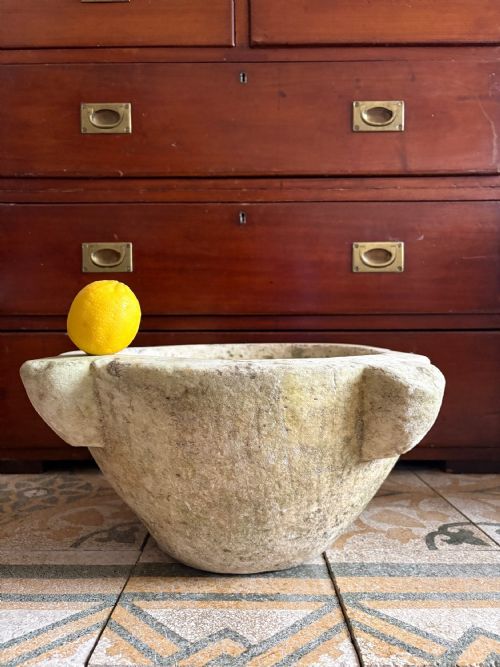
Stone and marble bowls were laboriously carved from solid blocks, yielding smooth interior basins and heavy, stable footprints. Wooden variants, including lignum-vitae and olive wood, were shaped on lathes to exploit the dense grain of the timber.
One extraordinary listing weighs a staggering one hundred and forty pounds, proving that some kitchen grinders doubled as heavy-duty industrial machinery.
Judging the quality of a mortar bowl
Quality rests heavily on the crispness of the casting or the precision of the stone carving, as well as the thickness and overall heft of the vessel. Pieces retaining their original matching pestle command greater interest than those separated from their grinding tools over time.
Surface character also dictates standing, with natural patination on metals and weathering on stone enhancing the visual weight of the object. Heraldic decoration or specific armorial bearings elevate certain bronze examples above standard utilitarian forms.
The Apothecary Mortar Bowl Glossary
- Mortar and Pestle
- Mortar and pestle describe the paired basin and grinding club used together for crushing materials. The mortar holds the substance while the pestle delivers the friction.
- Cast Bronze
- Cast bronze is an alloy of copper and tin poured into a mould to form solid metal vessels. It provides the heavy impact resistance required for pharmacy work.
- Lignum-vitae
- Lignum-vitae is an extremely dense, heavy wood utilised for turned wooden mortars. Its natural oils make it exceptionally durable under friction.
- Armorial
- Armorial refers to heraldic coats of arms cast onto the exterior of bronze vessels. These decorative elements often denote specific noble ownership or origin.
Apothecary Mortar Bowl: Frequently Asked Questions
What were apothecary mortar bowls actually used for?
These vessels were utilised across centuries for crushing herbs, minerals, chemicals, and pigments into fine powders. Apothecaries, chemists, and dye makers relied on their heavy walls to grind raw ingredients safely.
Over time, many of these bowls transitioned from active workspaces into decorative domestic objects, valued for their substantial form and tactile presence.
How do I date an antique bronze mortar?
Dating relies on stylistic clues such as decorative bands, surface patination, and cast motifs like Tudor roses or Gothic arches. Earlier seventeenth-century pieces often display distinct casting irregularities and specific rim profiles compared to later Georgian or Victorian examples.
Heft and material composition also provide guidance, as older metalwork frequently employs higher copper content and thicker walls than nineteenth-century reproductions or variants.
Are pestles normally included with these bowls?
Many listings offer the mortar and pestle together as a complete matching set. However, due to centuries of separate storage, surviving pestles are occasionally missing from the bowl.
When a pestle is present and matches the material and wear of the mortar, it significantly completes the historical utility of the piece.
How can I display a heavy stone mortar?
Because large marble and stone mortars can weigh fifty kilograms or more, they require sturdy placement on low tables, robust sideboards, or direct floor settings. Their neutral mineral tones complement both contemporary and traditional interior schemes.
Smaller bronze and brass varieties suit tabletop display, where their polished or patinated metallic surfaces catch the light effectively.