


Antique Writing Slope Inkwell
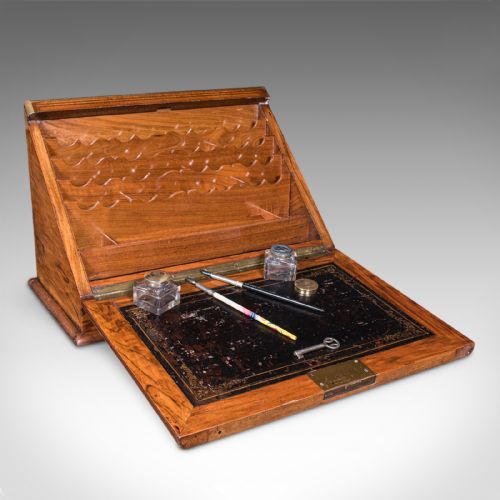
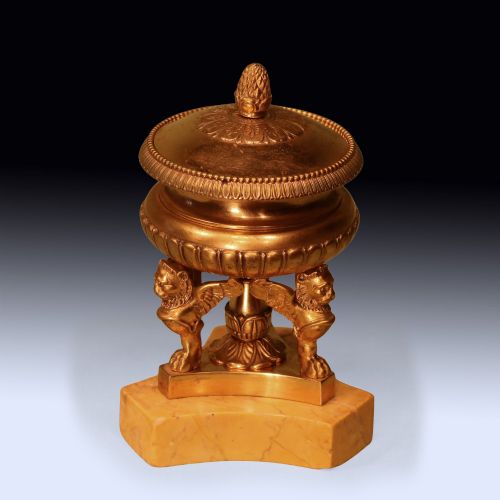
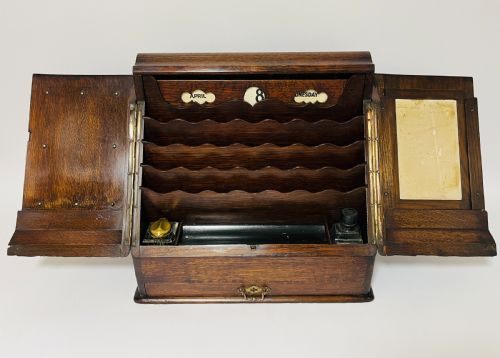
An antique writing slope inkwell is a desk accessory for holding ink, encountered here in various nineteenth-century timber, marble, and bronze forms.
Antique Writing Slope Inkwell
An antique writing slope inkwell serves as a practical desktop reservoir for ink, frequently found integrated into larger desk sets, standishes, and stationery cabinets. The pieces on this page span the eighteenth, nineteenth, and early twentieth centuries, encompassing Georgian, Regency, and Victorian aesthetics.
Buyers will encounter portable travelling versions alongside grander freestanding desk stands constructed from materials such as oak, walnut, mahogany, and coromandel. Many examples incorporate decorative details including mother of pearl, brass mounts, and ceramic inserts.
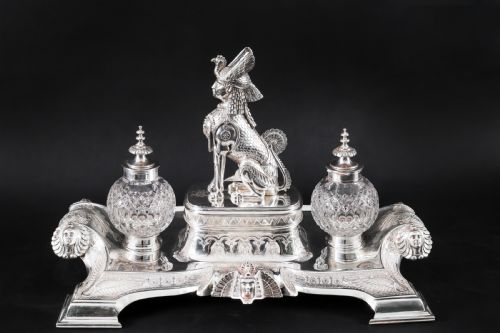
Desk accessories of this type often arrive paired with letter racks, blotters, or matching stationery boxes to form complete writing suites. The selection includes specialised forms like Egyptian Revival inkstands, Boulle-work desks sets, and tunbridgeware travelling inkwells.
How they were made
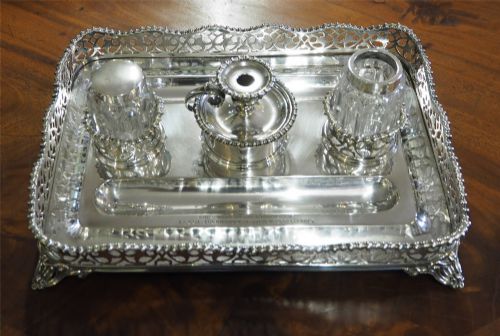
Cabinetmakers constructed the wooden bodies of these inkwells using dense timbers like oak, walnut, mahogany, and coromandel, occasionally applying intricate tunbridgeware or mother of pearl inlay. Metal components rely on cast ormolu, brass, and bronze, sometimes complemented by silver plating.
Glassmakers produced heavy cut glass bottles and wells to contain the ink securely without tipping during use. Stoneware and porcelain elements, such as hand-painted porcelain plaques and blue and white ceramic vessels, were shaped and fired before mounting onto metal or stone bases.
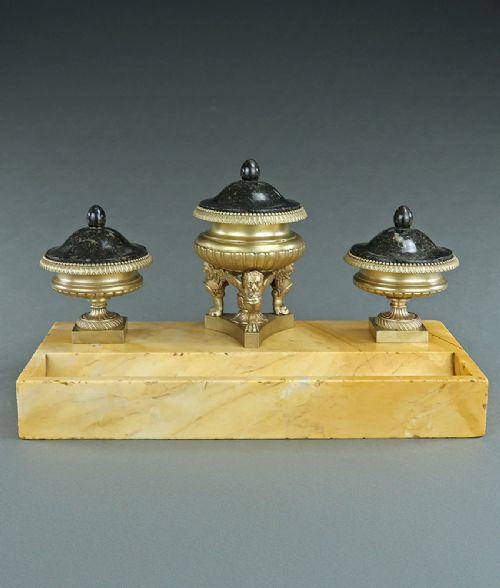
Carvers and masons shaped natural stones like Sienna marble into substantial plinths and encriers to support metal or glass reservoirs. Boulle desk sets utilised tortoiseshell and brass marquetry laid into timber carcases.
Dalmatian dog figures peer out from Victorian ceramic inkwells, guarding the ink with spotty loyalty.
What varies in quality
The distinction between standard and superior pieces rests on the precision of the joinery and the selection of materials, such as figured walnut or heavy cut glass. Makers who employed solid timbers rather than simple veneers achieved greater durability and depth of finish.
The refinement of cast metal mounts, such as ormolu or bronze figures, separates mass-produced items from works by known houses. High-grade desk sets feature carefully fitted compartments, intact ceramic liners, and complete matching ink bottles.
Elkington·Wilkinson & Co·Lefebvre of Belgium
The Antique Writing Slope Inkwell Glossary
- Inkstand
- A portable tray or stand fitted with one or more inkwells, sanders, and pen holders. These desk accessories kept writing implements organised on a desktop.
- Standish
- An alternative term for a desk stand or inkstand, often of substantial weight and formal design. Such pieces held ink, quills, and sometimes sealing wax.
- Encrier
- A French term for an inkstand or inkwell. They frequently combine marble bases with ormolu mounts in Neoclassical or Empire styles.
- Ormolu
- Gilt bronze ornamentation applied to furniture and decorative objects. The technique involves treating finely cast bronze with a gold amalgam.
- Tunbridgeware
- Small wooden objects decorated with mosaic patterns formed from tiny coloured wood blocks. This specialty woodworking flourished in Kent during the nineteenth century.
- Boulle
- A style of marquetry utilising tortoiseshell and brass inlay developed in France. It appears on luxury nineteenth-century desk sets and stationery boxes.
Antique Writing Slope Inkwell: Frequently Asked Questions
What is an antique writing slope inkwell?
An antique writing slope inkwell is a desk accessory designed to hold liquid ink safely for writing. These pieces range from simple wooden blocks to elaborate marble and bronze stands.
They often form part of larger desk sets or stationery cabinets used during the eighteenth and nineteenth centuries.
How do I date my inkwell?
Dating involves examining the materials, construction methods, and stylistic influences present in the piece. Pieces from the Regency and Victorian periods often display distinct revival motifs or specific timber choices.
Maker signatures, registry marks, and the type of glass used in the ink bottle also help establish the era of manufacture.
Were these inkwells portable?
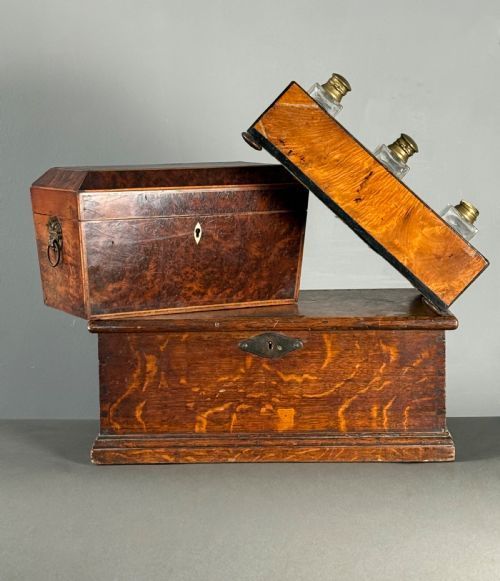
Many examples, particularly travelling inkwells housed in wooden boxes, were designed to be packed away inside writing slopes. Other heavier stands made of marble or bronze remained fixed on a library desk.
Portable versions usually feature secure lids or screw-top glass inserts to prevent spills during transport.
What materials were commonly used?
Cabinetmakers utilised hardwoods like oak, walnut, mahogany, and coromandel for the bodies of these desk accessories. Metal elements commonly include brass, bronze, and ormolu.
Glass and ceramic components form the actual reservoirs for the ink, while decorative pieces incorporate mother of pearl and marble.