

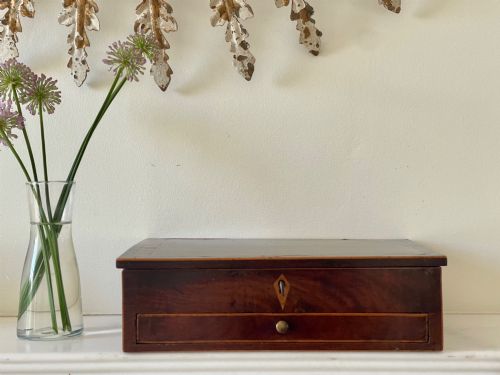

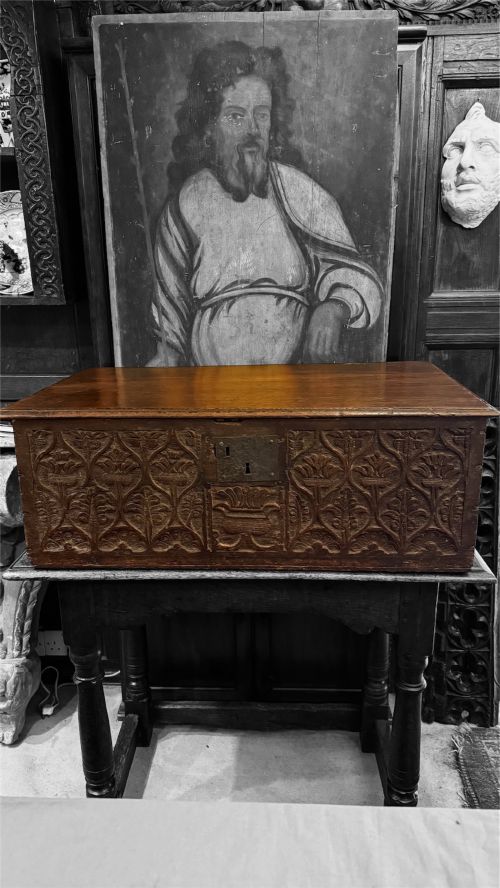

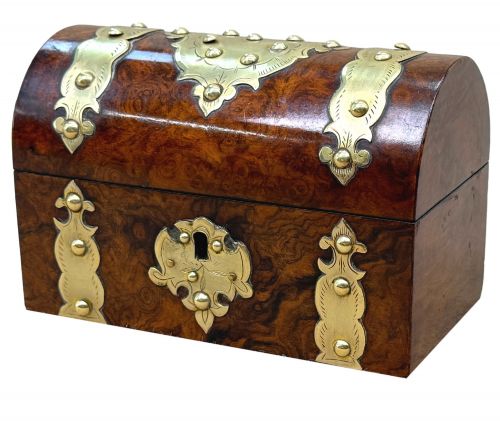
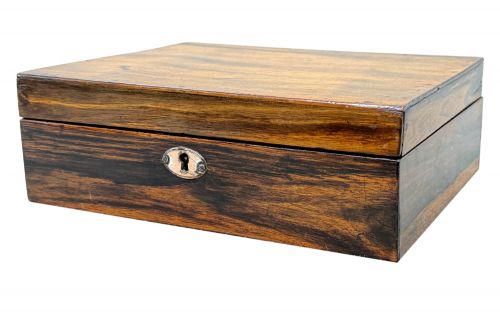


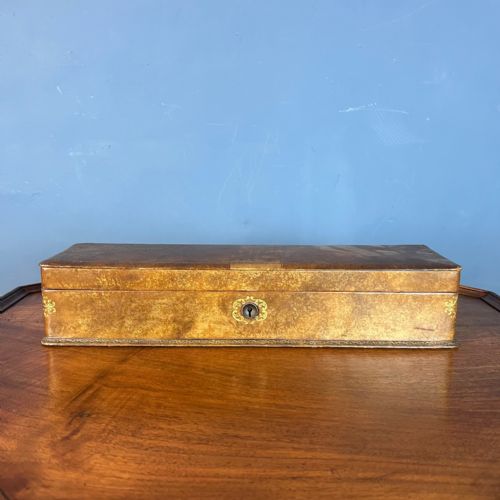

Antique Writing Casket
An antique writing casket is a solid repository for correspondence and papers, combining timber work and metal fittings.
Antique Writing Casket
When you search for an antique writing casket, you encounter desk accessories and desktop tidies spanning the seventeenth century to the Edwardian era. The Victorian examples dominate, frequently appearing as stationery boxes and letter cases made for the desk.
Materials and Technique
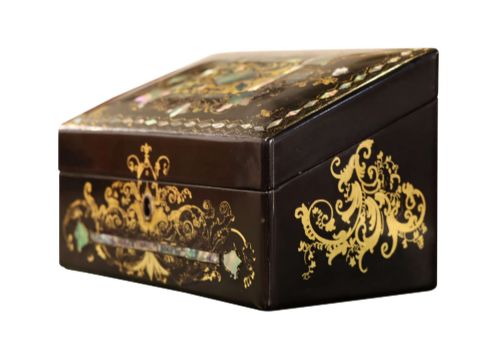
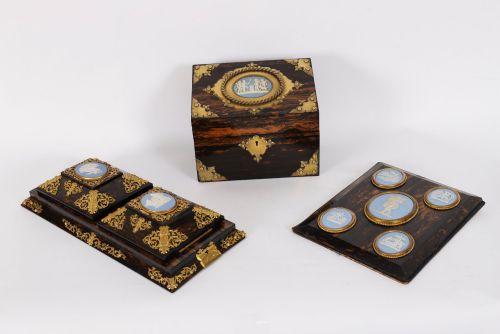
Cabinetmakers constructed these caskets using dense hardwoods like rosewood, burr walnut, and coromandel, often enhanced by brass mounts and banding. Decorative surfaces rely on marquetry, parquetry, bone inlay, and leather binding.
Specialised techniques include Tunbridge ware mosaic work, pokerwork, and pietre dure panel insertions. Ormolu mounts and silver plating appear on mid nineteenth century desk sets and caskets.
Antique Writing Casket Retail Price Guide 2026
Typical asking prices for writing casket among the pieces listed under this phrase on Sellingantiques today, from the lower quarter to the upper quarter. They describe what is for sale here now, not the wider market.
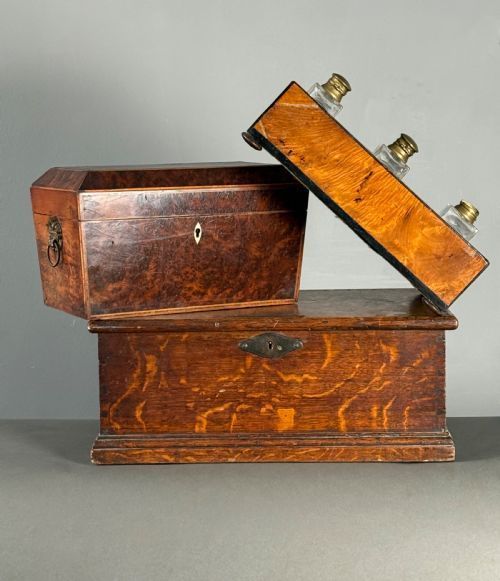
Materials appearing across the inventory include brass, burr walnut, coromandel, rosewood, oak, glass, and pollard oak.
Judging the Standard
The standard of a piece depends on the choice of timber and the precision of the parquetry or marquetry. Figured grain, such as burr walnut or flame mahogany, elevates the visual depth.
Quality shows in the integration of brass mounts, locks, and internal divisions. Fine decorative details like pietre dure plaques or intricate carved wood separate standard boxes from superior examples.
The Antique Writing Casket Glossary
- Stationery box
- A desk accessory designed to hold writing paper and envelopes upright in tiered compartments. These boxes often feature sloping lids or folding doors.
- Writing slope
- A portable box that opens to reveal a slanted leather or velvet lined surface for writing. They typically include secret drawers and inkwell compartments.
- Tunbridge ware
- Woodwork decorated with mosaic patterns created from tiny wood blocks of different natural colours. It originated in Kent during the nineteenth century.
- Pietre dura
- An inlaid work using cut and fitted polished coloured stones to create pictorial designs. It appears on select Victorian coromandel caskets.
- Campaign box
- A sturdy wooden box fitted with brass corners and recessed handles for travel. These pieces date from the Georgian and Regency periods.
Antique Writing Casket: Frequently Asked Questions
What is an antique writing casket?
An antique writing casket is a desk box built to store letters, documents, and writing materials. These pieces range from simple oak document boxes to elaborate coromandel and brass stationery caskets.
Cabinetmakers fashioned them in various timbers throughout the nineteenth century and earlier eras. They served as functional desktop containers for domestic and professional correspondence.
How do I date an antique writing casket?
Dating relies on timber choices, construction methods, and decorative styles. Regency pieces often feature rosewood with brass banding, whereas Victorian examples frequently utilise burr walnut and coromandel.
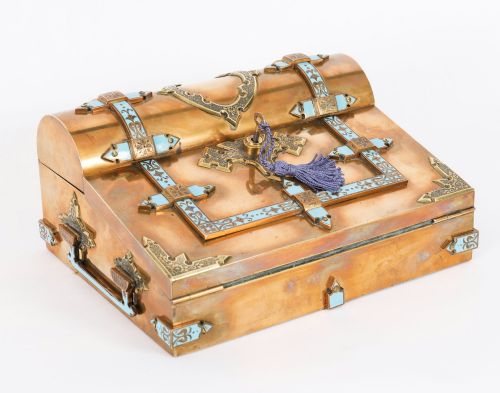
Stylistic cues such as Gothic revival brass mounts or Arts and Crafts pokerwork help narrow the period. Reference dates provided in individual descriptions offer further chronological context.
How were these boxes used?
Owners kept paper, envelopes, pens, and inkwells inside them on library tables and desks. Some caskets functioned as portable writing desks or document repositories.
Interior compartments organised correspondence while locking lids secured private papers. Presentation boxes served ceremonial purposes or held special gifts.
Where should I place a writing casket at home?
These boxes suit placement on desks, side tables, and chests of drawers where their wood grains and brass mounts remain visible. Tabletop letter cases and stationery boxes function well in studies and living rooms.
Keeping them out of direct sunlight protects delicate veneers like coromandel and burr walnut. The interior compartments continue to hold small modern items or stationery.