
Antique Work Stand
These antique work stand pieces bring period utility to a room through specialised surfaces and compartments designed for needlework, writing, and sorting.
Antique Work Stand
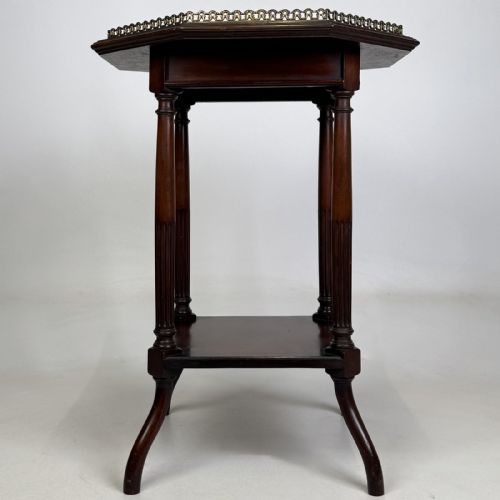
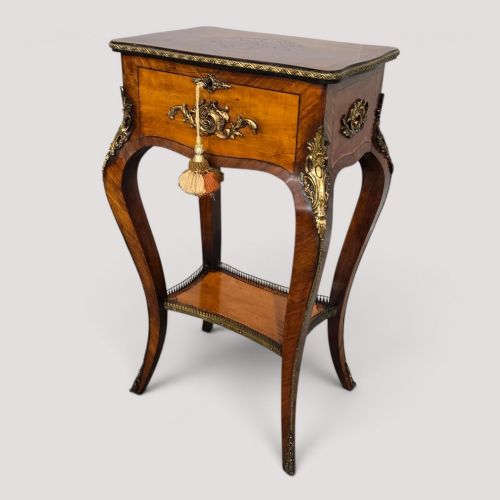
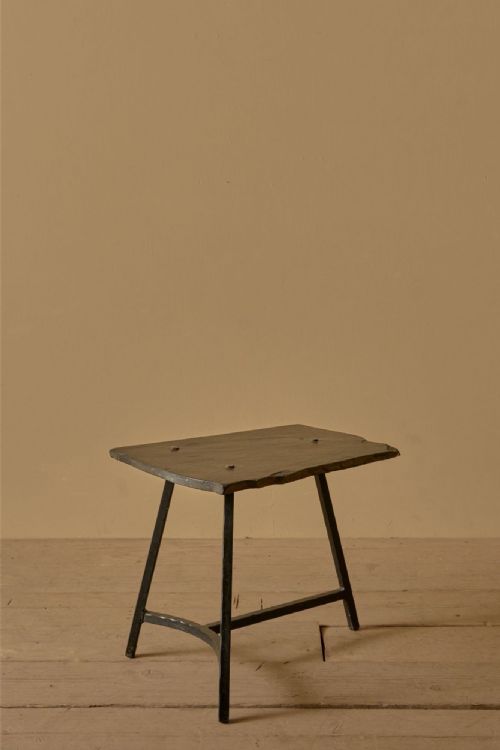
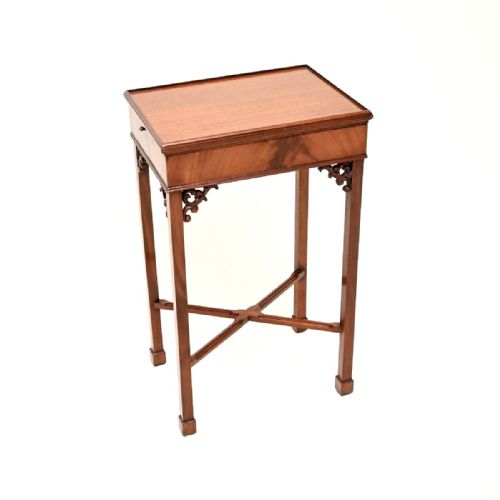
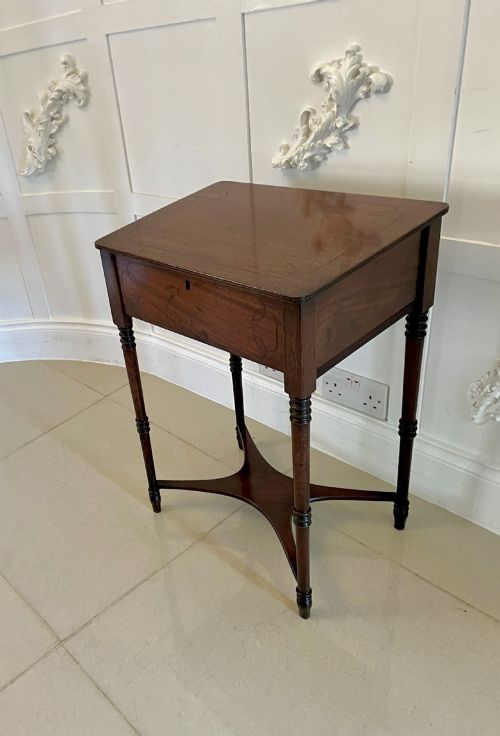
An antique work stand encompasses small tables, boxes on stands, and specialised furniture designed to hold sewing materials, writing equipment, and needlework supplies. The items span the Georgian, Victorian, and Edwardian periods, appearing in forms such as sewing tables, tapestry needlepoint stands, and desk stands.
Buyers will most frequently encounter Victorian walnut and fruitwood examples featuring fitted interiors, lift lids, or stretcher frames for textile work. These pieces combine compact proportions with practical storage compartments intended for domestic handcrafts.
How they were made
Construction relies on traditional cabinet timbers including walnut, satinwood, mahogany, and fruitwood, often shaped into small tables or compartmented boxes. Joinery methods reflect the period of origin, from Georgian cabinetwork to Victorian production.
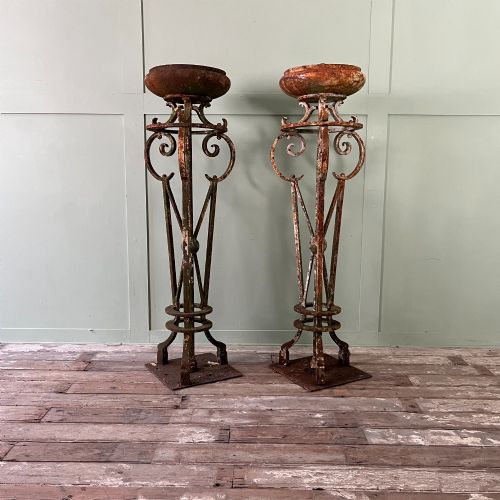
Surface decoration incorporates boulle work with tortoiseshell and brass inlay, marquetry, painted finishes, and gilded details. Metal elements such as brass wirework, iron frames, and fitted inkwells appear alongside textile components like needlepoint and tapestry stretcher frames.
Some Victorian work stands doubled as secret repositories for miniature embroidery scissors and stray buttons.
What varies in quality
Quality shows in the precision of the timber selection and the execution of decorative details like brass inlay, marquetry, and Boulle work. Finer examples maintain original fitted interior compartments and well-preserved textiles on needlework frames.
The sophistication of the turning, the joinery of the support structure, and the integration of the work box with its stand dictate the standing of an individual piece.
Mappin & Webb·Betty Joel
The Antique Work Stand Glossary
- Boulle work
- The technique of inlaying brass and tortoiseshell into furniture surfaces, popular in Napoleon III pieces. This decorative method creates striking contrast on small desk stands and table tops.
- Needlepoint
- A type of canvas work embroidery stretched on frames found on textile stands. It provides a patterned decorative surface for period sewing furniture.
- Satinwood
- A pale, lustrous timber utilised for fine cabinet work and dressing furniture during the Georgian and Edwardian eras. Its grain offers a smooth, golden visual texture.
- Fruitwood
- A dense, light-coloured timber sourced from fruit-bearing trees used in regional and occasional furniture. It yields a sturdy frame with subtle grain patterns.
- Canterbury
- A small compartmentalised stand designed for holding music sheets or books, occasionally fitted with work tops. This form combines shelving tiers with lower storage sections.
Antique Work Stand: Frequently Asked Questions
What is an antique work stand used for?
These stands served domestic purposes such as holding sewing supplies, needlepoint stretching frames, writing materials, and small documents. Their fitted interiors kept handcraft tools organised within reachable parlor spaces.
Today, they function as compact side tables or decorative storage surfaces in sitting rooms and studies.
How do I date a Victorian work stand?
Dating relies on timber choices, such as walnut and papier-mâché, combined with characteristic decorative motifs like Boulle work and needlepoint inserts. Construction techniques and hardware styles help narrow the decade of origin.
Comparison with documented archive pieces from the mid to late nineteenth century confirms specific production periods.
Are work stands and sewing tables the same thing?
They overlap significantly, as many work stands incorporate sewing boxes, silk bags, or needlework frames into their design. Some focus purely on desk accessories or writing supplies rather than textiles.
Both categories prioritize compartmented storage elevated on legs or a central pedestal.
How do I live with an antique work stand?
Place them beside seating where their lift-lids or tabletop surfaces can be accessed easily for holding small items. Keep them away from direct heat sources to protect delicate veneers and interior silk linings.
Their small scale allows them to fit into tight corners and alcoves without overwhelming a room.