



Antique Woodland Art
Antique woodland art brings the quiet depth of forest paths and shaded streams indoors through centuries of painting, print and tapestry.
Antique Woodland Art
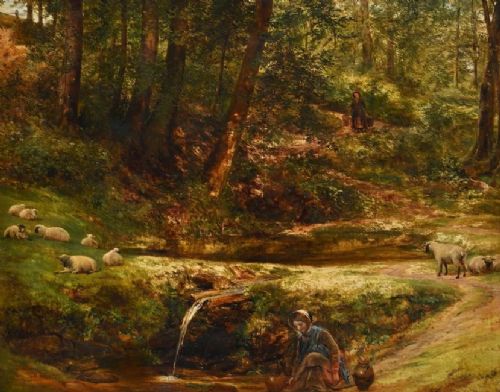
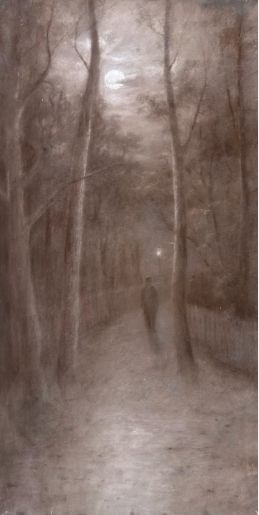
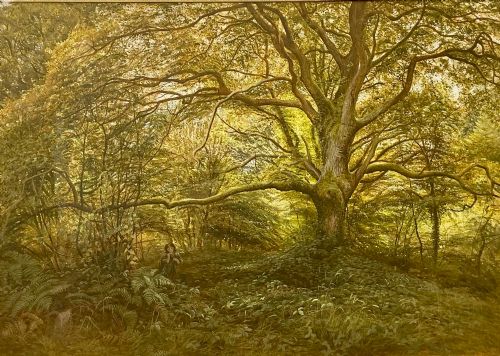
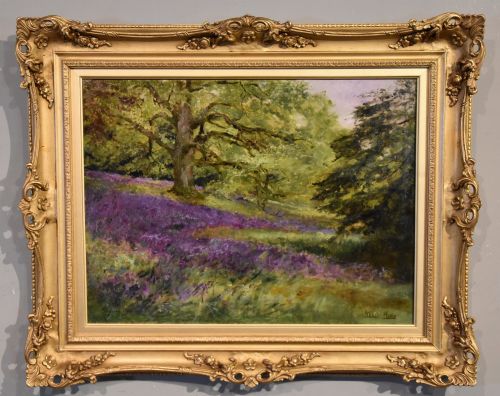
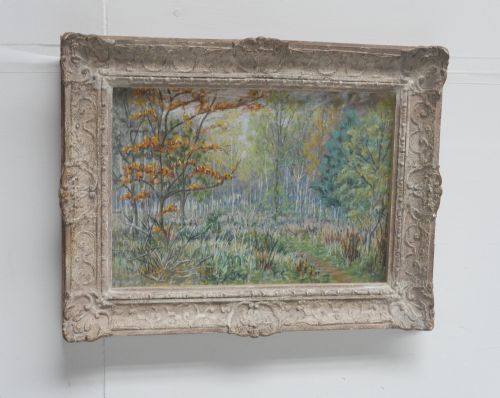
When you search for antique woodland art, you encounter oil paintings, watercolours, charcoal drawings and prints depicting trees, forest glades and shaded waters. These works span from the seventeenth century through to the mid-twentieth century, capturing changing seasons in British and European landscapes.
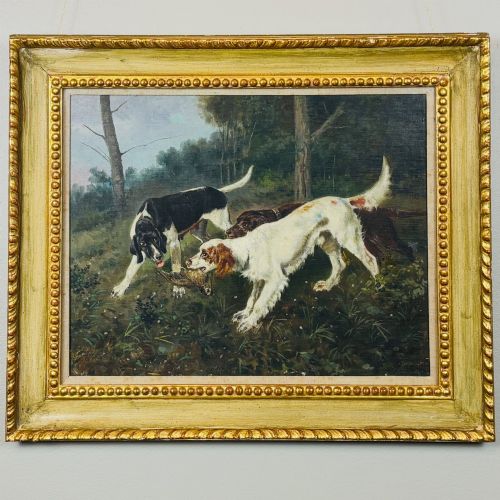
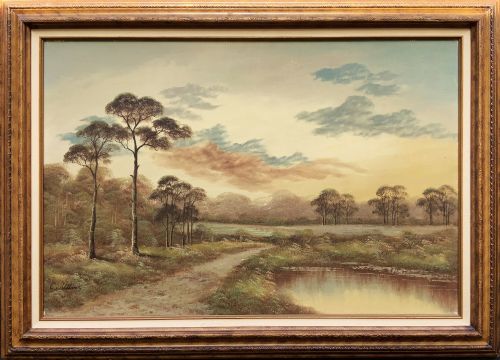
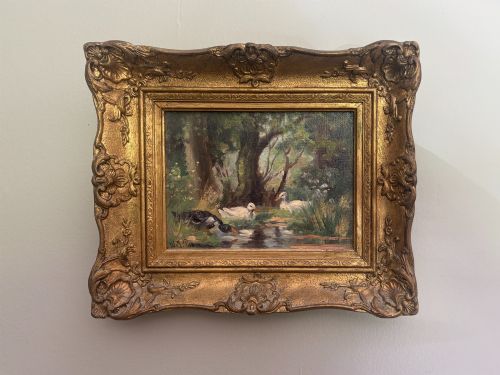
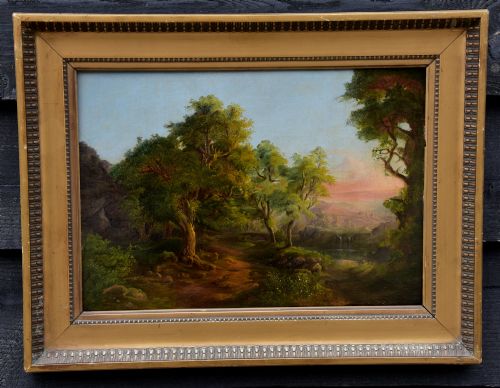
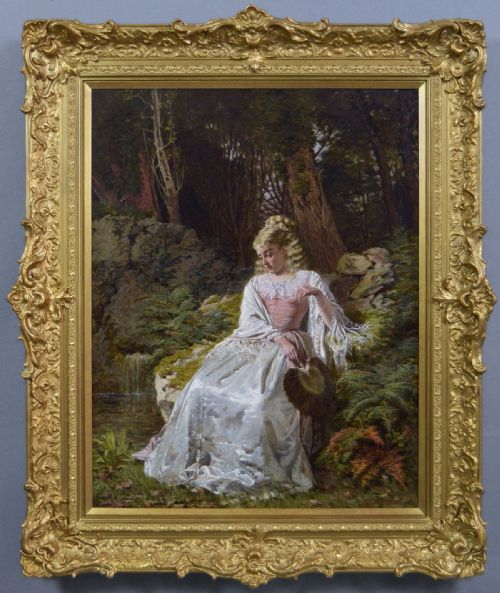
The most common examples on this page are nineteenth-century and Edwardian oil paintings and watercolours on canvas, paper or board. Many pieces present serene rural scenes, riversides under tree cover or mythological figures placed within forest settings.
How these pieces were made
Artists painted in oil or watercolour onto prepared canvas, paper, wood panels or board, often applying gesso to create a smooth ground. Prints utilise techniques such as collotype to reproduce original imagery with fine tonal graduation.
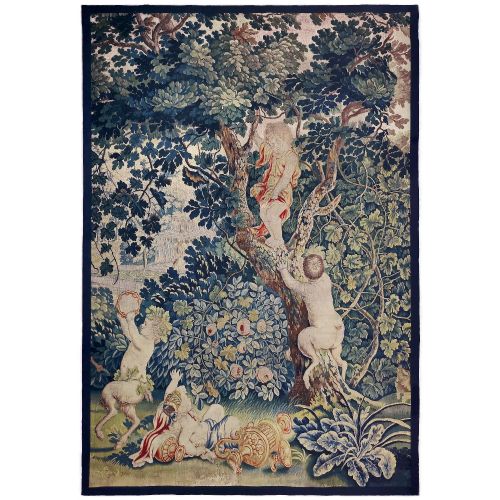
Tapestries employ woven threads to build verdure scenes of woodland foliage and landscape details by hand on vertical or horizontal looms.
Antique Woodland Art Retail Price Guide 2026
Typical asking prices for woodland art among the pieces listed under this phrase on Sellingantiques today, from the lower quarter to the upper quarter. They describe what is for sale here now, not the wider market.
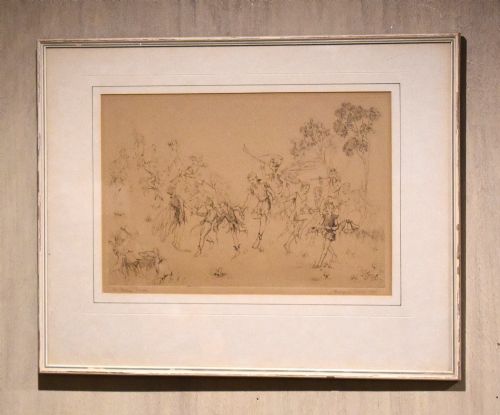
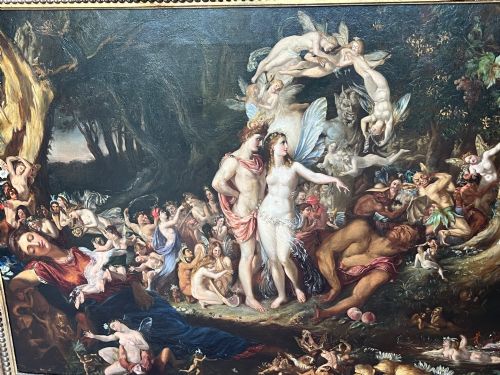
Fairies, stags and wood nymphs share these shaded forest paths with cattle and firewood gatherers.
What varies in quality
Quality rests in the artist's command of light beneath a forest canopy and the subtlety with which foliage, bark and water are rendered. Stronger works display confident brushwork and a balanced composition that suggests depth and atmosphere.
Material preservation also marks the distinction between pieces, with untouched original surfaces and stable supports holding greater artistic integrity than heavily restored or degraded examples.
Marjorie L Davies·Willem J Palman·Sir Joseph Noel Paton·William H Myers·Sir Peter Lely·Richard Redgrave·Paul Désiré Trouillebert·Bonomi Edward Warren·Henry Yeen King·Arthur Herbert Rigg·Thomas Bromley Blacklock·William Hoggatt·Thomas Edward Roberts·James Mallard Bromley·Clarence Henry Roe·David Watts·William Mellor·Alfred Grey·Henri Joseph Harpignies·John Wright Oakes·Walter Follen Bishop·James Proudfoot·Rowland Henry Hill·Edmund George Warren·Abraham Hulk Jnr
The Antique Woodland Art Glossary
- Verdure tapestry
- A wall hanging woven with a predominant theme of foliage, trees and landscape, often produced in Flemish workshops during the seventeenth and eighteenth centuries.
- Collotype
- A planographic printing process using gelatin, capable of producing highly detailed monochrome or colour facsimiles of original artworks.
- Barbizon School
- A nineteenth-century French movement of painters who focused on direct observation of nature and forest landscapes, exemplified by artists like Trouillebert and Harpignies.
- Gesso
- A traditional paint mixture consisting of a binder mixed with chalk, plaster or pigment, used to prepare wood panels or canvas for painting.
- Watercolour
- A painting method where water-soluble pigments are suspended in a water-based solution, typically applied to paper to create translucent washes.
Antique Woodland Art: Frequently Asked Questions
What periods do these pieces cover?
The works span from the seventeenth-century Dutch school and Flemish tapestries through nineteenth-century Victorian realism and impressionism into the mid-twentieth century.
Most items originate from the nineteenth and early twentieth centuries, reflecting changing landscape painting traditions across Britain and Europe.
How should I care for antique watercolours?
Watercolour paintings on paper require careful placement away from direct sunlight to prevent fading of pigments and discolouration of the paper support.
Framing with acid-free mounts and UV-filtering glass helps protect these delicate works from environmental damage over time.
What subjects appear besides trees?
Many forest scenes incorporate rivers, streams, cattle watering, or figures gathering firewood beneath the canopy.
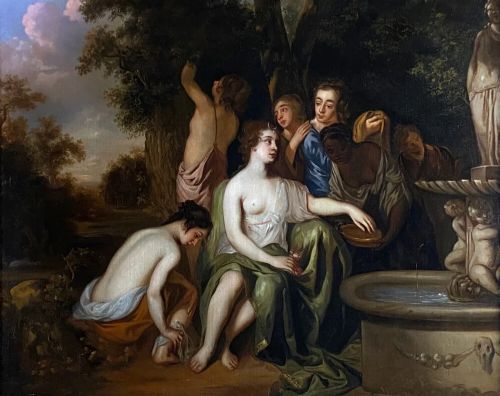
Other works introduce literary, classical, or mythological elements such as fairies, Shakespearean characters, and classical figures like Diana.
How do I distinguish oil paintings from watercolours?
Oil paintings utilise viscous pigments suspended in drying oils, applied thickly enough to show visible brush texture on canvas, board or wood panels.
Watercolours feature translucent washes of pigment on paper or card, allowing the reflective quality of the white ground beneath to show through.