

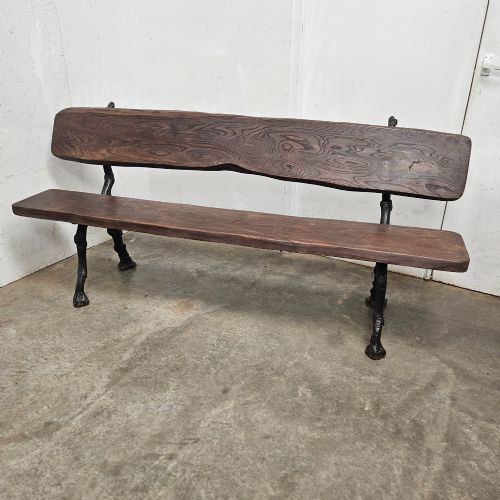
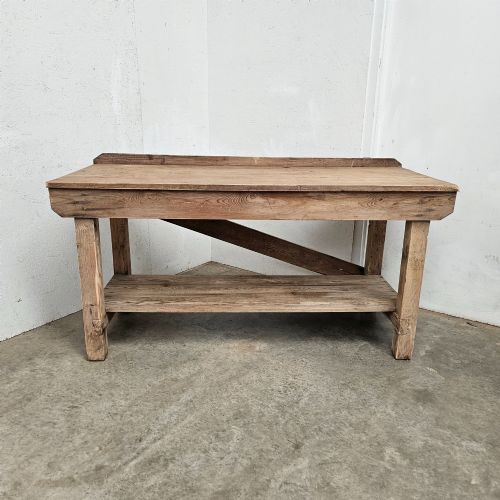
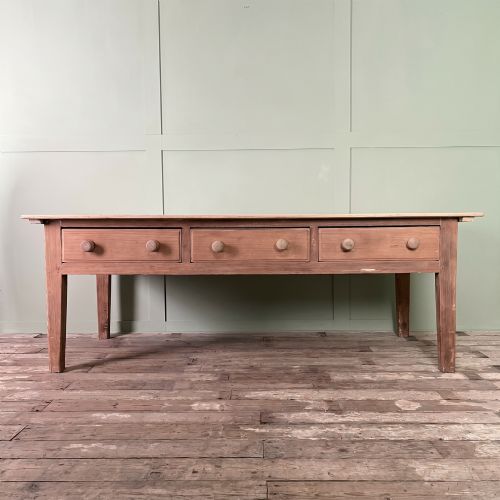
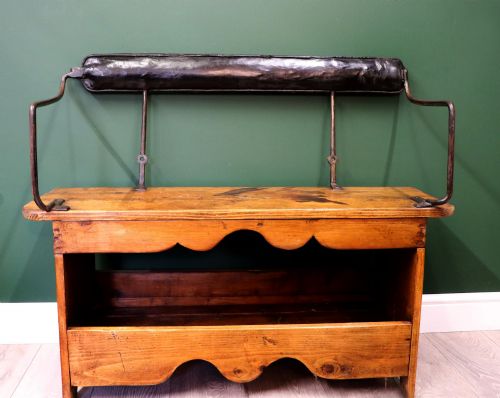


Antique Wooden Work Bench
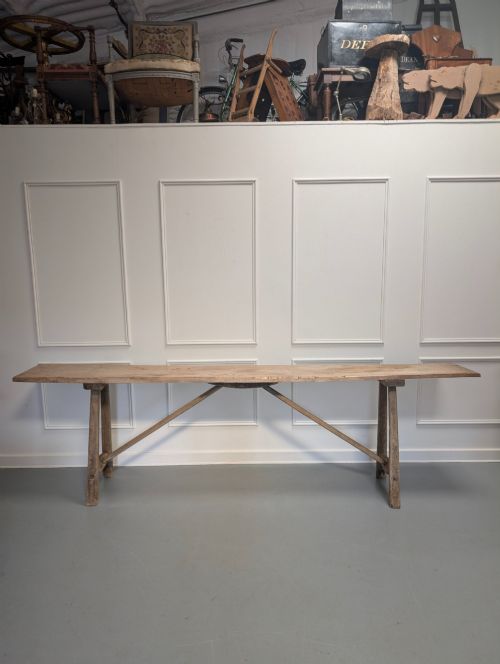
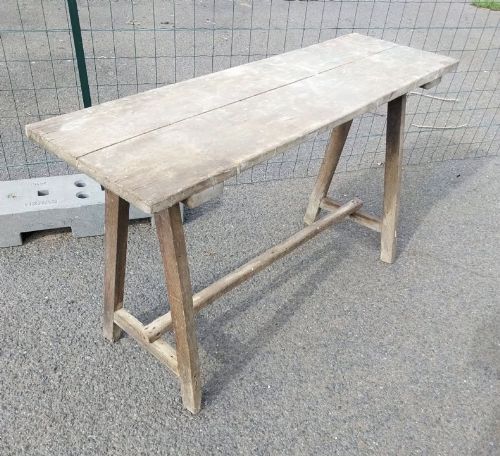
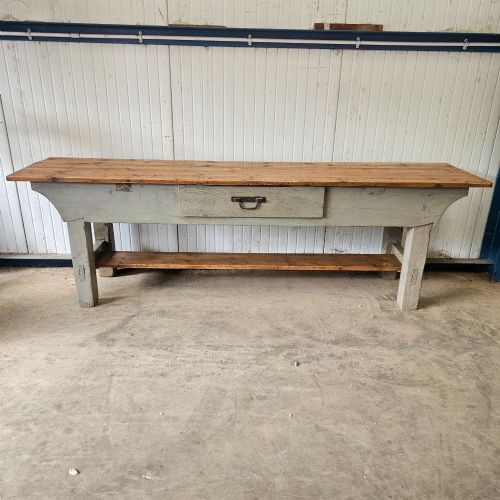
An antique wooden work bench brings honest, hard-working character and robust utility into a modern room.
Antique Wooden Work Bench
When you search for an antique wooden work bench, you are looking at heavy-duty functional furniture born from trade, horticulture, and domestic preparation. These pieces span the eighteenth, nineteenth, and early twentieth centuries, encompassing Edwardian examples alongside earlier regional workshops.
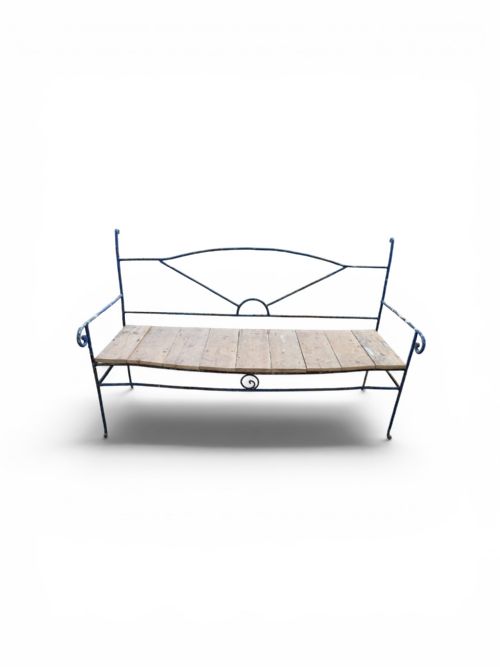
The selection here leans heavily towards utilitarian forms transformed from their original trades. You will find French artisans' benches complete with vices, potting tables, dairy prep tables, and drapers' tables sitting alongside rustic farmhouse and garden benches.
Materials reflect pure practicality, combining heavy timbers with ironwork where strength was paramount. These surfaces bear the authentic marks, stains, and patinas of daily labour, making them distinct from purely decorative period furniture.
How they were made
Construction relies on solid, honest timber construction designed to withstand intense daily toil. Pine, oak, elm, sycamore, and general timber provide the thick tops and sturdy frames, while cast iron and wrought iron add structural reinforcement and mechanical operation through vices and brackets.
Surfaces show the natural results of hard use, scrubbed finishes, and occasional surviving layers of paint such as distressed green or verdigris copper. Joinery is straightforward and robust, prioritising stability over decorative flair.
Antique Wooden Work Bench Retail Price Guide 2026
Typical asking prices for wooden work bench among the pieces listed under this phrase on Sellingantiques today, from the lower quarter to the upper quarter. They describe what is for sale here now, not the wider market.
Listings feature pieces built from pine, oak, elm, sycamore, cast iron, and wrought iron across the eighteenth, nineteenth, and Edwardian periods.
What varies in quality
Quality in these utility pieces lies in the integrity of the surviving timber and the honesty of the wear. A bench with retained working components, such as a functional wooden vice, carries more direct historical connection to its trade.
Proportion and substance dictate distinction, from large trestle forms to compact potting tables. The depth of the natural patina accumulated through generations of trade use separates a compelling survivor from a plain assembly.
The Antique Wooden Work Bench Glossary
- Patina
- The surface sheen and texture developed through decades of handling, cleaning, and exposure to work. It acts as the visual shorthand for an object's age and history.
- Trestle
- A structural support consisting of a horizontal beam fixed to two splayed pairs of legs. This design offers maximum legroom and exceptional weight-bearing capacity for heavy work tables.
- Verdigris
- A green patina or crust that forms naturally on copper or brass over time through atmospheric oxidation. It frequently appears on metal tops exposed to garden environments.
- Faux bois
- A decorative technique mimicking wood grain, executed in concrete, metal, or plaster. It allows weather-resistant garden furniture to carry organic visual warmth.
Antique Wooden Work Bench: Frequently Asked Questions
How do I clean an old work bench?
Preserve the historical surface by simply dusting with a dry cloth and applying clear beeswax sparingly to nourish dry timber.
Avoid aggressive chemical strippers or modern varnishes that destroy the accumulated patina and character built up over centuries of use.
Are these benches sturdy enough for daily use?
These pieces were originally built to endure heavy trade work, carpentry, and preparation tasks, making them inherently robust for modern living.
Their solid pine, oak, and elm frames easily handle everyday demands as kitchen islands, sideboards, or writing desks.
Can I use an indoor work bench outside?
Most antique wooden benches constructed for indoor trades, dairies, or kitchens lack weather-resistant treatments and will degrade if left exposed to damp conditions.
Reserve untreated pine and indoor tables for interior spaces, leaving specifically designated garden benches for outdoor placement.
How do I date an antique work bench?
Examine the tool marks, construction methods, and timber species to establish an approximate period of origin. Hand-sawn boards and pegged joinery point towards eighteenth and early nineteenth-century production.
Compare the form against documented regional styles like French provincial artisans' tables or English vernacular country pieces for closer attribution.