





Antique Wooden Trinket Cabinet
These antique wooden trinket cabinets offer small-scale storage for valuables, combining period craftsmanship with compact utility.
Antique Wooden Trinket Cabinet
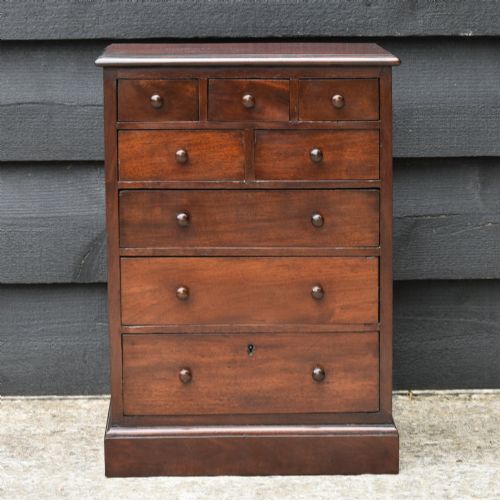
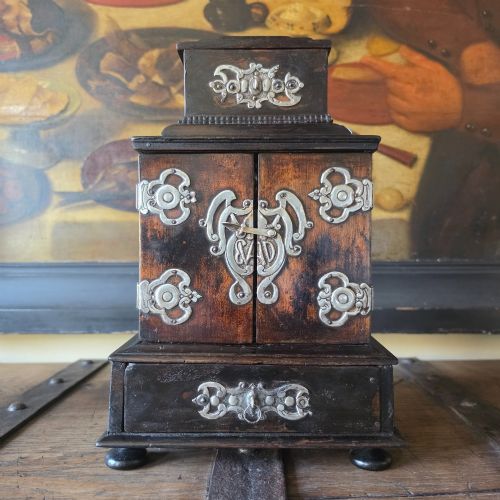
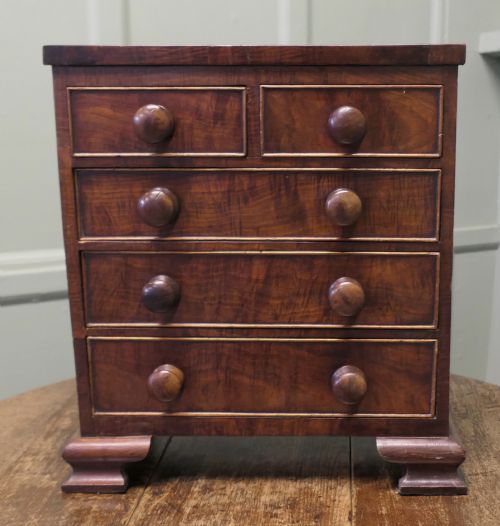
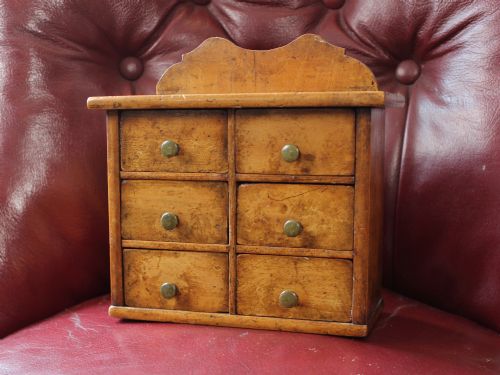
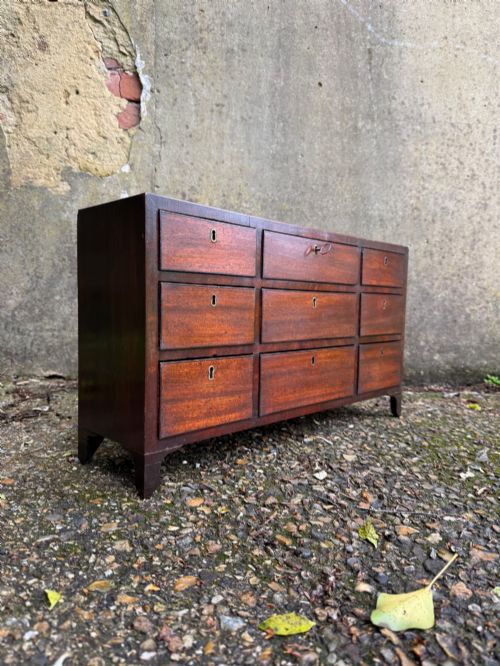
An antique wooden trinket cabinet serves as a small repository for precious items, taking forms such as miniature chests of drawers, table cabinets, and jewellery chests. These pieces span the 18th century, Georgian, Victorian, and Edwardian periods, reflecting domestic storage needs of past eras.
Buyers are most likely to encounter mahogany and walnut miniature chests of drawers among these listings. Other variations include spice drawers, collector chests, and compactum wardrobes designed for tabletop or small surface placement.
Origins range widely across British, Continental, Anglo-Indian, Ottoman, and Japanese traditions. Each style brings distinct regional characteristics to the construction and surface ornamentation of the small cabinet.
Materials and construction methods
Makers utilised hardwoods including mahogany, walnut, rosewood, fruitwood, and oak for the primary carcases. These woods were frequently chosen for their grain pattern and durability in small-scale cabinetry.
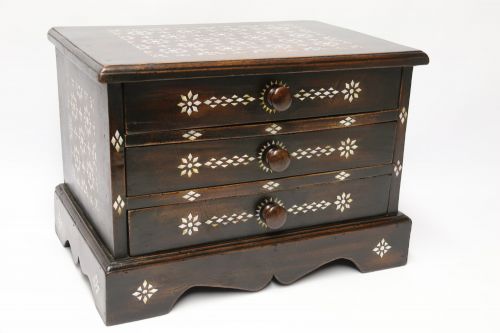
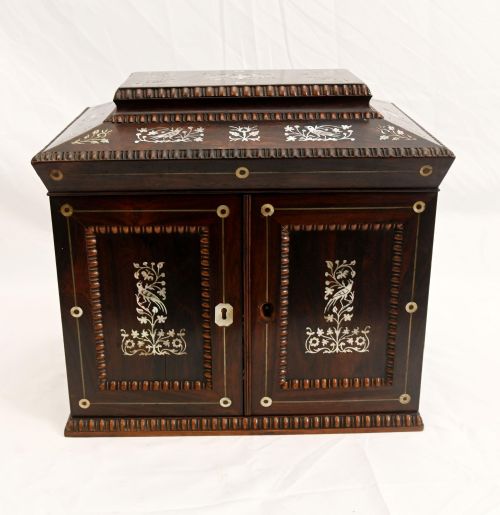
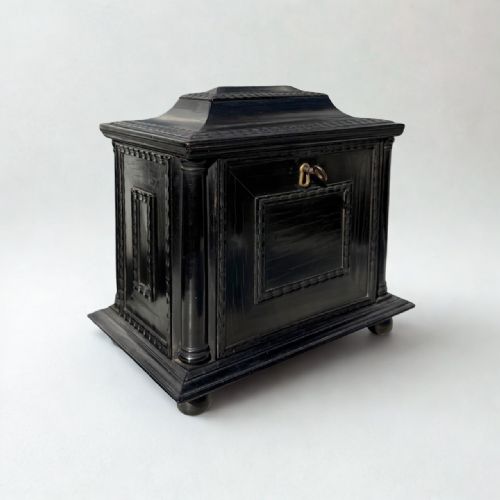
Decorative surfaces often incorporate inlay of mother-of-pearl, bone, brass, or parquetry work. Finishes range from natural polished timber to black lacquer and ebony treatments depending on the regional origin and period style.
Listings feature mahogany, walnut, rosewood, and oak timbers alongside decorative additions of brass, bone, and mother-of-pearl.
Distinctions in quality
Quality in these small cabinets rests on the precision of the joinery and the selection of timber figures. Superior examples show careful attention to drawer linings, dovetail joints, and balanced grain matching across the front facades.
The sophistication of secondary materials also separates categories, with elaborate mother-of-pearl inlay, fine brass hardware, or intricate parquetry indicating higher workshop input. Simpler vernacular pieces rely on honest utility rather than decorative flourishes.
The Antique Wooden Trinket Cabinet Glossary
- Miniature furniture
- Small-scale replicas or apprentice pieces made to demonstrate a cabinetmaker's skill or serve specific tabletop functions. These items duplicate the proportions and construction methods of full-sized furniture.
- Parquetry
- Geometric mosaic woodwork applied to a surface to form decorative patterns. This technique appears on tabletops and casket lids using contrasting timber veneers.
- Apprentice piece
- A project executed by a trainee craftsman to prove competency before gaining master status. They often take the form of miniature chests of drawers.
- Compactum
- A fitted wardrobe or multi-compartment cabinet designed to hold a variety of garments or small items efficiently. Edwardian versions appear among these tabletop and floor variants.
- Flight of drawers
- A vertical arrangement of multiple small drawers housed within a single cabinet frame. Georgian examples are particularly noted for this configuration.
Antique Wooden Trinket Cabinet: Frequently Asked Questions
What is an apprentice piece?
An apprentice piece is a small-scale model built by a craftsman in training to demonstrate mastery of woodworking techniques. These items display the exact joinery and proportions of standard furniture.
They were kept by the maker as proof of skill or used in domestic settings for storing small valuables.
How were tabletop cabinets used?
Tabletop cabinets provided secure storage for jewellery, trinkets, letters, and spices in the home. Their small footprint allowed them to sit on desks, dressing tables, or sideboards.
Owners kept their most treasured personal effects inside, often locking the main door or drawers for security.
How do I date an antique cabinet?
Dating relies on identifying the primary wood species, construction techniques like dovetailing, and stylistic markers from periods such as the Georgian or Victorian eras. Secondary materials like brass hardware and mother-of-pearl inlay also offer chronological clues.
Comparing the overall form to dated examples in the record helps narrow down the decade of manufacture.
Are all miniature cabinets English?
No, the selection includes pieces from various global traditions including Anglo-Indian, Ottoman, Japanese, and Flemish workshops. Each region contributed distinct decorative vocabularies and timber choices.
Materials such as black lacquer or exotic hardwoods point directly to these diverse geographical origins.