
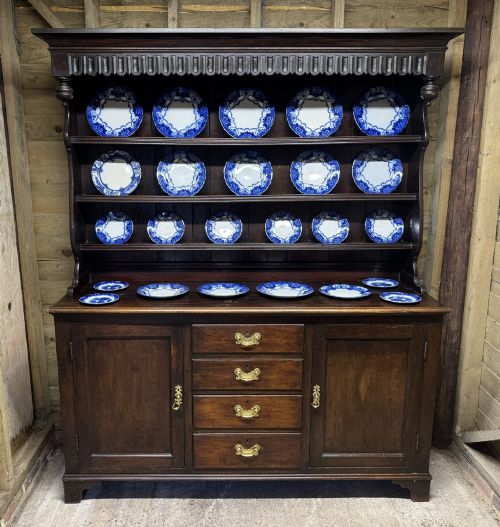
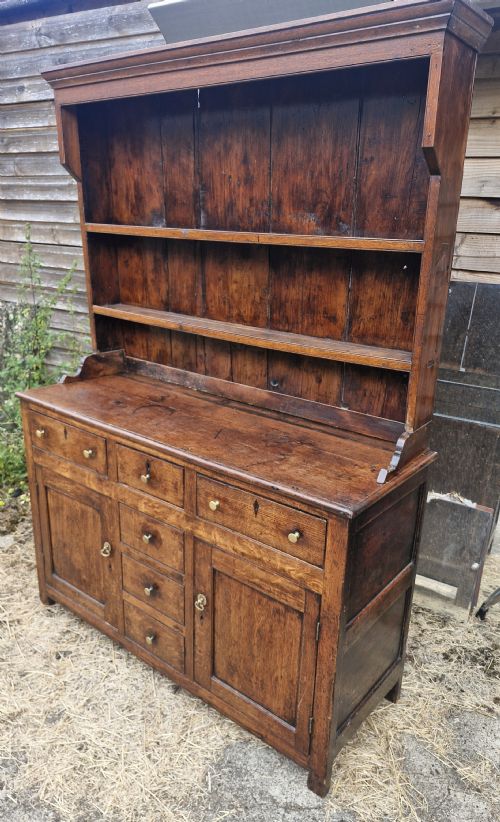
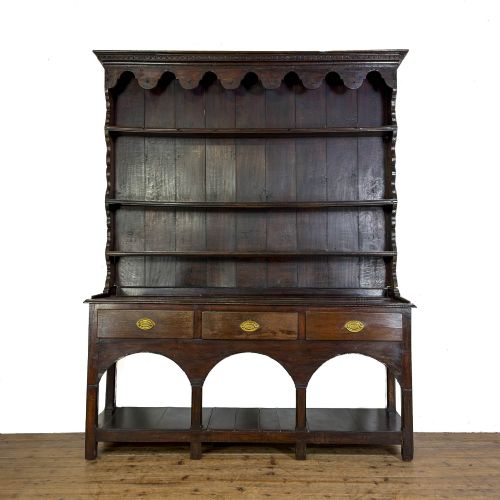
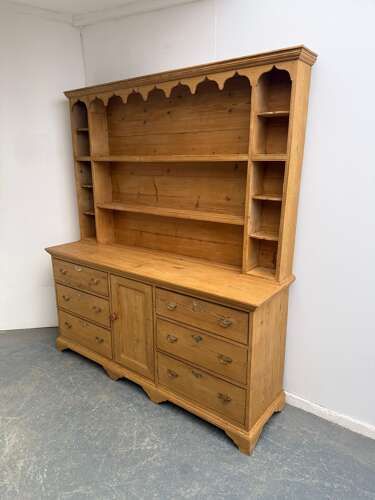
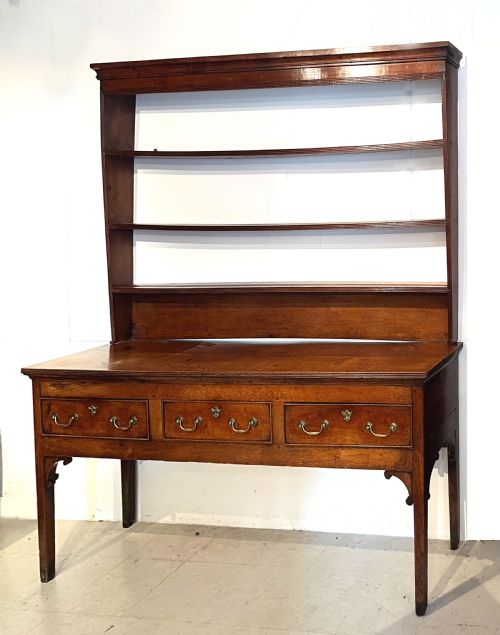


Antique Wooden Sideboard Rack
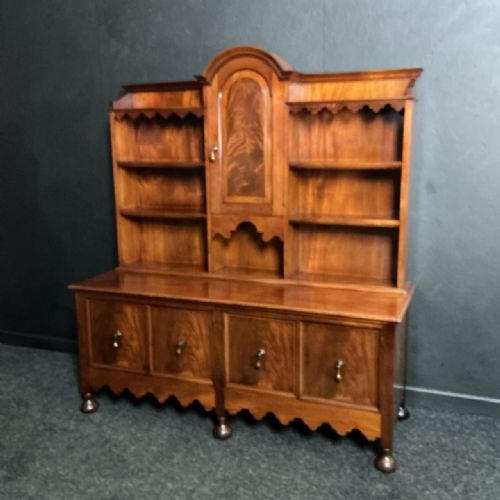
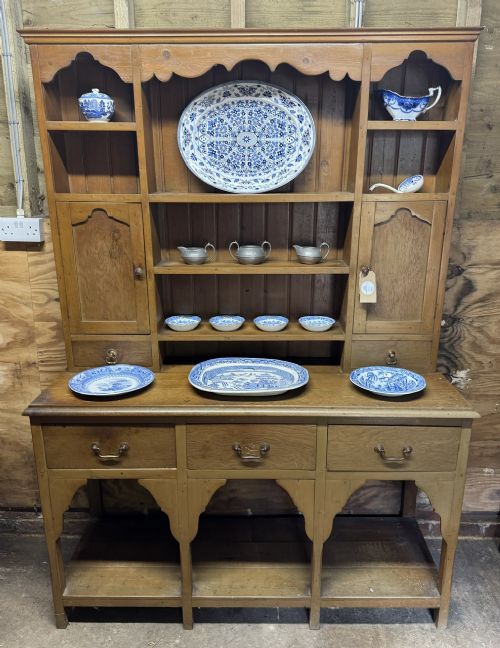
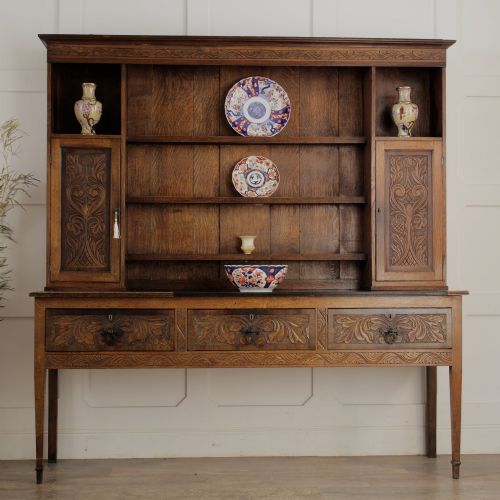
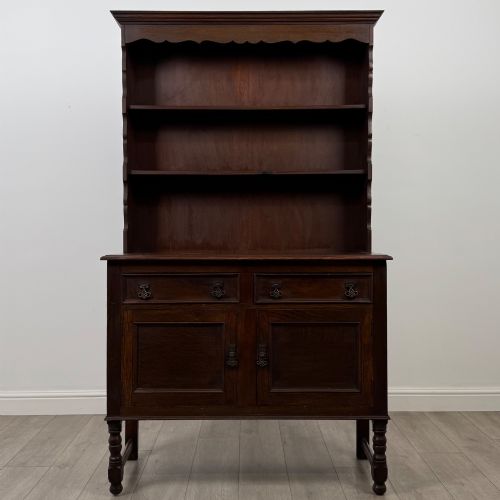
An antique wooden sideboard rack tops a robust base, holding plates and platters ready for daily service.
Antique Wooden Sideboard Rack
An antique wooden sideboard rack brings together a lower storage base and an upper display framework designed for holding ceramics. When searching for an antique wooden sideboard rack, buyers frequently encounter substantial country pieces originating from the eighteenth and nineteenth centuries. These items combine open plate shelving with cupboards or drawers below to handle household tableware.
The format ranges from compact cottage versions in pine and oak to grand two-part Welsh and French Provincial designs. Many pieces display regional vernacular characteristics, particularly from English, Welsh, and French rural workshops.
Lower sections serve as sideboards or buffets, sometimes incorporating potboards or wine racks beneath the main surface. The upper rack fastens securely to the back, presenting grooved plate rails and hooks for mugs or hanging utensils.
How these pieces were made
Carpenters constructed these frameworks predominantly using native timbers such as oak, pine, elm, and walnut, selecting boards for strength and grain pattern. Cabinetmakers joined carcases using pegged mortise and tenon joints, securing backboards with handmade iron nails or wooden screws.
Surfaces received hand-planed finishes, wax polish, or early paint layers that accumulated natural wear and patination over decades of domestic use. Upper racks often featured shaped friezes and plate grooves cut at angles to prevent crockery from slipping forward.
Available forms include compact cottage dressers, two-part Welsh examples, and painted pine kitchen furniture from the Victorian era.
What varies in quality
Structural integrity and the survival of original surface finishes separate standard utility furniture from exceptional examples. Timber selection dictates overall refinement, with tight-grained oak, burr walnut, and figured elm commanding greater appreciation.
Originality remains paramount, distinguishing pieces that retain their matching upper racks, original brass or iron hardware, and untouched patination from those assembled from mismatched components later in their history.
The Antique Wooden Sideboard Rack Glossary
- Potboard
- An open lower shelf fitted beneath a dresser base for storing heavy pots and pans. This platform sits just above the floorboards.
- Plate rack
- The upper shelving unit attached to a dresser base, featuring grooved ledges to display plates upright. These structures often incorporate small spice drawers or hooks.
- Patina
- The surface sheen and colour developed through years of handling, polishing, and natural oxidation. Genuine age creates depth that modern chemical finishes cannot replicate.
- Two-part dresser
- A form built as separate upper and lower sections that bolt or peg together for transport. This construction method helped tradesmen move heavy furniture into rural cottages.
Antique Wooden Sideboard Rack: Frequently Asked Questions
What is a sideboard rack used for?
These assemblies served as the central storage and display unit in historic kitchens and dining rooms. The lower cupboards held heavy cookware and linens, while the upper shelves exhibited prized ceramic plates.
Today, owners utilise the upper racks for displaying kitchenware in modern dining spaces while keeping tableware concealed below.
How do I know if the rack is original to the base?
Examine the timber species, wear patterns, and mounting points where the upper rack joins the lower sideboard. Matching wood grain, consistent ageing, and compatible peg holes indicate that both sections grew old together.
Subtle discrepancies in colour or fasteners often suggest a marriage of two separate antique elements.
Which woods are most common?
Oak and pine dominate regional British and European examples, reflecting the local timber available to rural carpenters. Elm frequently appears in structural parts and drawer linings due to its resistance to splitting.
Finer urban pieces occasionally utilise walnut or fruitwood veneers over secondary pine carcases.
How do I care for an antique wooden rack?
Maintain stable indoor humidity levels to prevent the historic timber from shrinking or cracking over seasonal shifts. Apply a microcrystalline wax sparingly to nourish the dry wood surface.
Avoid placing these heavy wooden assemblies near direct heat sources or strong sunlight that might fade the antique finish.