

Antique Wooden Rail
An antique wooden rail brings enduring utility to a room, holding textiles or garments with simple, grounded grace.
Antique Wooden Rail
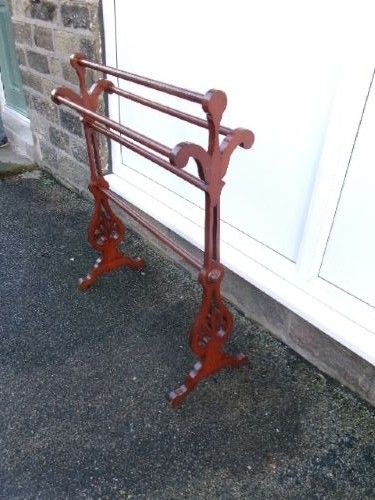
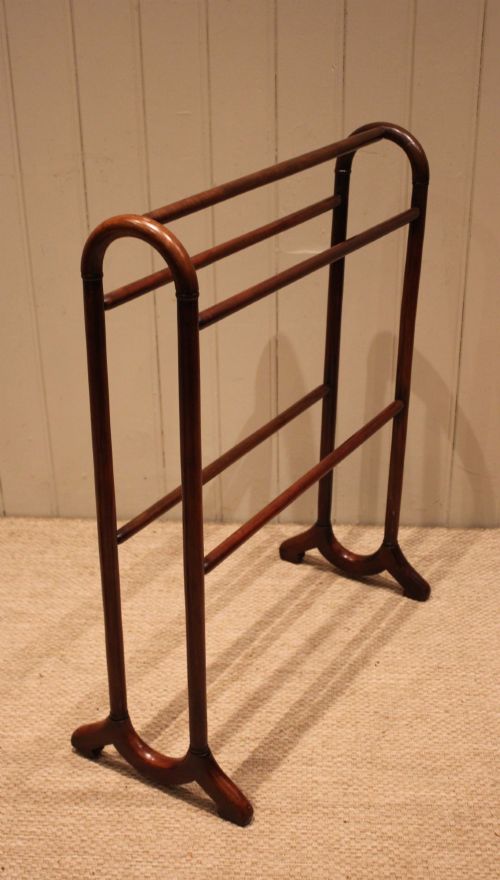
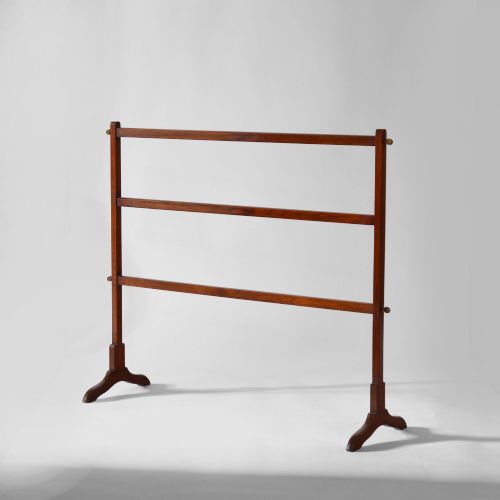
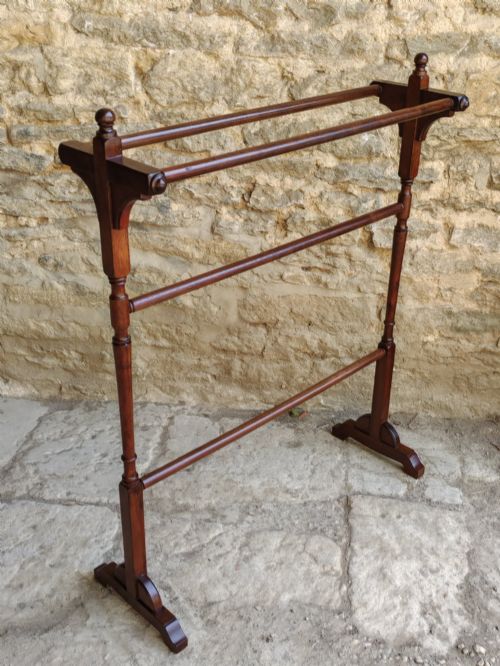
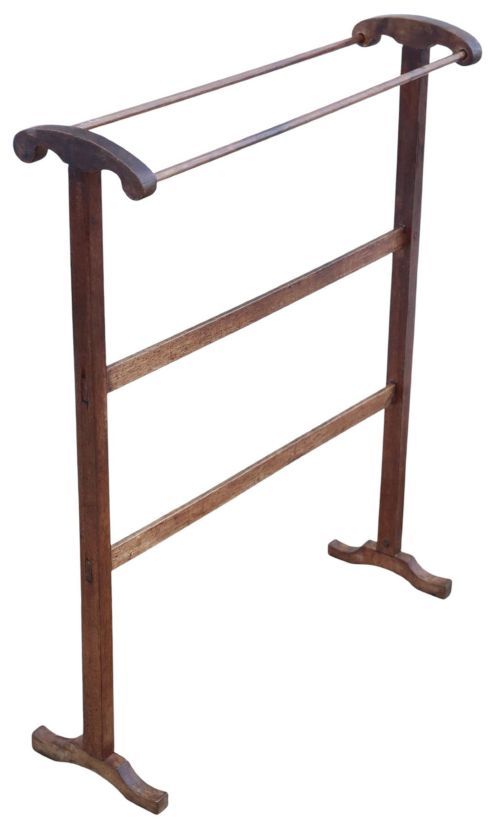
An antique wooden rail encompasses practical household furnishings designed for utility, predominantly appearing on this page as towel rails, clothes racks, and coat racks from various eras. Buyers seeking an antique wooden rail will find pieces spanning the Victorian, Edwardian, and Regency periods, alongside late nineteenth and early twentieth century examples.
Materials and construction methods
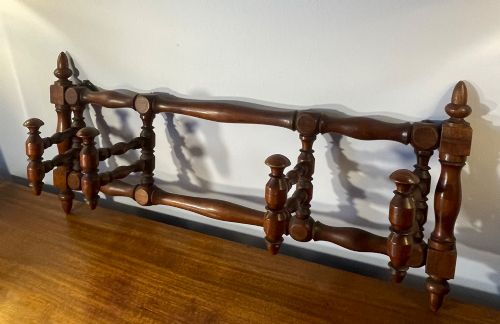
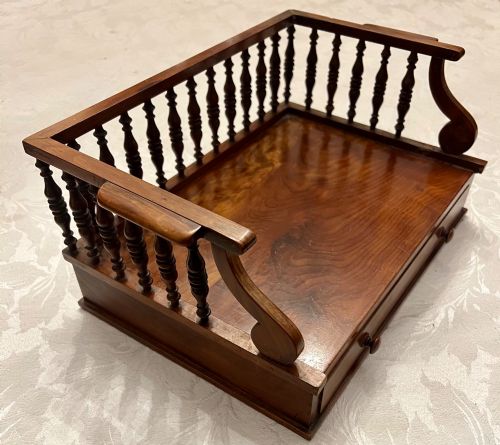
Makers utilised dense hardwoods such as mahogany and oak for structural durability, often turning the timber on a lathe to create shaped uprights and stretchers. Pine and walnut also appear in the evidence, providing alternative bases for wall-mounted racks and folding stands.
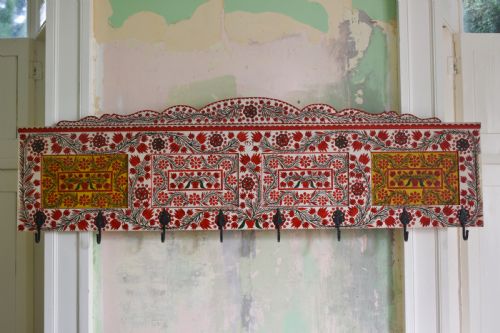
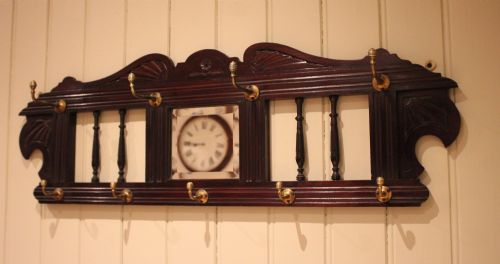
Metal and ceramic elements frequently complement the woodwork, with brass brackets, cast iron fittings, and ceramic hooks secured to wooden backboards. Folding mechanisms rely on hinged wooden frames that allow the rails to adjust or collapse when not in use.
Antique Wooden Rail Retail Price Guide 2026
Typical asking prices for wooden rail among the pieces listed under this phrase on Sellingantiques today, from the lower quarter to the upper quarter. They describe what is for sale here now, not the wider market.
Listings span the nineteenth and early twentieth centuries, featuring Victorian, Edwardian, and Regency periods alongside materials such as mahogany, brass, oak, and pine.
Distinctions in quality
Quality in these pieces rests upon the selection of timber and the precision of the joinery rather than ornate decoration. Superior examples display carefully turned spindles, stable frames, and securely seated metal or ceramic hardware.
The integration of materials also defines the tier of a piece, where solid mahogany structures paired with original cast brass or ceramic hooks demonstrate finer manufacture than simpler utilitarian variants.
The Antique Wooden Rail Glossary
- Towel rail
- A freestanding or wall-mounted frame designed for holding and drying towels. These fixtures often feature multiple horizontal bars for practical domestic use.
- Coat rack
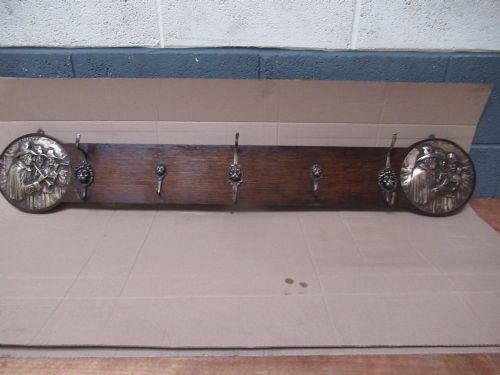
- A wall-mounted wooden board or freestanding stand fitted with hooks for hanging garments and hats. They frequently incorporate brass or ceramic fixtures.
- Mahogany
- A durable tropical hardwood prized for its reddish-brown colour and fine grain. It forms the primary structural timber for many nineteenth-century furnishings.
- Turned leg
- A wooden component shaped on a lathe to create decorative cylindrical profiles. This technique appears widely on upright supports and stretchers.
Antique Wooden Rail: Frequently Asked Questions
What is an antique wooden rail used for today?
These rails serve practical storage and display functions in modern homes. They hold towels in bathrooms or organise garments in hallways and bedrooms.
Their traditional designs integrate easily into contemporary interiors while maintaining historical character.
How do I identify a Victorian wooden rail?
Victorian examples typically feature dark hardwoods like mahogany or walnut. They often display turned spindle work and robust joinery characteristic of the nineteenth century.
Wall-mounted versions frequently combine the timber backboard with cast brass or ceramic hooks.
Were these rails wall-mounted or freestanding?
Both formats exist within the evidence for this search phrase. Freestanding versions include folding towel rail stands and clothes racks.
Wall-mounted variants consist of wooden backboards fitted with multiple metal or ceramic coat hooks.
What woods were used for these rails?
Makers predominantly employed mahogany, oak, and pine for these domestic fixtures. Hardwoods provided strength for load-bearing rails and freestanding frames.
Pine frequently served as the backing material for wall-mounted coat racks fitted with hooks.