






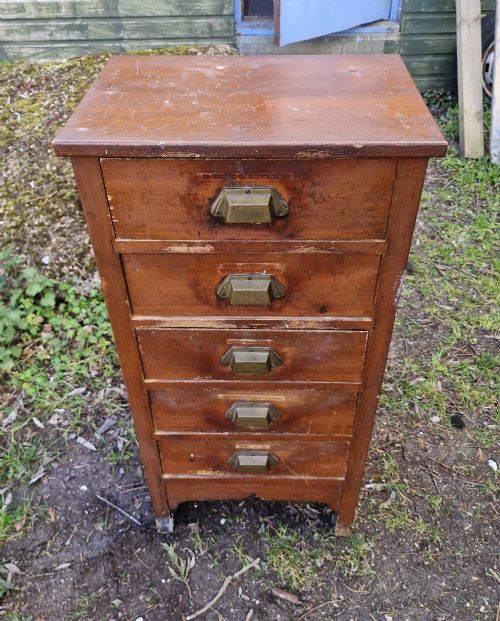
Antique Wooden Office Chest
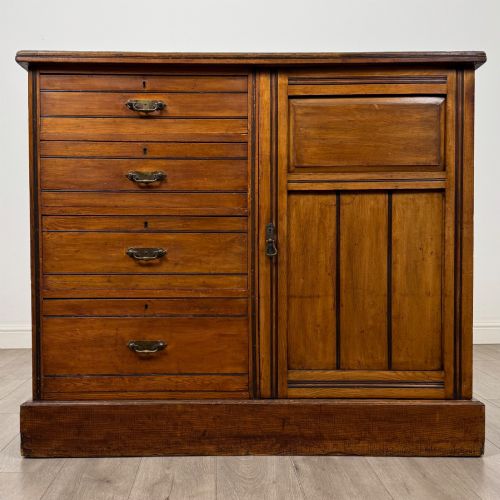
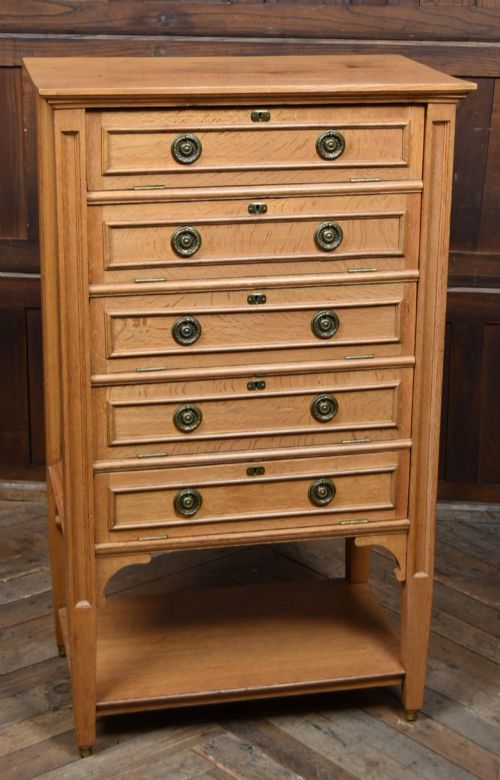
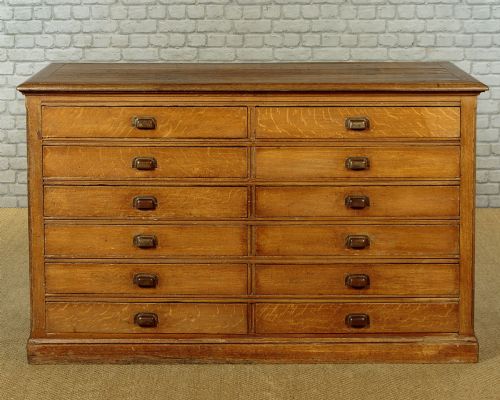
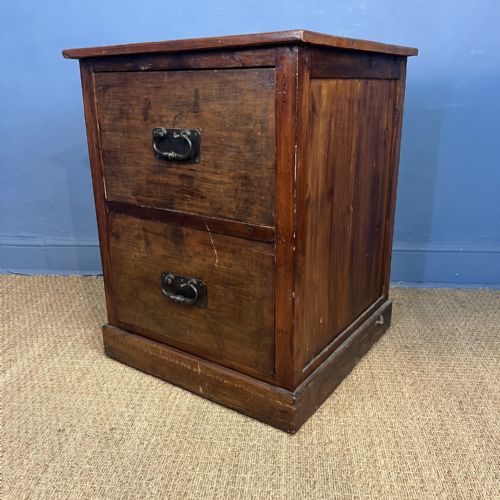
An antique wooden office chest brings practical storage into a room, spanning filing cabinets, banks of drawers, and modular filing units.
Antique Wooden Office Chest
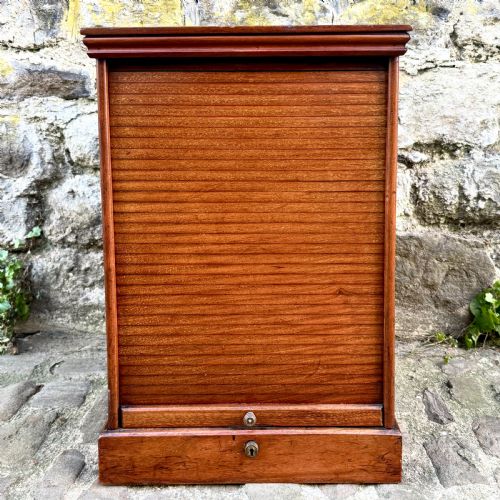
An antique wooden office chest serves working and storage roles, appearing most frequently as oak or mahogany filing cabinets and multi-drawer banks dating from the Edwardian period and the early twentieth century. Pieces range from tambour front cabinets and index drawers to larger modular banks designed for systematic document storage.
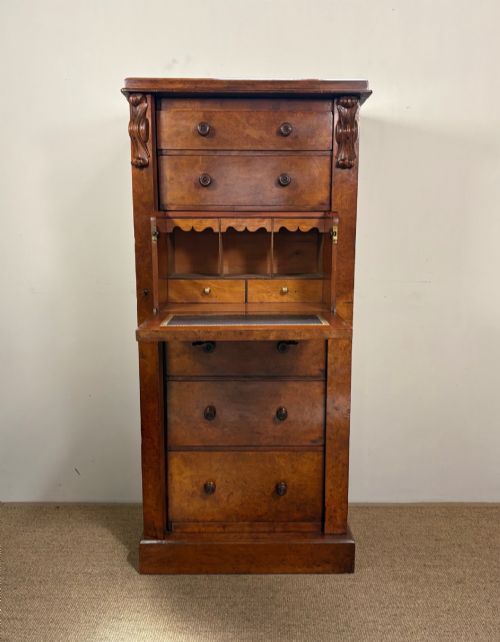
The selection includes specific functional forms such as Wellington chests, music cabinets, and bureau desks alongside specialised letter files. Originating from commercial and domestic settings, these items adapt readily to contemporary interiors while retaining their original mechanical details.
How they were made
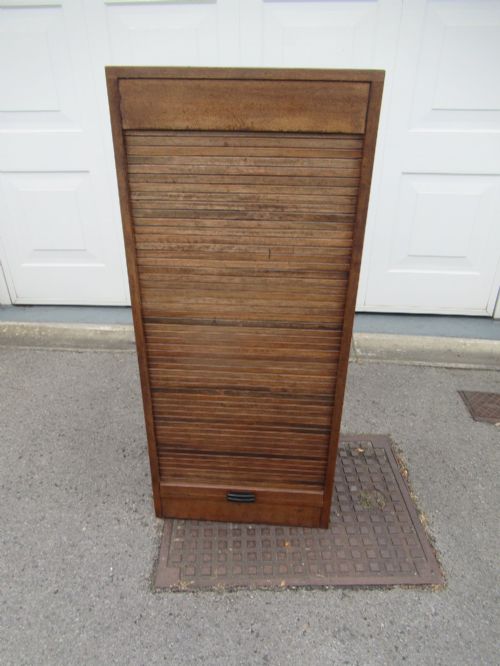
Construction relies heavily on durable hardwoods like oak, mahogany, and walnut, frequently paired with secondary softwoods such as pine and beech for internal framing and drawer construction. Tambour fronts utilise narrow wooden slats glued to canvas backings to slide smoothly within curved grooves.
Hardware components combine brass pulls and handles with iron mechanisms, patent locking bars, and specialised internal dividers. Cabinetry techniques encompass dovetailed drawer joints and panelled sides designed to withstand daily commercial use.
Antique Wooden Office Chest Retail Price Guide 2026
Typical asking prices for wooden office chest among the pieces listed under this phrase on Sellingantiques today, from the lower quarter to the upper quarter. They describe what is for sale here now, not the wider market.
Patent filing systems by makers like Amberg and Shannon appear alongside standard tambour front cabinets and workshop banks.
What varies in quality
Quality shows in the selection of timber veneers, the precision of tambour mechanisms, and the integrity of internal drawer dividers. Examples bearing maker stamps or patent systems reflect higher manufacturing standards.
Superior execution is evident in well-figured mahogany or quarter-sawn oak grains, intact brass hardware, and smoothly operating multi-drawer banks that maintain structural rigidity under heavy loads.
Maple & Co·Shannon·Amberg
The Antique Wooden Office Chest Glossary
- Tambour
- A flexible sliding door made of narrow vertical wooden strips attached to a fabric backing. This mechanism allows the door to track around a curved corner and conceal the interior compartments.
- Wellington chest
- A tall, narrow chest of drawers secured by a locking side flap hinged to one side. The flap fastens with a padlock or key to secure all drawers simultaneously.
- Quarter-sawn oak
- Timber cut radially to the growth rings to produce a distinctive decorative grain pattern often called medullary rays. This cutting method also provides greater dimensional stability.
- Secretaire chest
- A cabinet featuring a fitted writing drawer that pulls down to reveal small pigeonholes and compartments. The drop-front surface serves as a compact desk.
- Bank of drawers
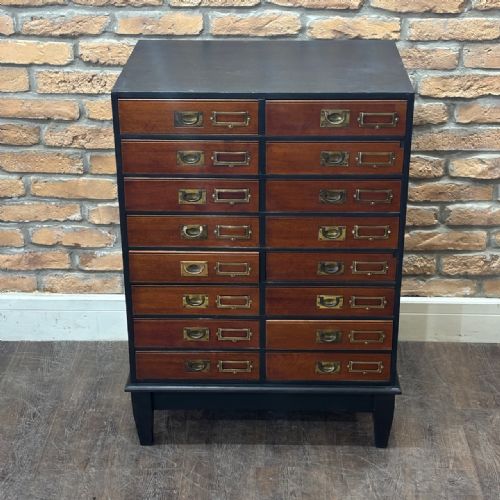
- A multi-drawer storage unit designed for commercial or institutional filing purposes. These pieces often contain numerous shallow drawers intended for papers and documents.
Antique Wooden Office Chest: Frequently Asked Questions
How do tambour doors work?
Tambour doors use a series of small horizontal or vertical wooden slats glued to a canvas backing. This flexible construction allows the entire shutter to slide smoothly along tracks cut into the cabinet frame.
Opening the compartment requires guiding the slats around a tight curve into the body of the cabinet. This design saves exterior space since no swing clearance is needed for doors.
What is an index filing drawer?
Index filing drawers are shallow compartments designed to hold standard-sized record cards or documents flat. They often incorporate internal brass or iron compression rods to keep papers upright and organised.
These units typically form part of larger modular filing systems used in early offices. Their shallow depth prevents documents from sliding around or bending during retrieval.
How are Wellington chests secured?
Wellington chests lock using a hinged vertical locking stile attached to one side of the case frame. When closed, this locking bar fastens over the edge of every drawer simultaneously.
Swinging the bar open allows individual access to each drawer in the stack. This single-point locking mechanism offered secure storage for valuable papers in nineteenth-century offices.
Where were multi-drawer cabinets used?
Multi-drawer cabinets served primarily in commercial offices, libraries, and workshops to sort correspondence, technical drawings, and records. Businesses relied on these modular banks to maintain orderly filing systems before modern steel furniture became standard.
Domestic spaces also utilised smaller variations as music cabinets or collectors' chests for specimens and documents. Their modular construction allowed offices to expand filing capacity as paper records accumulated.