




Antique Wooden Music Lectern
An antique wooden music lectern brings architectural dignity and practical function to a room, offering a sturdy perch for scores, books or papers.
Antique Wooden Music Lectern
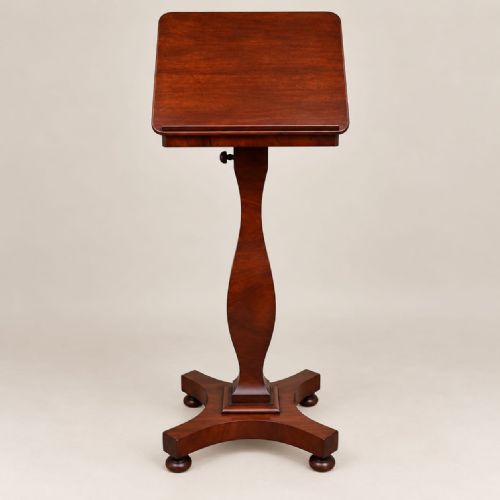
When you search for an antique wooden music lectern, you examine pieces designed to support reading and performance across the nineteenth and early twentieth centuries. The selection encompasses forms ranging from simple floor-standing reading tables to elaborate duet stands and ecclesiastical lecterns.
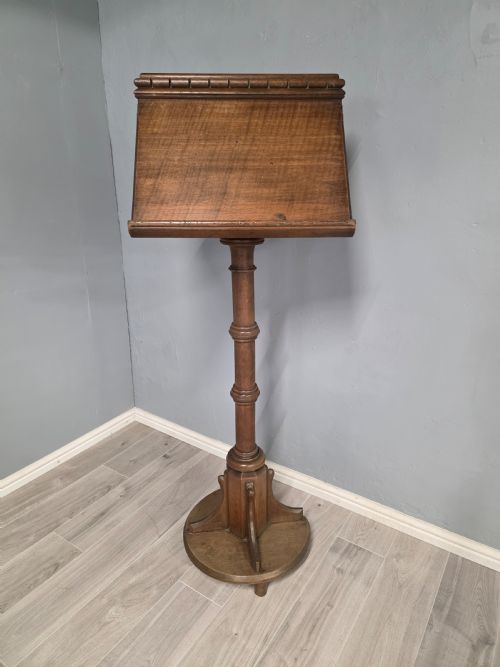
You are most likely to meet Victorian and Regency examples made from mahogany, oak or walnut. These pieces often feature adjustable mechanisms or carved details, serving as functional furniture or decorative focal points in domestic and church settings.
Materials and construction
Cabinet makers utilised dense hardwoods such as mahogany, walnut and oak to build these stands, frequently incorporating brass adjustments and iron fittings for movable parts. Timber selection prioritised stability and figured grain, particularly in reading tables and duet stands.
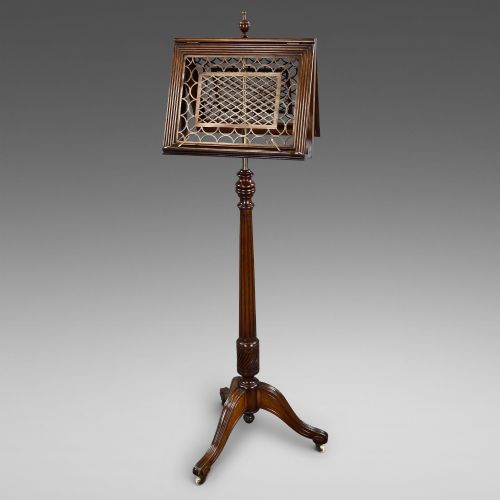
Construction techniques include turned pedestals, tripod bases and fretwork panels, alongside specialised ratchets and screws to alter height and angle. Inlaid satinwood and ebonised finishes occasionally supplement the primary timbers to provide decorative contrast.
Antique Wooden Music Lectern Retail Price Guide 2026
Typical asking prices for wooden music lectern among the pieces listed under this phrase on Sellingantiques today, from the lower quarter to the upper quarter. They describe what is for sale here now, not the wider market.
One nineteenth-century eagle lectern stares with carved wooden intensity, ready to declaim sermons to an empty hallway.
Judging quality
Quality rests upon the proportion of the timber, the crispness of the carving, and the engineering of the adjustable mechanisms. Superior pieces exhibit well-figured mahogany, walnut or oak paired with robust, smoothly operating brass or iron hardware that holds position securely.
Lesser examples display plain secondary woods, clumsy joints, or worn adjustment screws that fail to support weight effectively. The presence of refined details such as fretted music rests or finely turned columns elevates a piece within its period.
The Antique Wooden Music Lectern Glossary
- Duet stand
- A music stand designed to hold two scores simultaneously, often featuring wide desks or double ledges for two musicians.
- Reading table
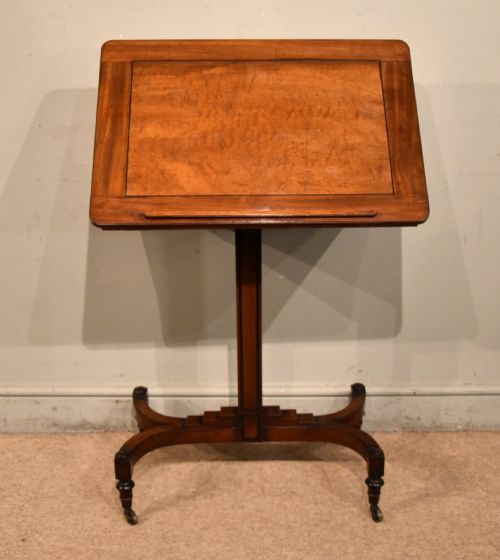
- A form of lectern incorporating a flat or adjustable top supported on a pedestal, suitable for books as well as sheet music.
- Gonçalo Alves
- A dense, highly figured exotic hardwood sometimes utilised in high-end nineteenth-century furniture construction.
- Tripod base
- A three-legged support structure commonly found beneath adjustable music stands to ensure stability on uneven floors.
- Fretted
- Ornamented with pierced or openwork carving, frequently seen on the music desks of better quality stands.
Antique Wooden Music Lectern: Frequently Asked Questions
What is the difference between a lectern and a music stand?
Lecterns generally incline at a fixed or adjustable angle suited for reading books or manuscripts, often in churches or libraries. Music stands frequently incorporate adjustable mechanisms specifically intended to hold sheet music for performers.
Historically, makers designed both forms with similar pedestals and reading ledges, leading to overlapping terminology in antique listings.
How do adjustable mechanisms work on these pieces?
Many nineteenth-century stands utilise brass screw keys, sliding wooden stems, or ratchets hidden behind the desk. These components allow the user to alter both the height of the column and the tilt of the reading surface.
Original hardware remains an important consideration when evaluating the integrity of an adjustable reading table or stand.
Where were these pieces used originally?
Antique wooden music lecterns served musicians in drawing rooms and concert spaces, and supported texts in churches, studies, and libraries. Smaller reading tables were placed beside chairs or desks for convenient access to reference volumes.
Ecclesiastical examples, such as carved eagle lecterns, originated strictly within church interiors for reading scriptures.
How do I care for an antique wooden lectern?
Keep wooden lecterns away from direct heat sources and strong sunlight to prevent the timber from drying out or splitting. Dust regularly with a soft, dry cloth and apply occasional appropriate wax polish to nourish the polished surface.
Avoid over-tightening adjustable brass screws to protect the internal threads from unnecessary wear.