


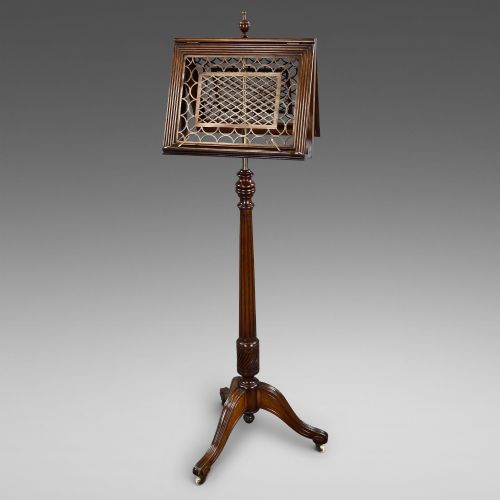
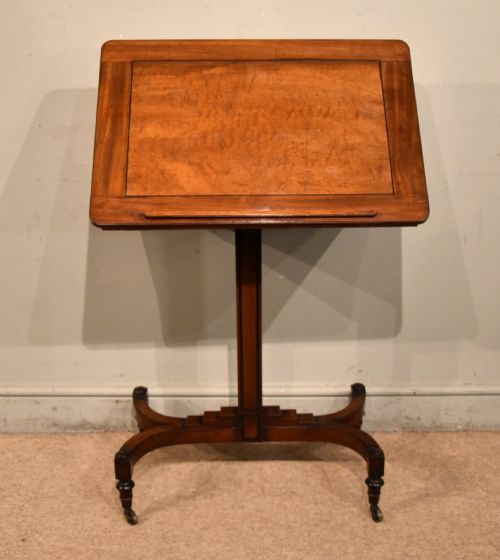
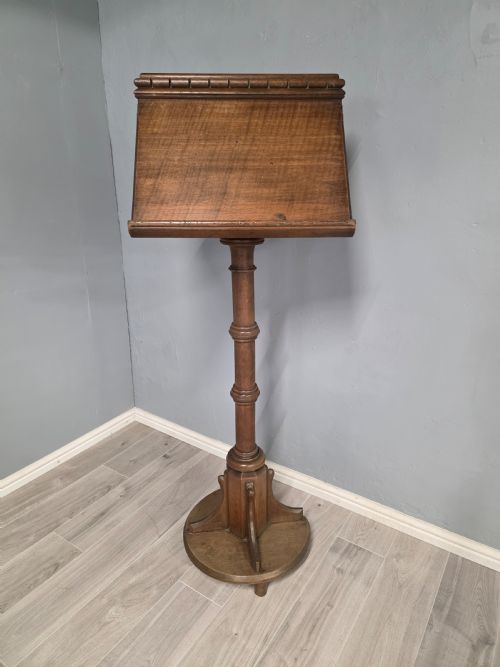


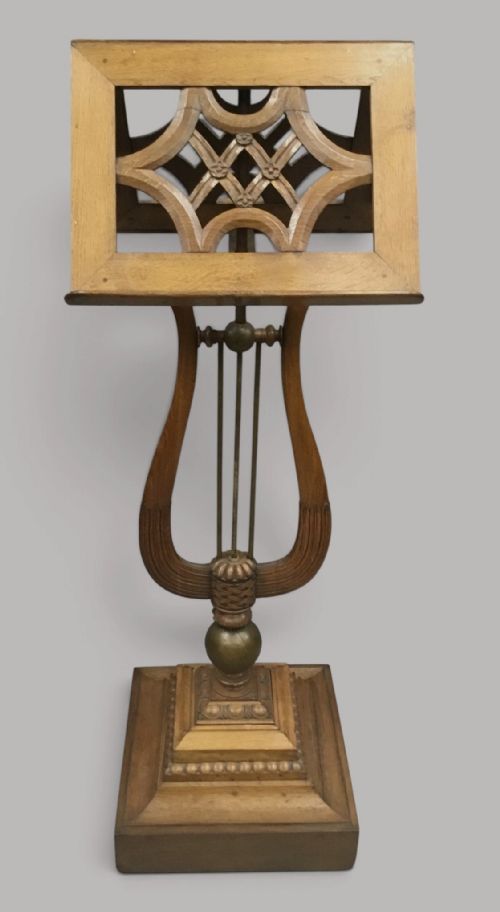

Standing Wooden Sheet Lectern
These standing wooden sheet lecterns are practical reading and music stands designed to hold bound volumes or loose leaves at a comfortable angle.
Standing Wooden Sheet Lectern
When you search for standing wooden sheet lecterns, you find adjustable book stands, reading tables, and music stands produced across the nineteenth century. These pieces appear in forms ranging from simple tripod music stands to elaborate duet music stands and heavy church lecterns.
The versions you are most likely to meet on this page date from the Victorian and Regency periods. They utilise woods such as mahogany, oak, walnut, and gonçalo alves, often featuring adjustable mechanisms for height and reading angle.
Makers designed these objects for use in studies, libraries, drawing rooms, and ecclesiastical settings. Their configurations vary from single reading desks to double-sided duet stands with fretted or inlaid music rests.
How they were made
Cabinetmakers constructed these lecterns using dense hardwoods such as mahogany, walnut, and oak, occasionally incorporating secondary timbers like pine in hidden structural parts. Turning, carving, and joinery formed the structural skeleton of tripod bases, adjustable columns, and folding reading ledges.
Surfaces often display decorative treatments such as satinwood inlay, burr walnut veneers, ebonisation, and brass fittings. Mechanical adjustment relied on robust metal ratchets, screws, and sliding stems housed within the central wooden pillars.
Standing Wooden Sheet Lectern Retail Price Guide 2026
Typical asking prices for standing wooden sheet lectern among the pieces listed under this phrase on Sellingantiques today, from the lower quarter to the upper quarter. They describe what is for sale here now, not the wider market.
Listings span the nineteenth and early twentieth centuries, featuring woods from native oak and mahogany to exotic gonçalo alves.
What varies in quality
The distinction between standard and finer examples rests upon the selection of timber and the complexity of the woodwork. Highly figured veneers, crisp hand-carving, and intricate fretted music rests separate utilitarian pieces from superior drawing-room furnishings.
The engineering of the adjustable mechanism also dictates quality. Smoothly operating brass screws, robust ratchets, and stable tripod or heavy base constructions indicate superior period craftsmanship designed for frequent daily adjustment.
The Standing Wooden Sheet Lectern Glossary
- Duet stand
- A music stand or lectern designed to accommodate two musicians or readers simultaneously, typically featuring a wider double desk.
- Tripod base
- A three-legged support structure commonly utilised on nineteenth-century music stands to ensure stability on uneven floors.
- Fretted
- Woodwork pierced with ornamental openwork patterns, frequently seen on the sheet-holding ledges of music stands.
- Gonçalo alves
- A dense exotic hardwood with distinctive figuring, occasionally utilised for nineteenth-century cabinet work and stands.
- Ebonised
- Wood stained or painted to imitate the appearance of ebony, a technique popular for nineteenth-century decorative furniture.
Standing Wooden Sheet Lectern: Frequently Asked Questions
What is a standing wooden sheet lectern?
A standing wooden sheet lectern is an adjustable piece of furniture designed to hold books, scores, or papers at a readable height and angle.
These pieces typically feature a central wooden column supported by a tripod or heavy base, topped by an angled reading desk.
How do you adjust the height?
Most period stands utilise a sliding wooden stem secured by a side screw or a metal ratchet mechanism housed within the central pillar.
Turning the key or screw allows the upper section to rise or lower before being locked firmly into position.
Where were they used?
These stands served various functions in nineteenth-century homes, churches, and institutional libraries.
Single versions sat in studies for reading folios, while wider duet stands appeared in music rooms for shared sheet music.
Are all the stands adjustable?
The majority of pieces recorded on this page feature adjustable mechanisms for height, reading angle, or both.
Makers built this versatility into music stands and reading tables so users could customise the desk position for sitting or standing.