



Antique Wooden Fire Guard
An antique wooden fire guard serves both a practical hearth purpose and displays needlework, spanning periods from Georgian to Victorian.
Antique Wooden Fire Guard
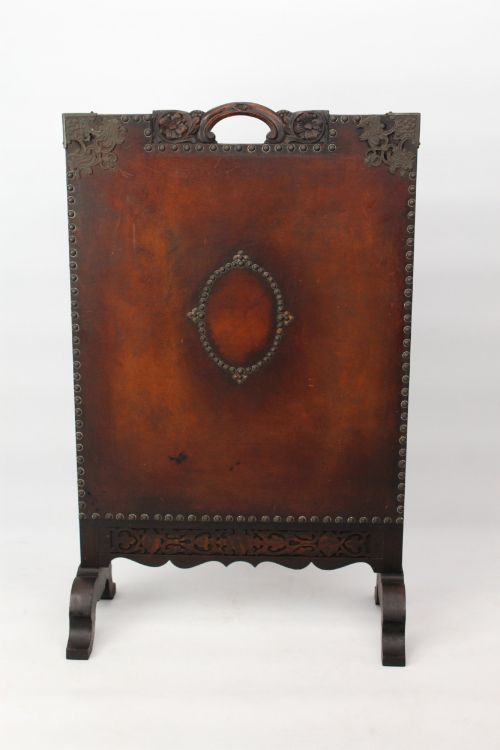
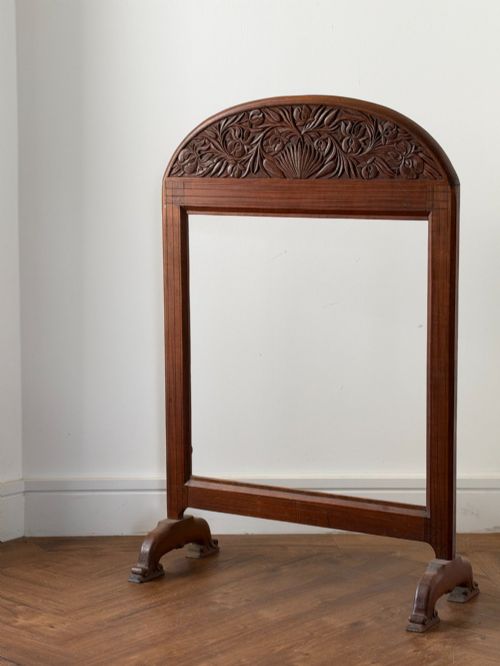
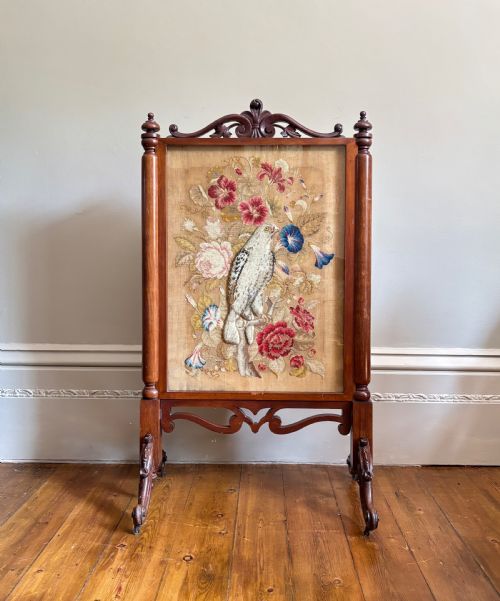
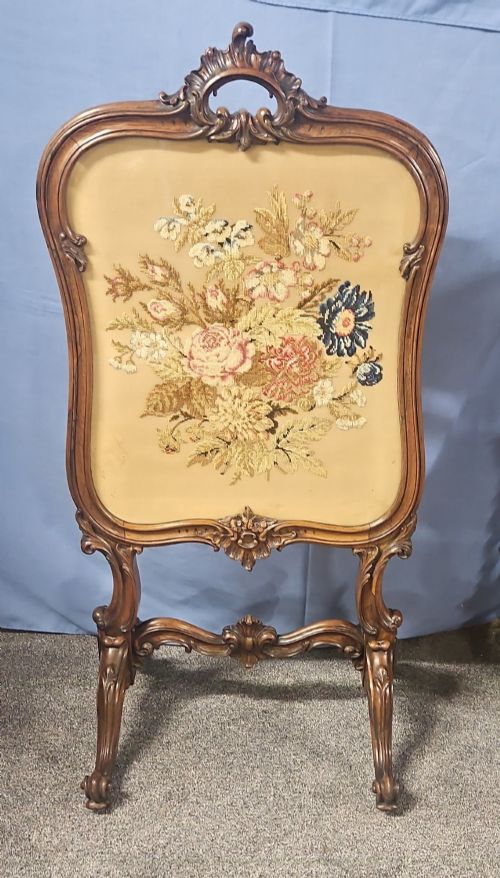
An antique wooden fire guard protects people sitting near an open hearth from radiant heat while displaying decorative needlework or glass panels. These furnishings range from simple nineteenth century oak and mahogany frames to elaborate Victorian walnut and rosewood designs.
The pieces on this page include fire screens, firescreens, and occasional tables with metamorphic functions, alongside fireplace fenders. Walnut and mahogany predominate, often holding wool, tapestry, canvas, or embroidered panels.
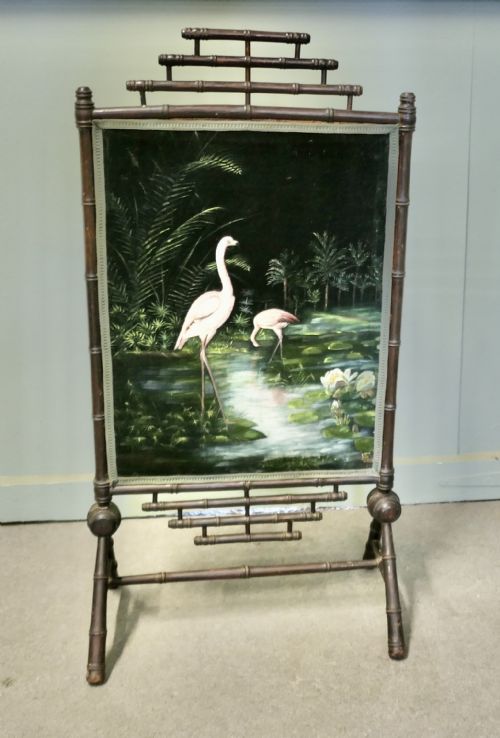
Makers utilised various regional styles, encompassing Chinoiserie, Black Forest, Regency, and Rococo Revival aesthetics. Panels feature pastoral scenes, flamingos, and poker work alongside plain glass or carved wooden inserts.
How They Were Made
Carpenters worked primarily in hardwoods like walnut, mahogany, oak, and rosewood, fashioning frames with carved detailing and adjustable components. Some pieces incorporated bronze hardware, brass fittings, and folding leaves.
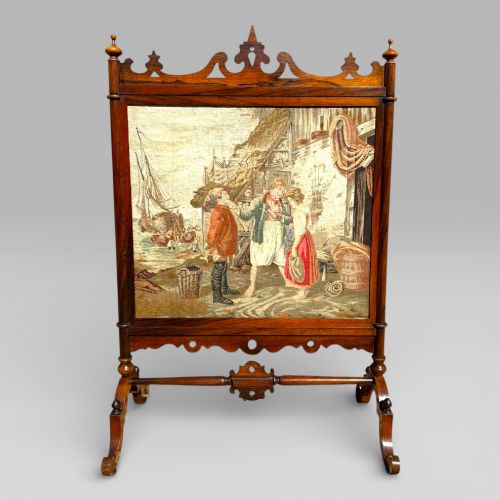
Central panels were hand woven using wool, tapestry, needlepoint, and Berlin work, or painted on glass and canvas. Skilled artisans combined joinery with textile arts to create portable room dividers for the fireplace.
Antique Wooden Fire Guard Retail Price Guide 2026
Typical asking prices for wooden fire guard among the pieces listed under this phrase on Sellingantiques today, from the lower quarter to the upper quarter. They describe what is for sale here now, not the wider market.
Flamingos painted on black lacquer bring unexpected tropical brightness to nineteenth century hearths.
What Varies in Quality
Quality depends on the crispness of the timber carving and the complexity of the frame, such as adjustable doors or metamorphic table functions. Solid walnut and mahogany constructions outlast simpler veneered examples.
The artistry of the central panel separates standard items from finer works, particularly finely executed needlepoint, hand woven tapestries, or detailed poker work. Intricate painted glass and specialised motifs like Chinoiserie elevate the piece.
The Antique Wooden Fire Guard Glossary
- Berlin work
- A style of needlepoint embroidery popular in the nineteenth century using coloured wool on canvas. It allowed makers to produce elaborate floral and pastoral pictures.
- Poker work
- The technique of decorating wood by burning designs with a heated tool. This method created contrasting dark brown imagery on panels.
- Club fender
- A low upholstered seat placed around the perimeter of a fireplace. These frames combined brass or iron with oak bases.
- Metamorphic
- Describing furniture designed to transform into another object, such as a fire screen that converts into an occasional table. This ingenuity suited compact nineteenth century interiors.
Antique Wooden Fire Guard: Frequently Asked Questions
How do I use a fire guard today?
These pieces function well as decorative room dividers or wall accents when hearths are no longer active. They add historical character to modern living spaces.
Adjustable models can still serve near working fireplaces to block stray embers or excessive heat from an open fire.
What woods were commonly used?
Cabinet makers relied on durable hardwoods including mahogany, walnut, oak, and rosewood. These timbers supported heavy embroidered panels and glass.
Black lacquer and specialised finishes also appeared on specific decorative examples like Chinoiserie screens.
How do I date a fire screen?
Dating relies on stylistic clues like Regency curves, Victorian Rococo Revival carving, or Edwardian proportions. Wood patination and construction methods also indicate age.
Needlework techniques and fabric types help narrow down the period of manufacture alongside the primary timber used.
What is a metamorphic screen?
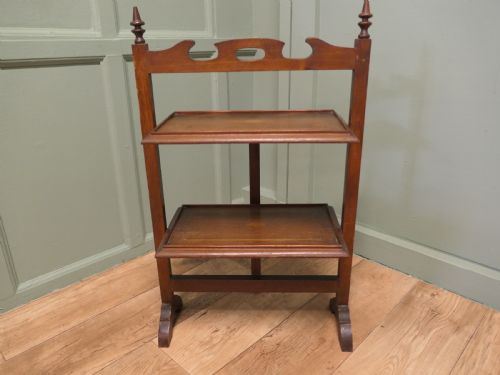
A metamorphic screen alters its physical form, commonly operating as both a fire screen and an occasional table. This dual purpose saved space in period homes.
Mechanism design and clever joinery allowed the upright panel to fold flat into a horizontal tabletop surface.