




Antique Wooden Dowry Chest
An antique wooden dowry chest is a sturdy storage piece made for household goods, offering practical history and distinct regional character.
Antique Wooden Dowry Chest
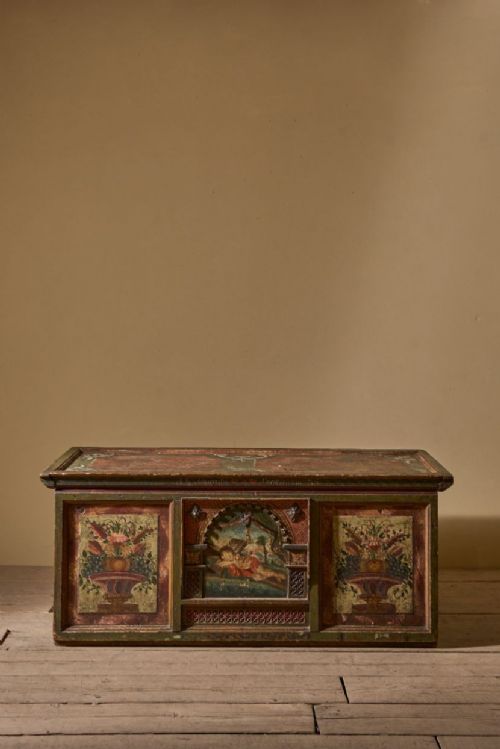
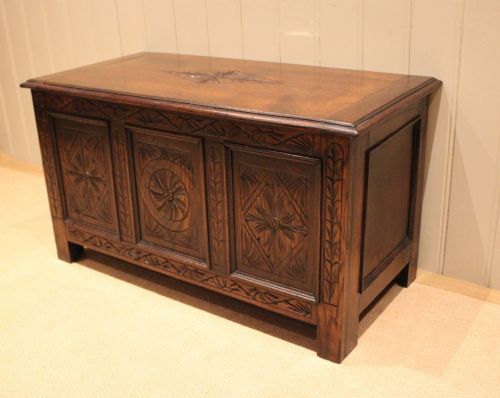
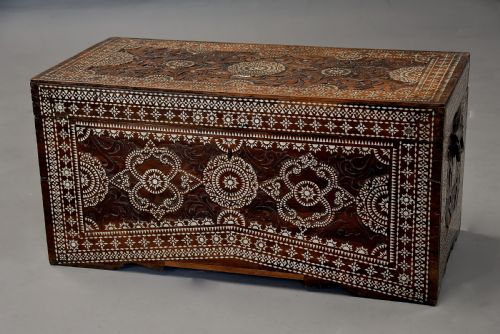
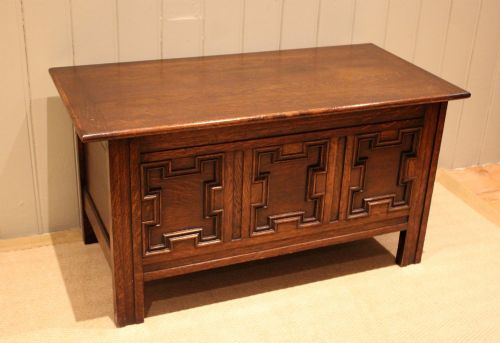
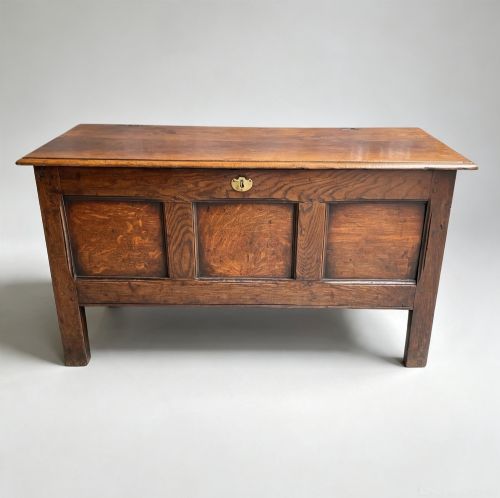
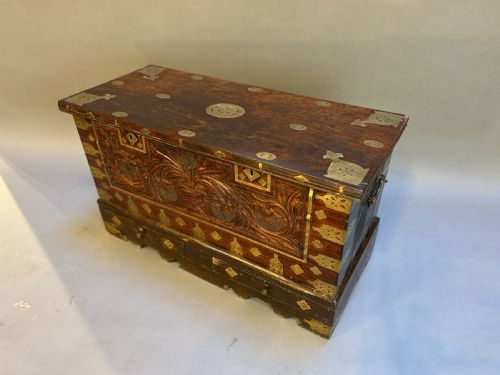
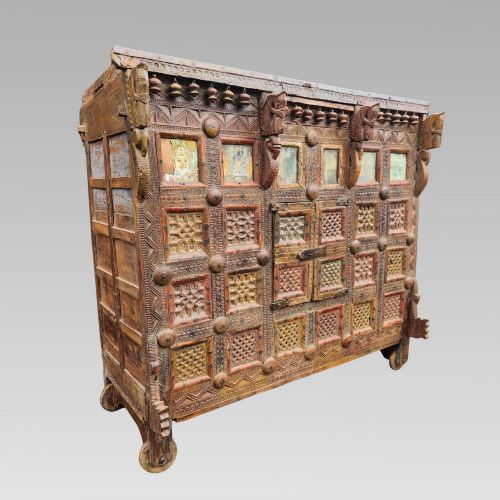
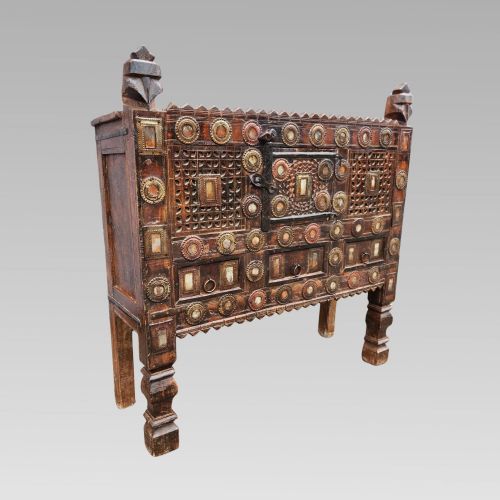
The selection ranges from British oak pieces originating in the seventeenth and eighteenth centuries to heavily decorated Indian teak variants and painted Scandinavian marriage boxes. Buyers frequently encounter regional variations spanning the seventeenth through to the early twentieth century.
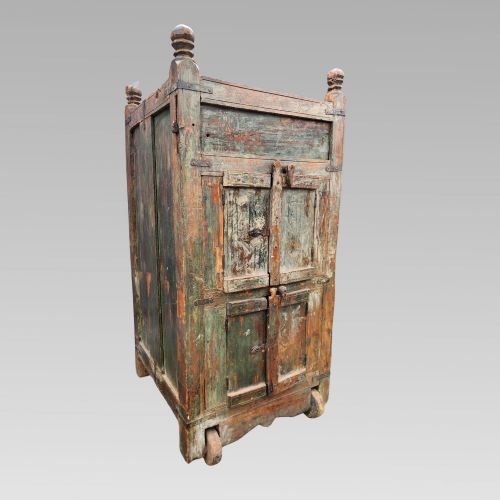
Domestic British examples generally present sober dark oak or mahogany construction, whereas Asian and European continental pieces often display vibrant painted surfaces, iron bands, or inlaid mother of pearl.
Materials and construction
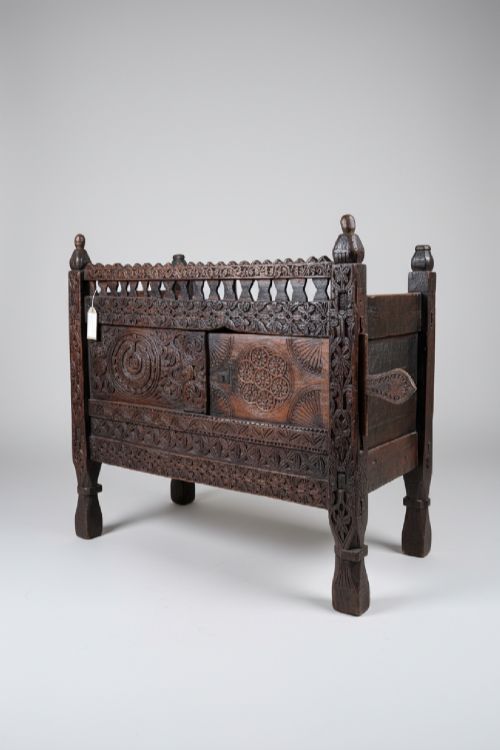
Carpenters built these chests using heavy structural hardwoods and conifers including oak, teak, pine, and mahogany, selected for regional availability and durability. Joinery relied on traditional methods such as scratch carving, pegged joints, and solid panel construction.
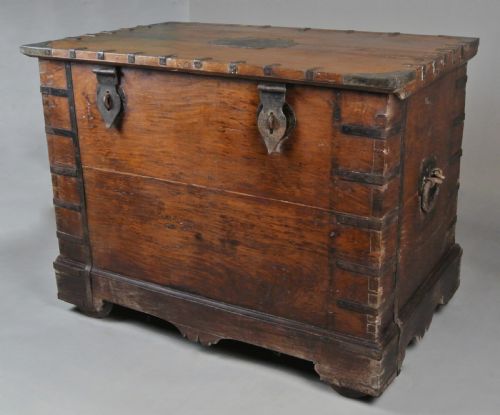
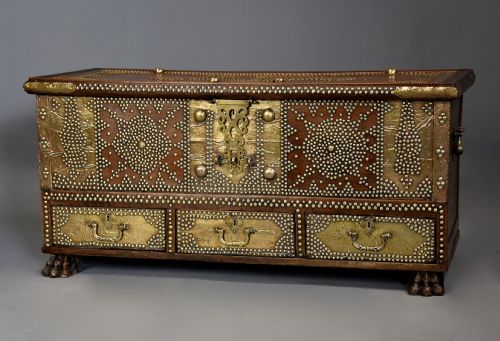
Iron and brass hardware played a vital structural role, providing heavy corner straps, intricate hinges, and complex locking mechanisms that secured valuable contents. Surface finishes varied from exposed waxed grain to rich layers of original pigment and folk art paint.
Periods represented across the inventory range from seventeenth-century English joinery up to early twentieth-century Middle Eastern and Indian production.
Distinguishing quality
The standard of a piece rests upon the integrity of its timber, the depth and skill of any carved ornamentation, and the preservation of original surfaces. Pieces retain greater character when structural ironwork, locks, and painted pigments survive in an uncompromised state.
Proportion and regional authenticity define the upper tier of these items, where untouched patination and period-correct hardware elevate standard domestic storage into significant folk art or cabinet-making examples.
The Antique Wooden Dowry Chest Glossary
- Coffer
- A heavy wooden box used for storing valuables, typically fitted with a hinged lid and standing on floor rails or short stiles. These form the baseline of early domestic furniture.
- Damchiya
- A traditional Indian low storage cabinet or dowry chest featuring deep hand-carved panels and heavy timber construction. They originate primarily from regions such as Rajasthan.
- Mule chest
- A traditional storage chest featuring one or more drawers built into the base beneath the main interior compartment. This form bridges the evolution between simple coffers and modern chest of drawers.
- Scratch carving
- A primitive decorative technique where a profile cutter or scratch stock cuts shallow linear patterns directly into the wood surface. This method appears frequently on seventeenth-century English oak furniture.
- Zanzibar chest
- A heavy hardwood trunk characterised by brass studwork, strapped iron binding, and compartmented interior storage. These pieces reflect historic trade connections across the Indian Ocean.
Antique Wooden Dowry Chest: Frequently Asked Questions
How were dowry chests used historically?
Families used these large chests to accumulate and transport personal belongings, linens, and wealth as part of a bride's marriage settlement. Their sturdy construction allowed them to double as benches, tables, or beds during travel.
Inside the home, they kept valuable textiles safe from pests and dampness while functioning as secure storage for family documents and heirlooms.
How do I date an old wooden coffer?
Dating relies on examining the joinery methods, tool marks, timber species, and style of carving present on the piece. Seventeenth-century examples often display pegged frame-and-panel construction with scratch carving, whereas later nineteenth-century pieces may incorporate iron banding or painted folk art.
Hardware such as hinges and locks also provides clues, though metalwork is frequently replaced or repaired over centuries of domestic use.
How do I integrate a large chest into a room?
Large chests anchor living spaces well when placed at the foot of a bed, beneath a window as a seat, or used as a coffee table in a hallway or reception room. Their flat lids provide useful surface area while the interior conceals everyday clutter.
Allowing sufficient clearance around the piece ensures its heavy proportions and decorative ironwork or carvings remain visible focal points in the interior.