


Antique Wood Wall Clock
An antique wood wall clock brings mechanical precision and rich timber cases into domestic spaces, marking time with dial designs drawn from railway stations, drawing rooms and workshops.
Antique Wood Wall Clock
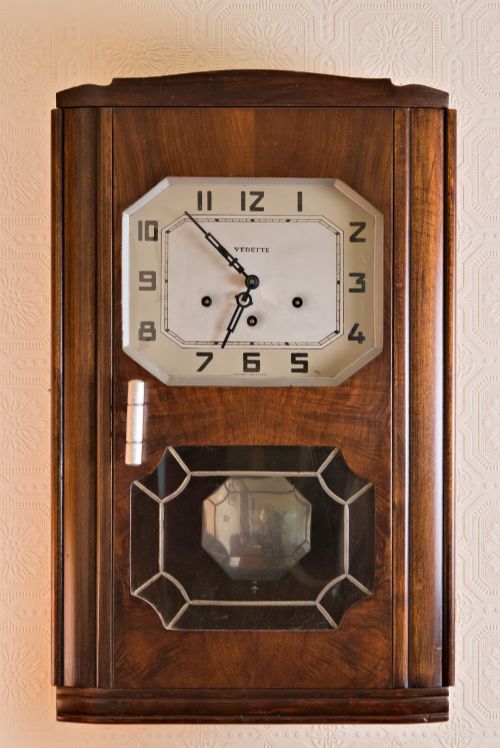
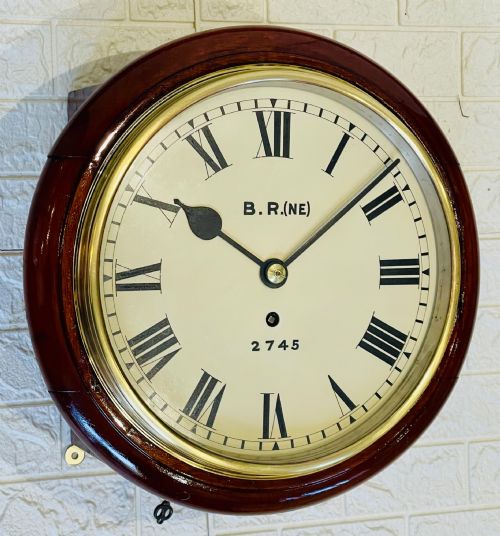
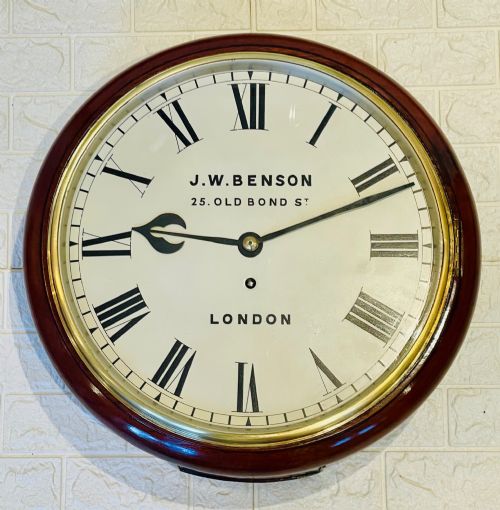
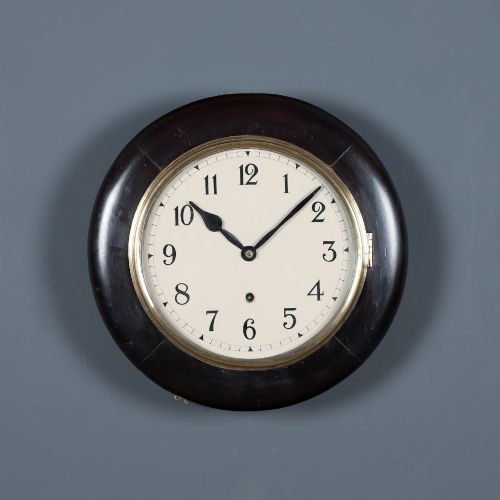
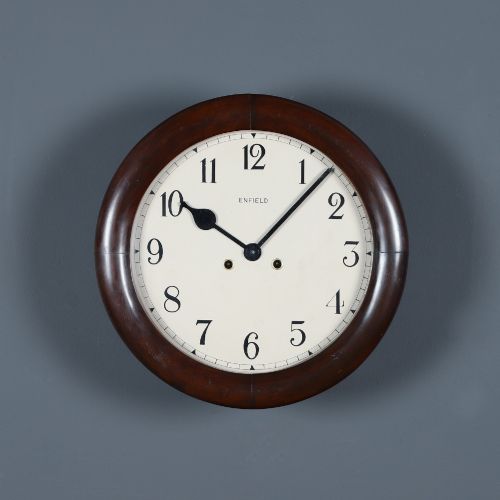
An antique wood wall clock spans utilitarian round dial timepieces made for public spaces and intricate domestic regulators or cuckoo clocks. When you search for an antique wood wall clock, you encounter round dial station designs alongside carved walnut and mahogany cases from the nineteenth and early twentieth centuries.
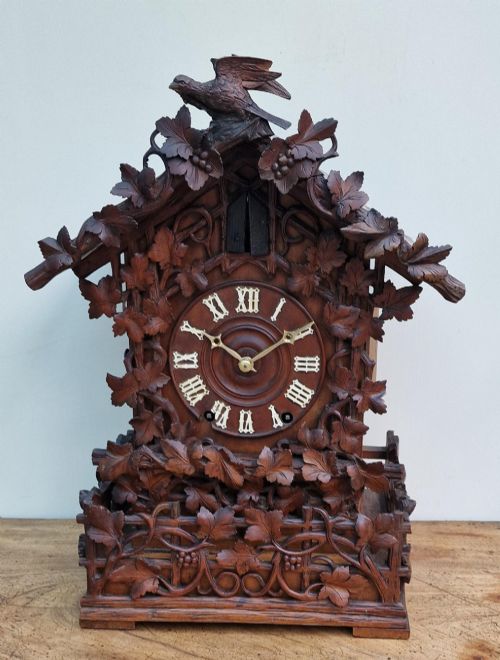
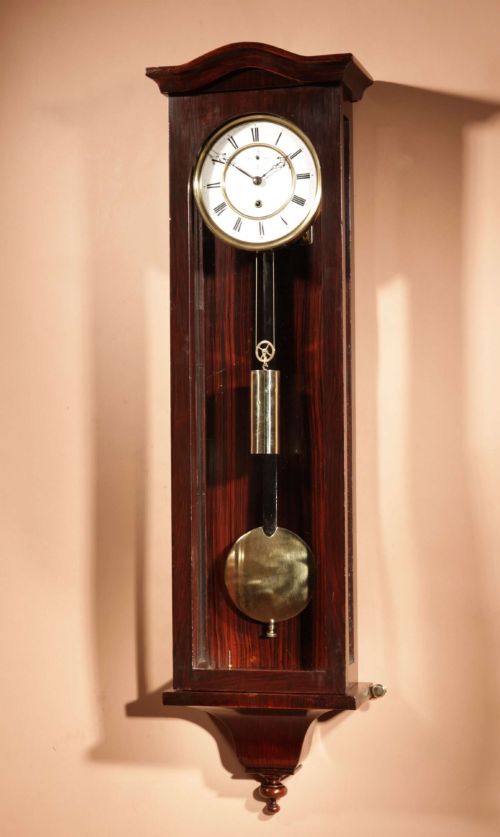
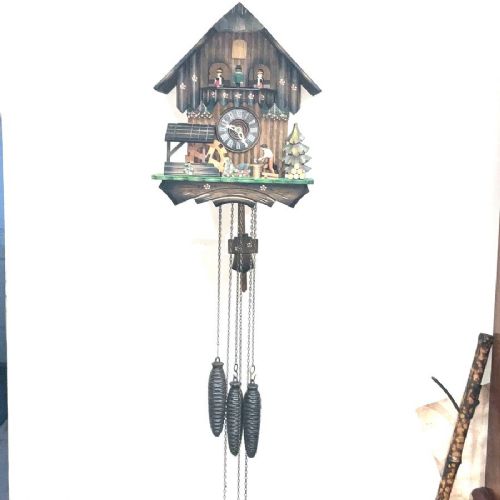
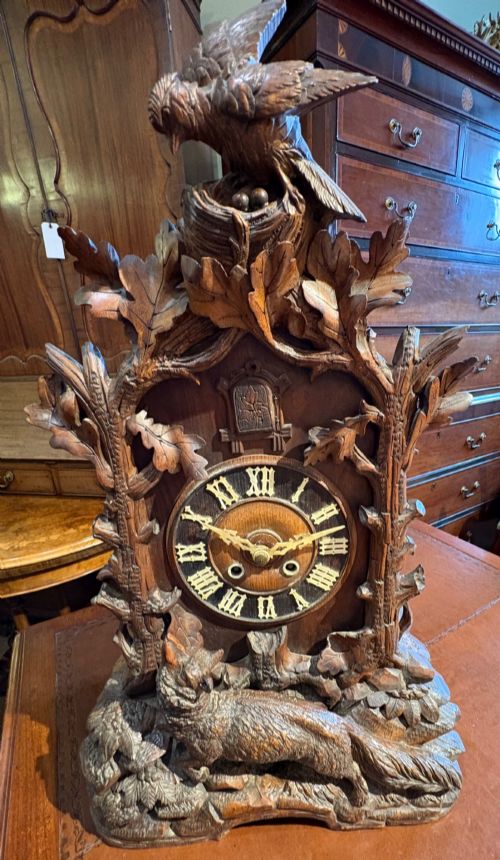
The domestic forms range from dial clocks designed to hang in hallways to carved Black Forest pieces featuring foliage and birds. Regional variations include English fusee movements housed in mahogany or rosewood, German walnut regulators, and Dutch wall clocks.
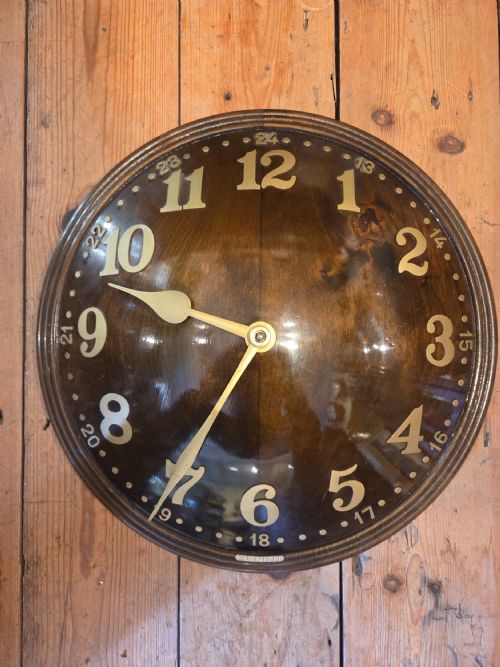
Dial designs vary from standard Roman numerals to specialised layouts like twenty-four hour dials or wooden faces. Cases utilise timbers such as oak, mahogany, walnut, and rosewood, often complemented by brass bezels, glass covers, and enamel dials.
How They Were Made
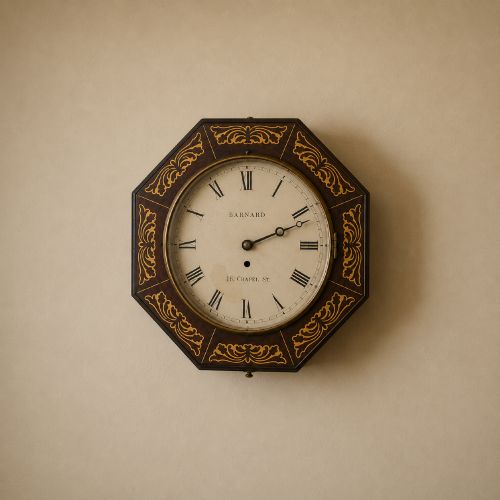
Clockmakers housed movements inside timber cases shaped from solid mahogany, walnut, oak, and rosewood, sometimes applying brass inlay or carved details. Carved wood versions from the Black Forest utilise carved walnut to create foliage and animal figures around the dial.
Movements rely on mechanical gear trains driven by weights or fusee spring mechanisms that require winding. Dial faces employ materials such as painted metal, enamel, or turned wood, protected behind hinged glass doors set within brass or wooden bezels.
Antique Wood Wall Clock Retail Price Guide 2026
Typical asking prices for wood wall clock among the pieces listed under this phrase on Sellingantiques today, from the lower quarter to the upper quarter. They describe what is for sale here now, not the wider market.
Cuckoo clocks bring mechanical birds out from behind carved walnut foliage to mark the passing hours.
What Varies in Quality
The caliber of the movement inside an antique wood wall clock separates standard timepieces from precision instruments. Fusee movements, designed to equalize the pull of the mainspring as it unwinds, represent a higher standard of clockmaking than basic spring-driven mechanisms.
Case construction and timber selection dictate visual merit. Solid mahogany, figured walnut, and rosewood cases with brass inlay or careful hand-carving reflect greater workshop investment than plain secondary woods.
J W Benson·Henry Harris·Smiths·Wetterstrands
The Antique Wood Wall Clock Glossary
- Fusee
- A conical pulley connected to the mainspring by a cord or chain, designed to maintain even force on the gear train as the spring unwinds. This mechanism is common in better English dial clocks.
- Drop Dial
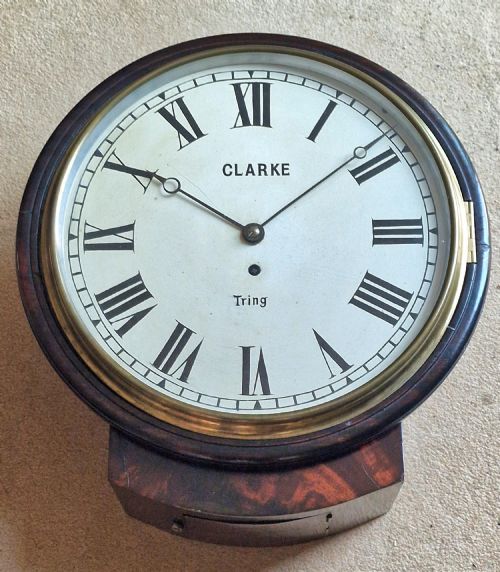
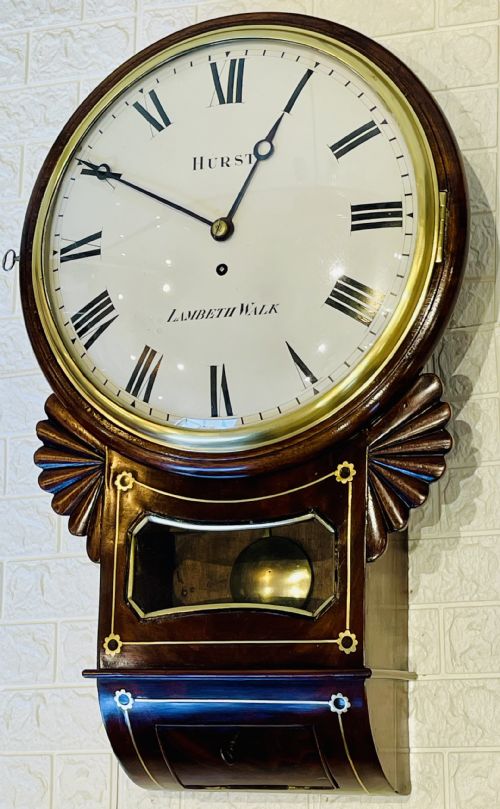
- A clock case featuring a circular dial at the top and an extended lower wooden trunk to house the pendulum. The trunk is often inlaid or glazed to show the swinging pendulum.
- Regulator
- A precision pendulum clock designed for accuracy and timekeeping reference. These movements typically feature long pendulums and weight-driven operation.
- Dial Clock
- A wall-mounted clock dominated by a prominent face with minimal surrounding case timber. Station and school clocks follow this straightforward format.
- Cartel Clock
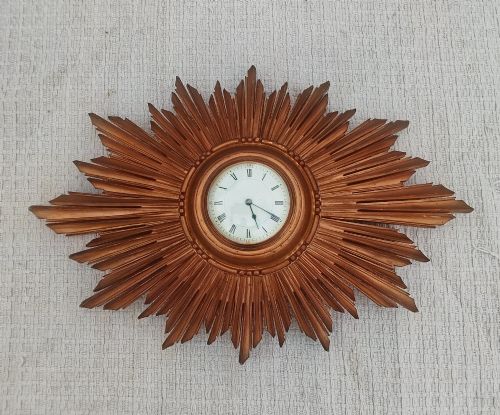
- An ornamental wall clock enclosed in a decorative scrollwork or foliage frame made of carved wood or metal. Giltwood examples are typical of this form.
Antique Wood Wall Clock: Frequently Asked Questions
How do I wind a fusee wall clock?
Use the designated winding key on the dial face, turning it gently until resistance indicates the mainspring is fully tensioned. Avoid over-winding to protect the internal chain or cord.
Ensure the pendulum hangs freely and the clock is mounted plumb on the wall before setting the hands to the correct time.
What is the difference between a dial clock and a regulator?
A dial clock is built for public or domestic utility with a prominent circular face and a short drop case. They frequently utilise fusee movements for reliable timekeeping.
Regulators prioritize strict accuracy through weight-driven power and long pendulums, often housed in glazed cases that display the mechanical components.
Where should I hang a heavy wooden wall clock?
Mount the clock directly into wall studs or utilise appropriate masonry anchors to support the weight of the timber case and movement. A secure fixing prevents vibrations that can disrupt the pendulum.
Position the clock away from direct heat sources and damp areas to protect the wooden case and delicate internal metal gears from warping or corrosion.
How do I identify the period of a wall clock?
Examine the timber, dial materials, and case style alongside any maker signatures inscribed on the movement or face. Regency and Victorian models often feature mahogany or rosewood cases with brass bezels.
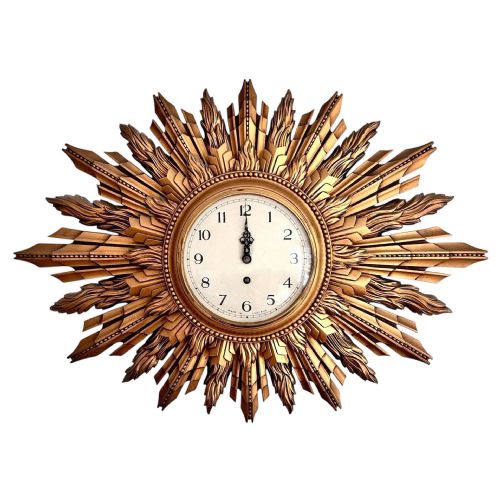
Later twentieth-century examples shift towards oak school designs, art deco starburst shapes, or mid-century twenty-four-hour dial layouts.