





Antique Wood Dresser Table
An antique wood dresser table brings robust utility and historic character to a dining space or hallway.
Antique Wood Dresser Table
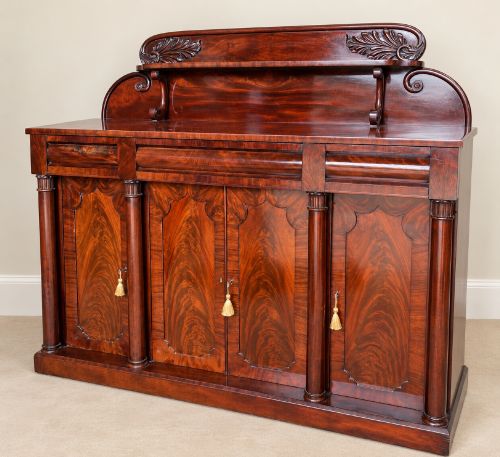
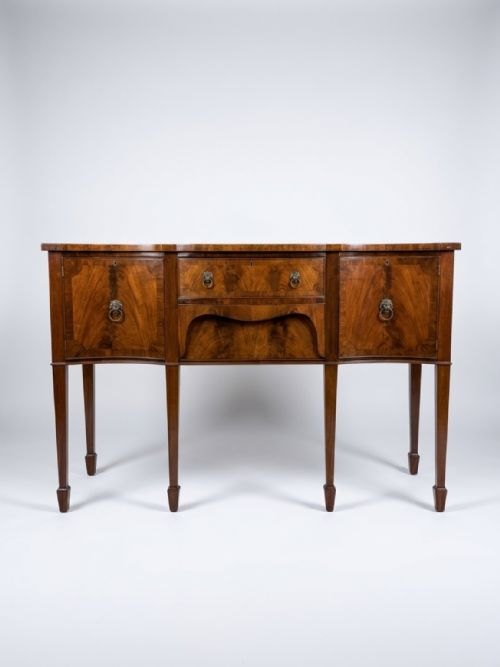
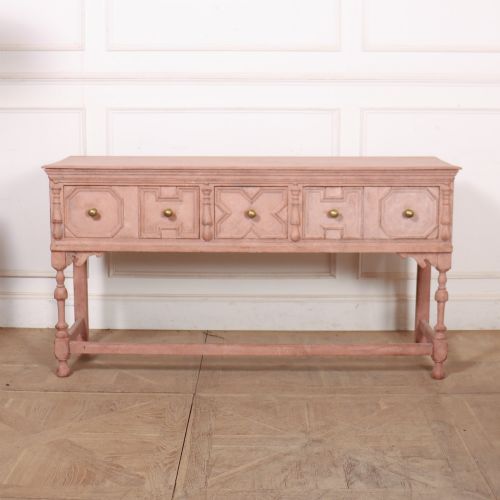
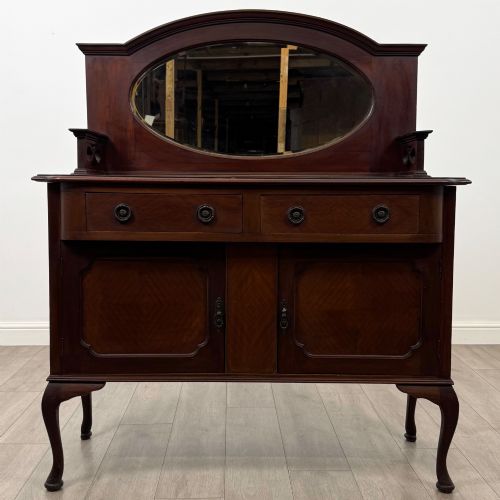
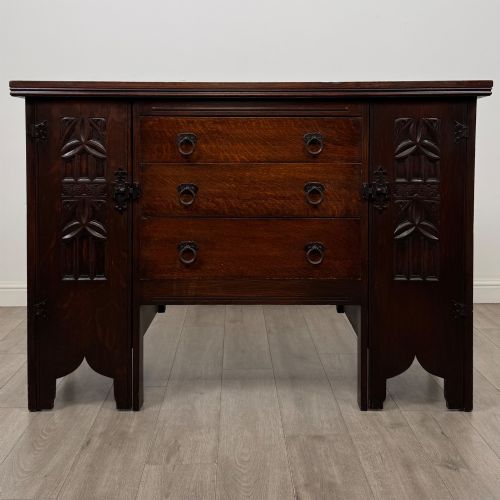
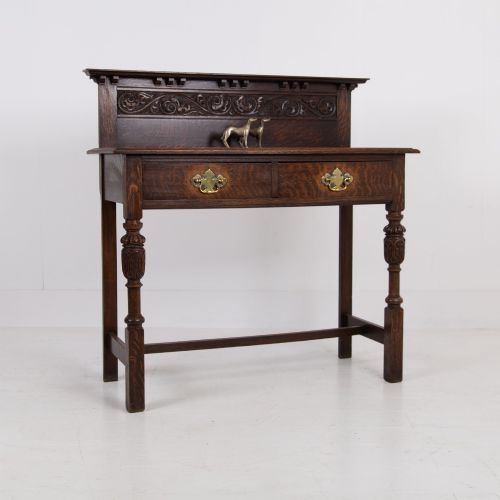
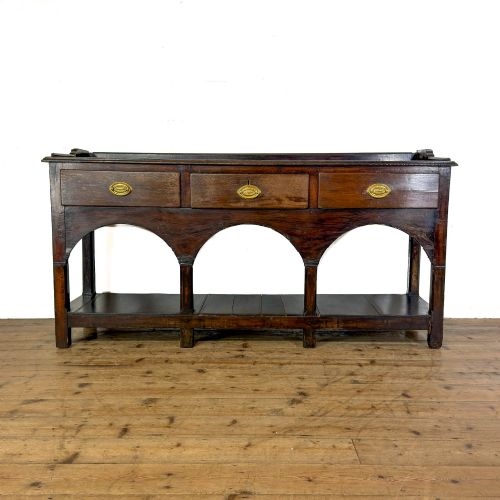
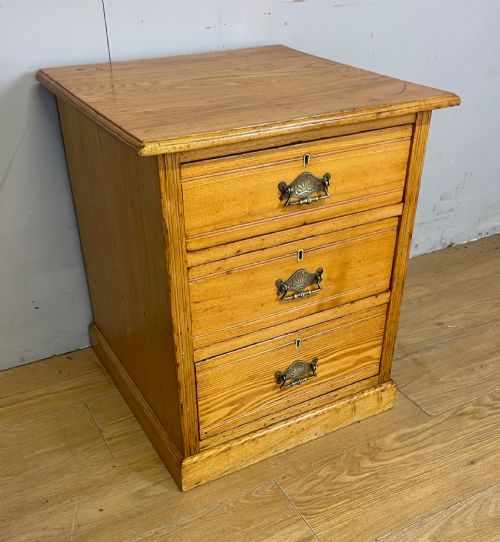
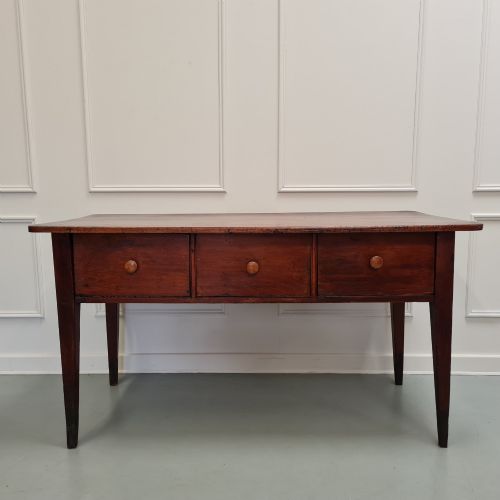
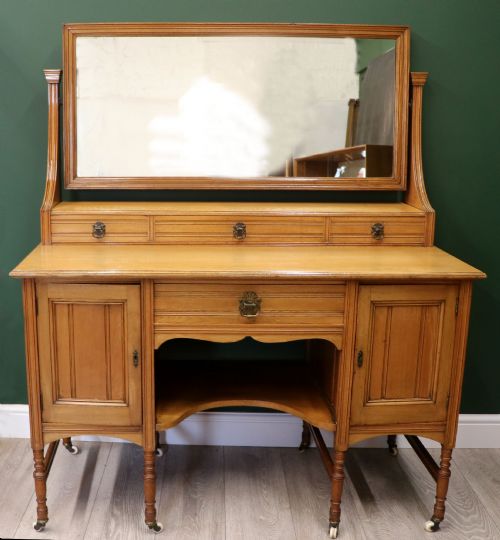
The most frequent examples on this page are oak and mahogany dresser bases and sideboards dating from the nineteenth century. Many of these sturdy items feature drawers and low shelves designed for everyday utility in country houses and town residences. English and continental workshops produced these foundational forms in various woods to serve dining and kitchen areas.
Materials and construction
Cabinet makers relied predominantly on solid oak, mahogany, and pine, frequently combining secondary timbers like elm for drawer linings and internals. Timber selection dictated the weight and visual presence of each piece, with dense hardwoods providing structural longevity for heavy daily use.
Joinery methods involved traditional hand-cut joints, panelled construction, and occasionally applied mouldings or geometric carvings. Surfaces finished with natural waxes or paints display the tool marks and gradual weathering characteristic of pre-industrial furniture production.
Listings feature pieces spanning the eighteenth, nineteenth, and early twentieth centuries, constructed from oak, mahogany, pine, walnut, and elm.
Markers of quality
The standard of timber selection and depth of carving distinguish finer examples from utilitarian pieces. Superior items display well-figured mahogany or richly patinated oak with careful attention to proportion and structural balance.
Original hardware, untouched patination, and integrity of the main carcase elevate a piece's standing. Altered elements or replaced timber components reduce the historical cohesion of the item.
The Antique Wood Dresser Table Glossary
- Potboard dresser
- A traditional base unit featuring an open lower shelf traditionally used for storing pots and heavy tableware. This shelf sits raised off the floor on short legs or stiles.
- Dresser base
- The lower portion of a kitchen or dining dresser constructed without the upper plate rack. These low cabinets provide substantial surface space and under-counter storage.
- Serpentine sideboard
- A serving table featuring a gently undulating front profile curved in a convex-concave-convex sequence. This refined Georgian shape required advanced carpentry skill to execute.
- Lowboy
- A small side table fitted with drawers, standing on relatively tall legs. These low tables often served as dressing tables or auxiliary serving surfaces.
- Flame mahogany veneer
- A decorative wood veneer sliced from timber where the branch meets the trunk, producing a distinctive flickering flame pattern. Cabinet makers applied this to drawer fronts and doors for visual impact.
Antique Wood Dresser Table: Frequently Asked Questions
What is a potboard dresser base?
A potboard dresser base is a heavy, low wooden unit designed for domestic kitchens and dining rooms without an upper plate rack. It provides a wide working surface above drawers and an open lower shelf.
The lower shelf, known as the potboard, sits just above the floor and held heavy earthenware and metal cookware in traditional households. These pieces date largely from the eighteenth and nineteenth centuries in oak and elm.
How do I date an antique wooden sideboard?
Dating a wooden sideboard involves examining the timber species, construction joints, hardware, and overall stylistic influence. Eighteenth-century pieces often employ solid oak or mahogany with hand-cut dovetails, while Victorian examples introduce heavier carved ornamentation.
Secondary woods inside drawers and the presence of tool marks provide further clues to the manufacturing decade. Regional variations in English, Welsh, and continental workshops also help narrow the period of origin.
Where should I place a dresser table at home?
A dresser table suits dining rooms, hallways, and spacious kitchens where surface area and enclosed storage are both useful. Their shallow depth allows them to sit against walls without blocking walkways.
In a dining setting, they function as serving surfaces for food or display areas for ceramics. In a hallway, a narrow console version provides a drop-off point for keys and correspondence.
Are these tables made of solid wood?
Many of these pieces utilise solid timber throughout the top, frame, and drawer construction, particularly eighteenth and nineteenth-century oak and pine examples. Heavier hardwood versions rely on thick boards to bear substantial daily loads.
Finer decorative items from the nineteenth century onwards occasionally incorporate mahogany veneers laid over secondary pine or oak carcases. This technique allowed cabinet makers to display striking grain figures without wasting scarce resources.