
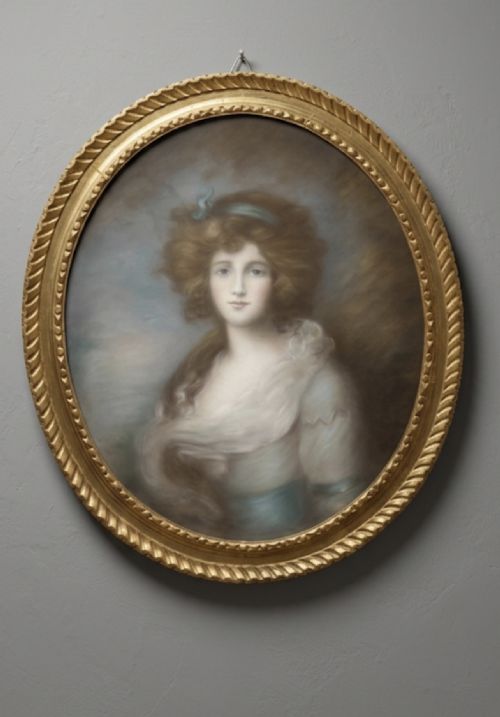


Antique Woman Portrait Drawing
These antique woman portrait drawing works capture likeness and character across centuries, offering collectors an intimate window into past lives.
Antique Woman Portrait Drawing
An antique woman portrait drawing captures feminine subjects through diverse historical lenses, ranging from eighteenth-century works to pieces from the nineteen-thirties. You encounter framed original artworks, oval compositions, and studies depicting ladies in hats or historical figures.
The selection encompasses English, French, and Scottish depictions executed across the nineteenth and early twentieth centuries. Pieces span academic realism, Georgian elegance, Victorian styles, and Art Deco sensibilities.
Works appear in formats such as pastel paintings, sanguine studies, and pencil sketches on paper. Many retain their original frames, including examples in maple and giltwood.
Materials and methods
Frames played an integral role in presentation, utilising materials like wood and giltwood to house and protect the works. Original frames often survive alongside the drawings, maintaining the historical integrity of the piece.
Several ladies gaze outward permanently lost in thought, eternally daydreaming behind protective antique glass.
Distinctions in quality
Quality rests in the draughtsmanship and the artist's ability to convey character and emotion, such as soul-stirring eyes or thoughtful expressions. Stronger examples demonstrate confident handling of line and tone.
The survival of original framing and the clarity of attribution to known artists or schools elevate specific pieces. Condition of the paper surface and the preservation of fugitive mediums like pastel also distinguish finer works.
Thomas Gainsborough·J D Fergusson·Robert Faulkner·Reginald G. Eves·Leo Klin·Cecil CP Lawson·Leopold Morsing
The Antique Woman Portrait Drawing Glossary
- Sanguine
- A type of red chalk used historically for sketching and portraiture. It produces warm, earthy tones favoured for flesh rendering.
- Pastel
- A medium consisting of powdered pigment and a binder, allowing for rich colour application on paper. Pastels require protective glass to prevent smudging.
- Giltwood
- Wood that has been coated with a thin layer of gold leaf. It is commonly found on traditional decorative frames.
- Graphite
- A form of carbon used as a drawing medium in pencils. It permits precise lines and subtle tonal shading.
Antique Woman Portrait Drawing: Frequently Asked Questions
How should I display antique portrait drawings?
Keep works on paper away from direct sunlight to prevent fading of pastels, watercolours, and graphite marks.
Ensure framing uses acid-free materials and UV-filtering glass to protect the delicate medium over time.
What framing is typical for these portraits?
Many examples survive in period surrounds, including original maple and giltwood frames that complement the era of the artwork.
Retaining the original housing preserves the historical context of the piece.
How do I identify the period of a drawing?
Stylistic clues such as costume, headdress, and framing methods often signal whether a piece belongs to the Georgian, Victorian, or Art Deco eras.
Signatures, dates, and recorded artist lifespans provide further chronological certainty.
What is the difference between pastel and graphite portraits?
Graphite and chalk drawings rely on monochrome line and tonal shading to define form and expression.
Pastel works introduce colour pigment, offering a painterly finish that captures flesh tones and textiles vividly.