


Antique Windsor Style Chairs
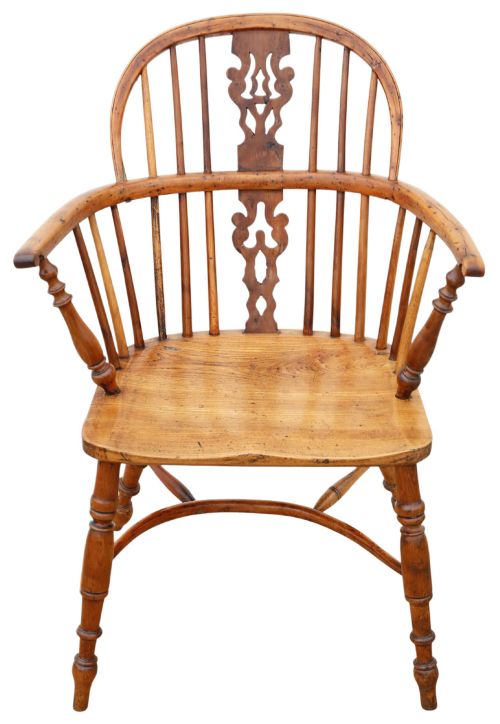
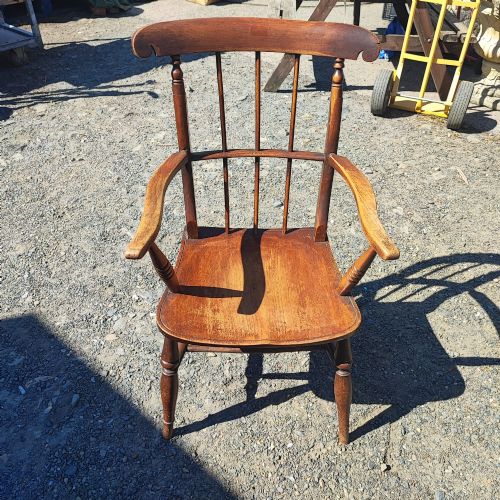
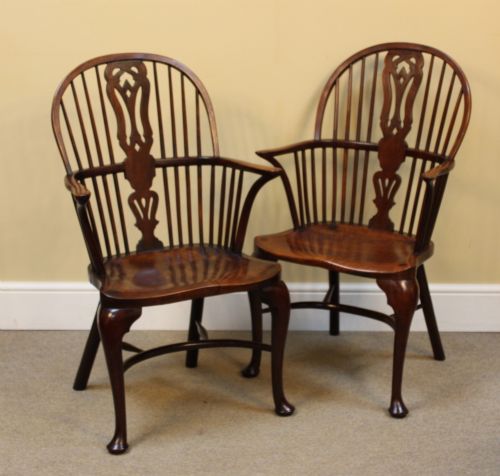
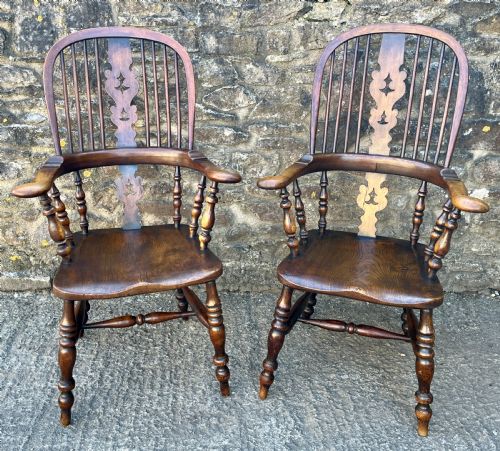
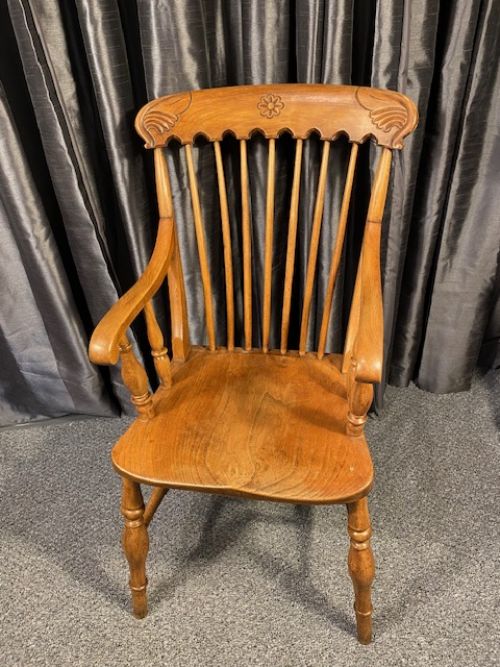
These antique windsor style chairs are timber-framed vernacular seats combining turned spindles, solid saddle seats, and bentwood backs.
Antique Windsor Style Chairs
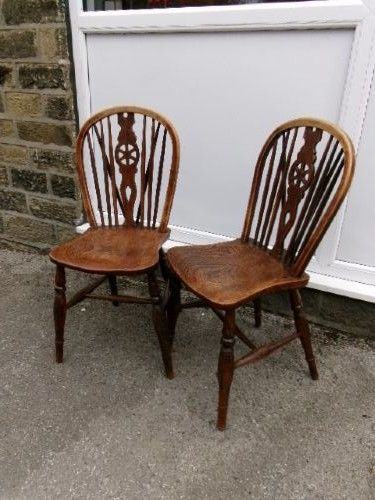
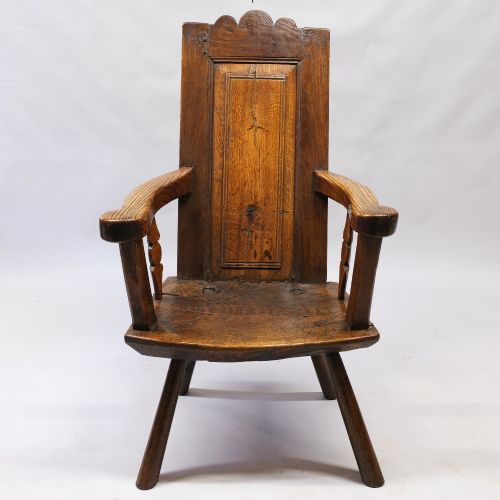
Antique windsor style chairs comprise armchairs, dining chairs, rocking chairs, and childs chairs originating across the eighteenth, nineteenth, and early twentieth centuries. The selection centres on English country vernacular pieces, spanning low-back, comb-back, hoop-back, wheelback, and panel-backed forms.
Buyers meet sturdy kitchen dining chairs in pairs and sets, alongside single broad arm or low back armchairs intended for parlour or fireside use. Smaller scaled childs chairs and rocking chairs appear frequently across nineteenth-century Victorian and Regency periods.
Origins trace through English country workshops, with regional variations evident in timber selection and back construction. These seating forms served practical domestic roles in farmhouses, cottages, and kitchens.
How they were made
Construction relies on combining contrasting native timbers, typically pairing solid elm seats with ash, beech, yew, or fruitwood for the legs, spindles, and bentwood bows. Planks of elm or yew wood were carved into comfortable saddle seats, bored to receive the legs and back uprights.
Green woodworking techniques allowed craftsmen to steam-bend ash or yew for hoop backs and arm bows, whilst lathe-turned spindles formed the back supports and underframing. Oak and pine also appear occasionally in structural components and secondary framing.
What varies in quality
Quality rests upon the choice of timber and the dexterity of the turner, with figured yew wood and well-figured elm commanding greater visual presence than plain beech or ash. The balance of the turned spindles and the depth of the sculpted seat determine the visual grace of each piece.
Structural integrity depends on the tightness of the wedged tenon joints connecting the legs and back to the solid seat slab. Examples retaining their original surface patination and unreplaced turned components hold superior character.
Benjamin Gilling
The Antique Windsor Style Chairs Glossary
- Comb-back
- A chair back featuring vertical spindles topped by a horizontal crest rail resembling the teeth of a comb. This form provides sturdy upper back support.
- Hoop-back
- A continuous bentwood bow forming the back and armrests in a single curved piece. It distributes weight evenly around the perimeter of the seat.
- Wheelback
- A solid wooden splat pierced and carved in the shape of a spoked cartwheel inserted into the chair back. This decorative motif gained popularity during the nineteenth century.
- Saddle seat
- A thick wooden seat slab carved with hollowed depressions to fit the human body. Elm is frequently utilised here for its interlocking grain preventing splits.
- Carver
- An armchair designed with elbow rests, often used at the head of a dining table. They match or complement sets of smaller dining chairs.
Antique Windsor Style Chairs: Frequently Asked Questions
How do I identify a yew wood chair?
Yew wood displays a rich, warm grain with characteristic knots and deep reddish-brown tones. It was often selected for the more important armchairs.
Combined with elm seats, these timbers create a distinct contrast visible across nineteenth-century country pieces.
Were these chairs used for dining?
Kitchen and dining chairs formed a major part of country production, often found in matched pairs or larger sets. Sturdy timbers like ash and elm withstood daily domestic use.
Wheelback and comb-back styles were common around farmhouse tables.
What distinguishes a childs chair?
Childs chairs scale down the traditional construction methods of full-sized armchairs and rocking chairs. They utilise the same turned spindles and saddle seats.
Victorian examples show the same regional vernacular craftsmanship as adult seating.