



Antique Whistle
An antique whistle brings centuries of craftsmanship, from delicate silver pendants to charming treen bird calls.
Antique Whistle
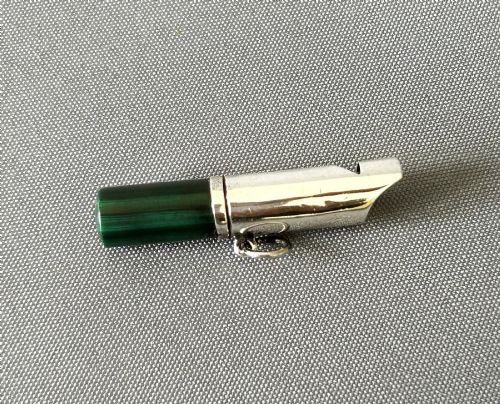
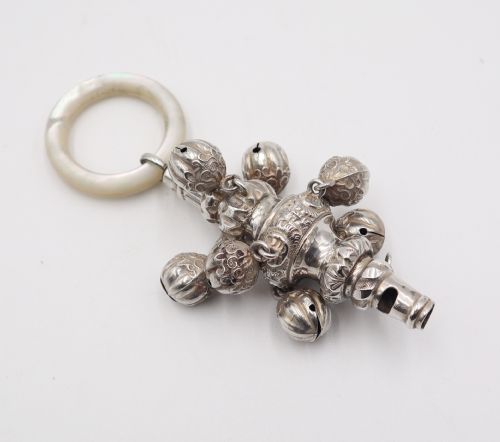
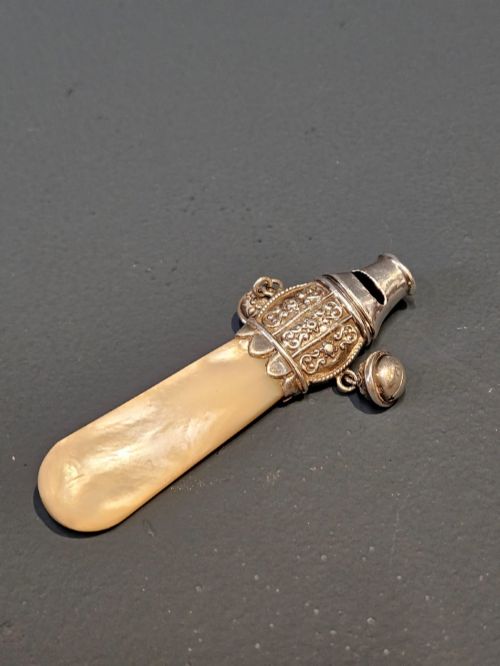
Many surviving pieces double as baby rattles and soothers, often combining silver with mother of pearl or coral. Other variants take the form of charms, treen bird calls, or sculptural works depicting figures in the act of piping.
Origins stretch from British workshops to Pre-Columbian Peruvian traditions, offering distinct regional forms. The selection unites small-scale silverwork with folk art and ceramics under one descriptive heading.
Materials and construction
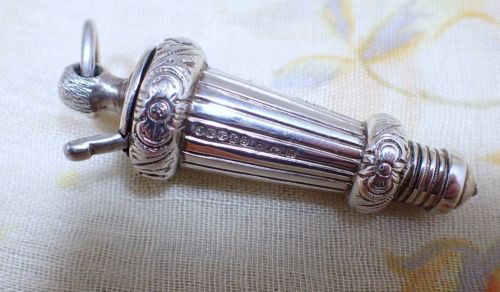
Silversmiths shaped sterling silver into intricate baby rattles, cases, and dog whistles, frequently employing hallmarks to record the maker and year. Turned wood and treen provided the organic medium for functional bird calls and rustic noisemakers.
Earthenware and terracotta formed the basis of early ceramic pieces, moulded into sculptural shapes like animal figures. Natural additions such as mother of pearl, amber glass, and coral embellished nursery items alongside polished silver.
Antique Whistle Retail Price Guide 2026
Typical asking prices for whistle among the pieces listed under this phrase on Sellingantiques today, from the lower quarter to the upper quarter. They describe what is for sale here now, not the wider market.
Current listings span silver, sterling silver, mother of pearl, coral, earthenware, terracotta, amber glass, and turned wood.
Assessing craftsmanship and condition
The standard of an antique whistle depends heavily on the crispness of its moulding or chasing, particularly on detailed silver animal figures and thistle charms. Maker attribution also elevates certain pieces, with recognised silversmiths commanding greater attention.
George Unite·Joseph Taylor·Bateman London
The Antique Whistle Glossary
- Treen
- Small handmade wooden domestic objects. These items showcase traditional turning and carving techniques from past centuries.
- Sterling silver
- An alloy containing a high proportion of pure silver. This material forms the primary body of many British whistles and rattles.
- Pre-Columbian
- Pertaining to the indigenous cultures of the Americas before European contact. Ceramic whistles from this era often take zoomorphic forms.
- Mother of pearl
- The iridescent inner layer of certain mollusc shells. It appears frequently as a decorative or functional handle on Victorian soothers.
Antique Whistle: Frequently Asked Questions
What were antique whistles used for?
Many of these objects served practical roles as dog training tools or personal signalling devices worn as pendants. Others functioned as children's toys and teething implements combined with rattles.
Some pieces exist purely as decorative charms or artistic representations captured in bronze and oil paint.
How do I date an antique whistle?
Silver examples often rely on British assay office hallmarks stamped directly onto the metal, revealing the exact year of production. Stylistic cues such as Victorian ornamentation or Georgian proportions also help narrow down the period.
Unhallmarked items like treen bird calls or earthenware require stylistic comparison with known regional folk art.
Are silver rattles safe for children?
While historic silver rattles were made for infants with coral or mother of pearl teethers, modern standards view them as collectible display items rather than toys.
Age and delicate construction mean these pieces suit display cabinets better than daily handling by young children.