


Antique Whippet Figurine
An antique whippet figurine captures the sleek line of the hound in bronze, earthenware or porcelain, bringing domestic elegance to a mantelpiece.
Antique Whippet Figurine
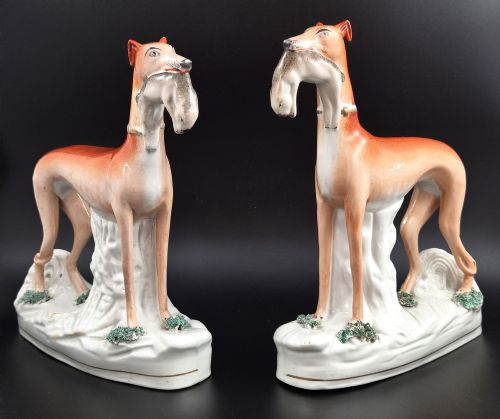
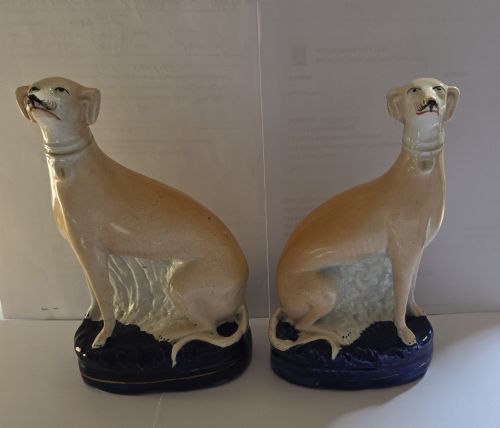
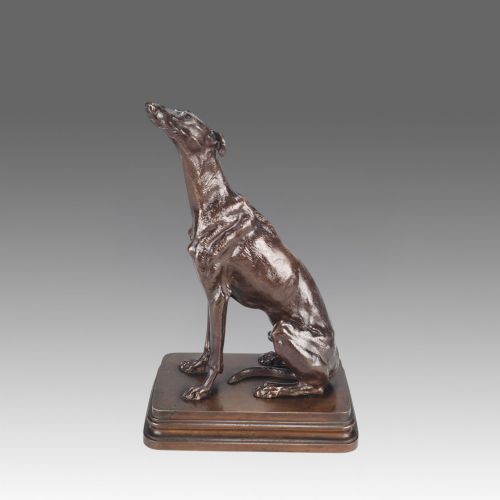
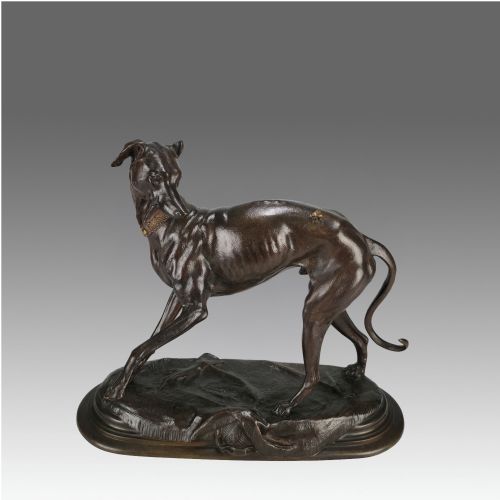
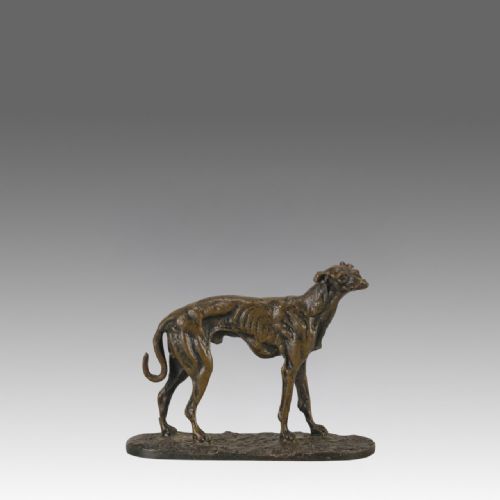
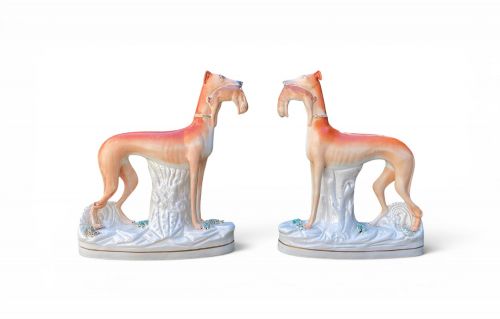
When you search for an antique whippet figurine, you encounter two distinct traditions: the robust earthenware figures of Victorian Staffordshire potteries and the muscular metal castings of the French Animalier school. Staffordshire pieces frequently appear as seated pairs, sometimes accompanied by hares or adapted to hold quills, reflecting mid-century domestic tastes. Bronze iterations from the nineteenth century focus tightly on anatomical precision, often capturing the dog seated, recumbent or mid-chase.
The Staffordshire pottery examples span the middle and late nineteenth century, finished with lead glazes and enamel paint to render the markings of the dogs. Many of these Staffordshire dogs were modelled as pairs to flank a fireplace, serving a decorative function in Victorian parlours. French and Austrian bronze sculptures from the same era portray the animal with greater naturalism, frequently bearing signatures of prominent founders and sculptors from the period.
Later twentieth-century examples shift towards the stylised geometry of the Art Deco movement, utilising silvered bronze or porcelain to depict the racing hound. These twentieth-century pieces streamline the muscular forms of the animal into clean silhouettes that suit modernist interiors. Across all periods, the figurine remains a study in canine form, whether rendered in vernacular clay or fine foundry metal.
Materials and construction methods
Staffordshire pottery figures are formed from earthenware clay, then fired and finished with a clear lead glaze and hand-applied enamel paint for facial details and markings. Some variations incorporate hollow moulds designed to serve practical purposes, such as desk quill holders flanking the central figure.
Bronze sculptures rely on the lost-wax casting technique to capture the intricate musculature and texture of the hound's coat. These metal pieces often receive patination treatments or gold leaf applications, whilst later Art Deco editions employ silvered finishes over bronze.
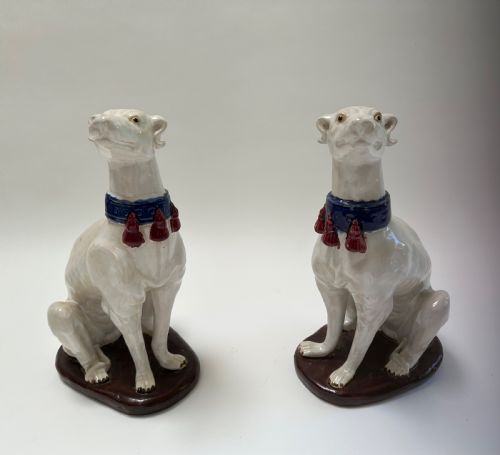
Porcelain examples utilise high-fired ceramic pastes shaped in detailed moulds before receiving glossy glazes. The resulting surface provides a smooth, uniform finish distinct from the textured hand-painted earthenware of earlier regional potteries.
Several Staffordshire whippets share hearth space with captured hares tucked neatly between their paws.
Assessing quality and execution
In bronze sculptures, the distinction lies in the sharpness of the chase work after casting, where a skilled hand defines the sinews, ribs and facial expression. Finer bronzes retain the artist's intended tension in the hound's pose, whereas lesser castings lose detail in the softer contours of the metal.
Alfred Dubucand·Alfred Barye·P J Mêne·Thomas Parr·Karl Hagenaur·Joseph Francois Victor Chemin·Christophe Fratin·Rosenthal
The Antique Whippet Figurine Glossary
- Animalier
- A nineteenth-century artistic movement dedicated to the realistic portrayal of animals, particularly predators and hounds. Sculptors in this tradition studied live specimens in menageries to achieve anatomical accuracy in bronze.
- Staffordshire pottery
- Earthenware produced by numerous factories in the Staffordshire region of England, famous for utilitarian figures and mantelpiece ornaments. These pieces are typically earthenware with lead glazes and enamel highlights.
- Lost-wax casting
- A metalworking method used to create bronze sculptures from an original wax model. This technique allows for exceptional detail in the rendering of fur and muscle.
- Lead glaze
- A shiny coating applied to pottery before a second firing to waterproof the vessel and impart a glossy surface. It is characteristic of nineteenth-century earthenware figures.
- Recumbent
- Lying down or resting, a common posture for whippet and greyhound figures designed for hearths or paperweights. This pose emphasises the elongated lines of the sleeping hound.
Antique Whippet Figurine: Frequently Asked Questions
What were whippet figures used for?
Victorian Staffordshire whippet figures served primarily as decorative ornaments for the mantelpiece, often arranged as pairs facing one another. Some specialised examples were constructed with integrated wells to function as quill holders on a writing desk.
Bronze versions functioned as art objects, mantel sculptures or heavy paperweights for the library. Their presence in the home reflected both an appreciation for hunting dogs and the Victorian taste for domestic animal display.
How do I date a Staffordshire whippet?
Dating relies on stylistic clues, potting weight, and the character of the lead glaze and enamel colours. Mid-nineteenth century pieces often exhibit distinct crackleur in the glaze and robust earthenware bodies.
Later Victorian iterations tend to show different handling of the facial paint and moulding lines. Comparing the piece to documented examples by known potters like Thomas Parr helps narrow the decade of manufacture.
Are bronze whippets French?
Many nineteenth-century bronze whippet sculptures originate from French workshops associated with the Animalier movement. Founders and artists such as P.J. Mêne and Alfred Dubucand produced refined bronze casts of hounds in Paris.
However, production was not limited to France, as later Art Deco interpretations emerged from Austrian studios and other European foundries.