



Antique Wheeling Trolley
An antique wheeling trolley brings mobile utility to a room, shifting bottles, tea, and books across timber and tile floors with ease.
Antique Wheeling Trolley
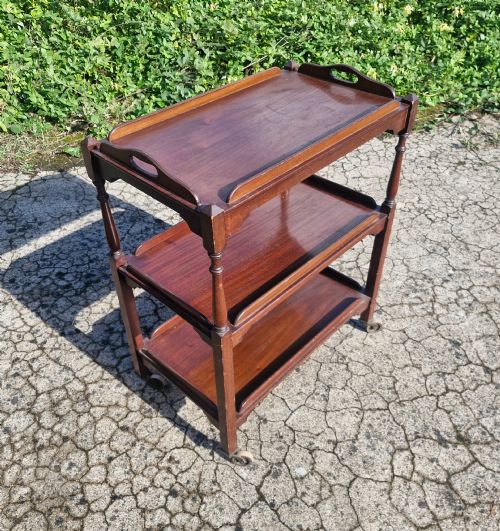
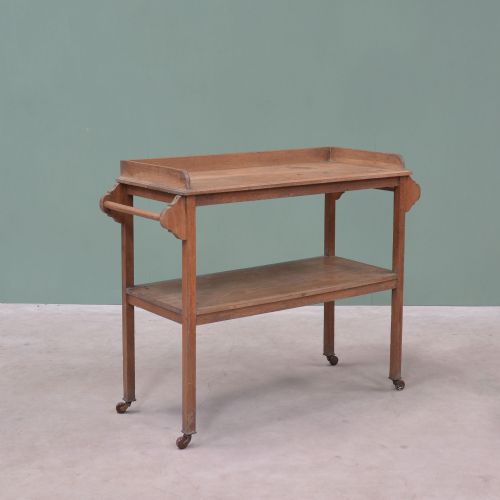
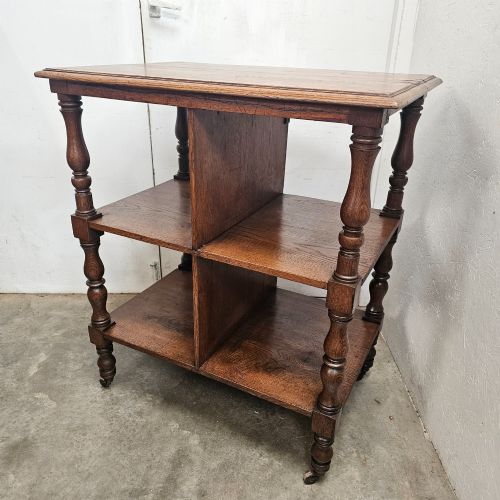
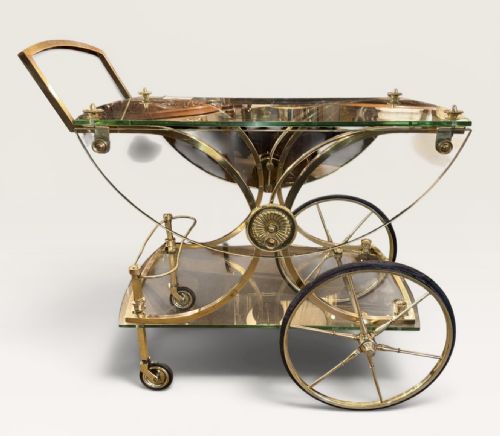
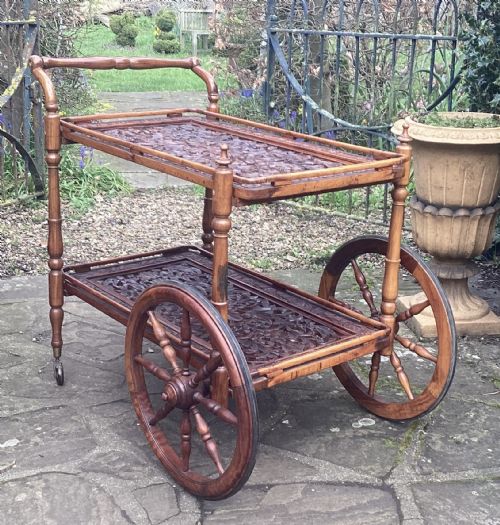
When searching for an antique wheeling trolley, buyers encounter a functional mix of serving carts, tea trolleys, bar carts, and library carts designed for movement. These pieces span periods from the Georgian era through the Victorian period, Edwardian years, and into Art Deco designs of the 1920s and 1930s.
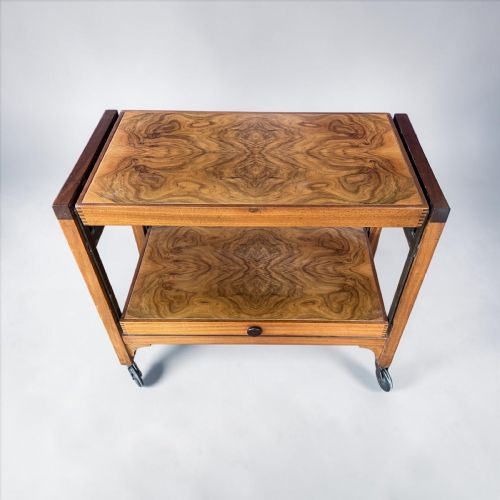
The versions most frequently met on this page include timber designs in oak and mahogany alongside brass and glass etageres and silver plated pieces. Forms range from simple two-tier tea trolleys with folding tops to metamorphic serving pieces and specialised rolling coasters.
Origins stretch across English, French, and Indian workshops, demonstrating how domestic and hospitality needs shaped mobile furniture over the centuries. Each item relies on casters or wheels to fulfil its primary purpose of conveyance within the home.
How they were made
Construction relies heavily on traditional cabinet timbers such as oak and mahogany, shaped into multi-tier frames, lift-off trays, and folding tops. Metal elements in brass, iron, and silver plate provide structural hardware, wheeled carriages, and decorative mountings.
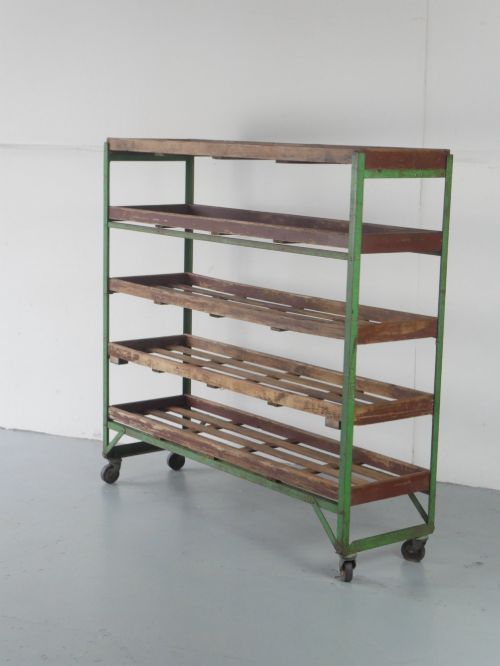
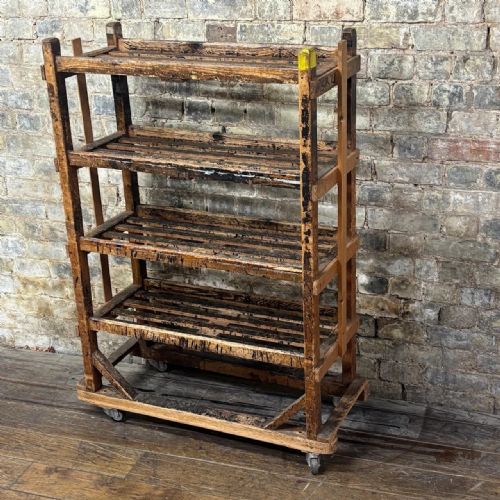
Specialised items incorporate glass shelving, carved hardwood details, and blacksmith-made ironwork to support their specific loads, whether holding decanters, books, or fuel. Joinery techniques from the Georgian, Victorian, and Edwardian periods ensure stability despite the dynamic stress of rolling on wheels.
Antique Wheeling Trolley Retail Price Guide 2026
Typical asking prices for wheeling trolley among the pieces listed under this phrase on Sellingantiques today, from the lower quarter to the upper quarter. They describe what is for sale here now, not the wider market.
Listings feature oak, mahogany, and brass materials across Victorian, Edwardian, and Art Deco periods.
What varies in quality
Quality reveals itself in the integrity of the rolling mechanism and the precision of the frame joints, which must withstand the kinetic strain of movement. Superior examples display refined timber selection, such as figured mahogany or quarter-sawn oak, matched with substantial brass or silver plated fittings.
Design sophistication separates standard utility pieces from exceptional items, seen in metamorphic mechanisms, clever folding trays, or bespoke hardware by known makers. The harmony between the wheels, the primary chassis, and the decorative detailing governs the overall standard of the trolley.
Maison Bagues·Mappin Brothers
The Antique Wheeling Trolley Glossary
- Wheeling trolley
- A mobile piece of furniture fitted with castors or wheels designed to transport food, drinks, or books from room to room.
- Etagere
- A set of open shelves on upright supports, frequently utilised as a drinks trolley or serving cart in brass and glass.
- Coaster
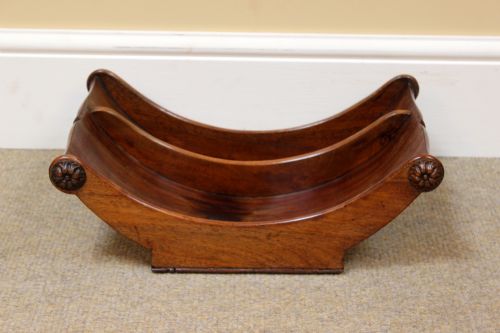
- A small wheeled carriage or tray designed to glide across dining tables, historically used for carrying wine bottles or decanters.
- Metamorphic
- Describing a piece of furniture that transforms its shape or function through folding or sliding mechanisms.
- Silver plate
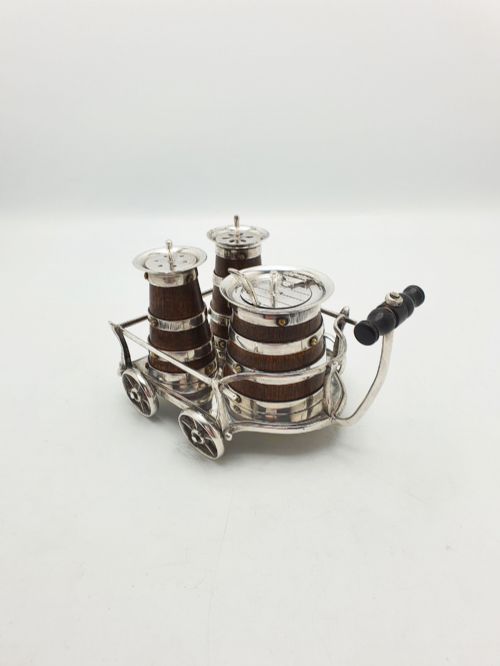
- A base metal layer coated with a thin layer of silver, commonly found on nineteenth-century carts, cruets, and carriages.
Antique Wheeling Trolley: Frequently Asked Questions
What is an antique wheeling trolley used for?
These pieces served practical domestic roles, carrying tea services, wine bottles, library books, and dining accessories across household floors.
Today, they function as mobile drinks bars, serving carts, or display surfaces in living spaces and dining rooms.
How do I identify a Victorian wheeling trolley?
Victorian examples often feature dense timbers like mahogany or oak, substantial brass castors, and heavy ornamentation typical of nineteenth-century craftsmanship.
They frequently take the form of tiered serving carts, wine coasters, or specialised cigar compendiums on wheels.
Are Art Deco wheeling trolleys different from Edwardian ones?
Art Deco trolleys from the 1920s and 1930s favour geometric lines, French styling, and modern combinations of brass, glass, and gilded surfaces.
Edwardian tea trolleys tend to rely on traditional oak construction, featuring folding leaves and multiple tiers for domestic hospitality.
Can these trolleys safely move heavy items?
Most pieces were built to carry decanters, stacked plates, books, or tea services on their original wheels and castors.
Checking the stability of the frame and the smoothness of the wheel movement determines how much weight a specific cart can handle.