

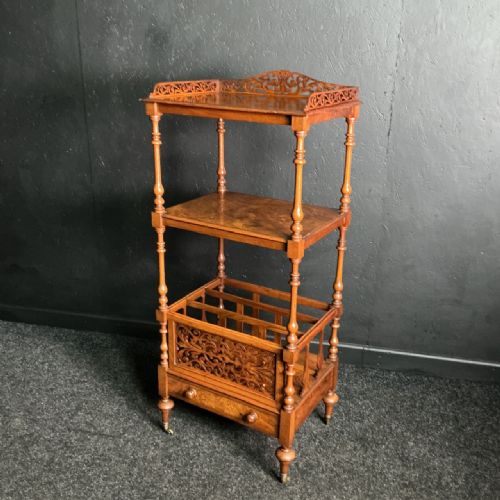
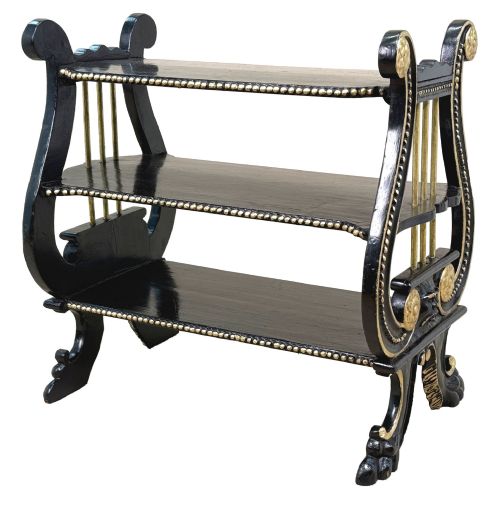
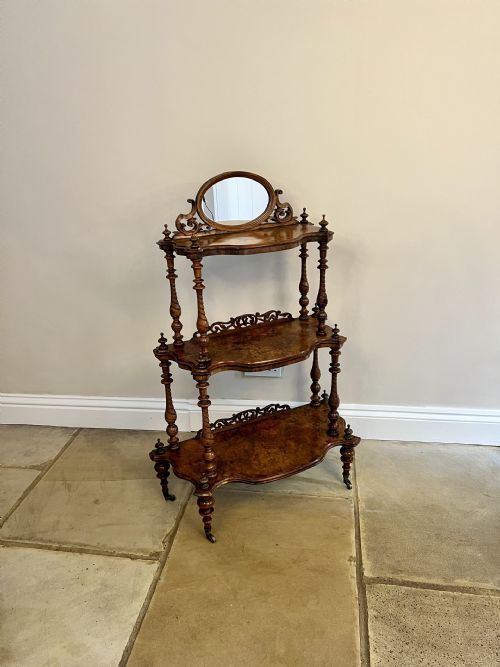
Antique Whatnot Furniture
Antique whatnot furniture brings tiered display and storage into a room, offering multiple open shelves for books, ornaments and curiosities.
Antique Whatnot Furniture
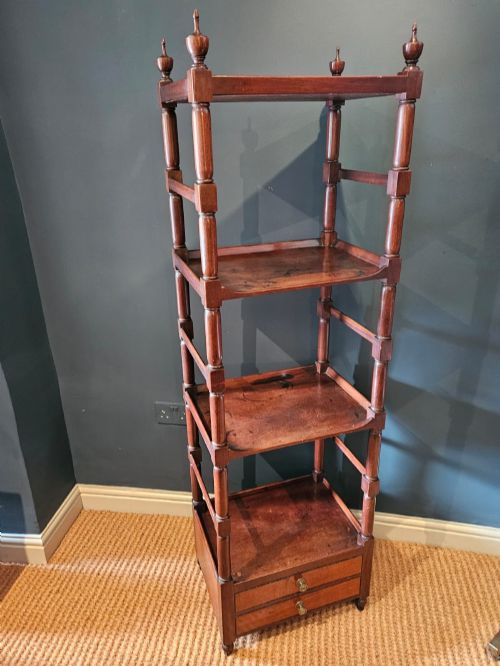
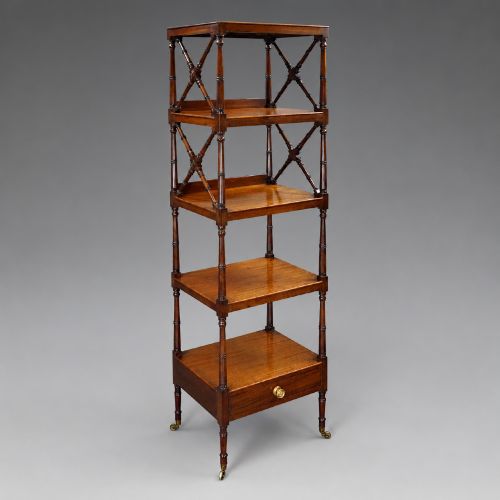
Antique whatnot furniture consists of tiered shelving units and étagères designed for displaying and holding small decorative objects, books or music sheets. These multi-shelf pieces emerged strongly during the Georgian and Regency periods before becoming a staple of Victorian drawing rooms and parlours.
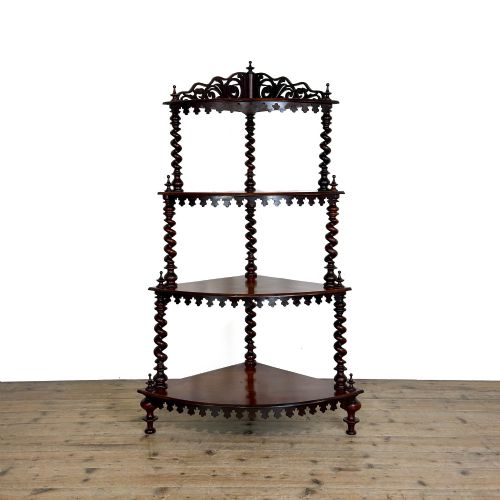
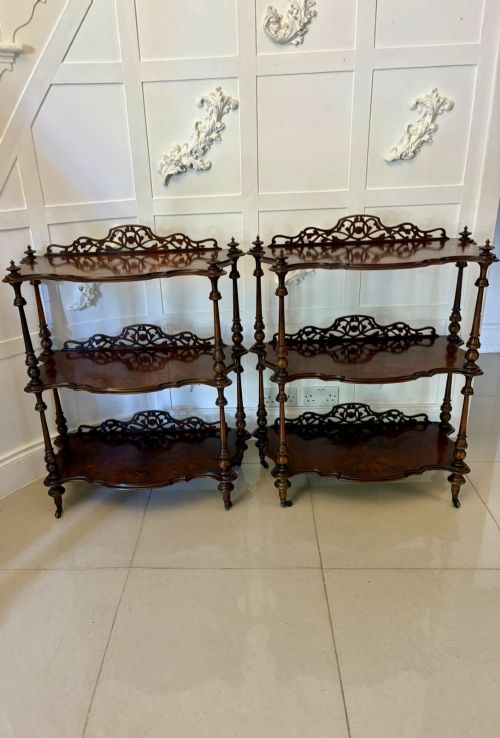
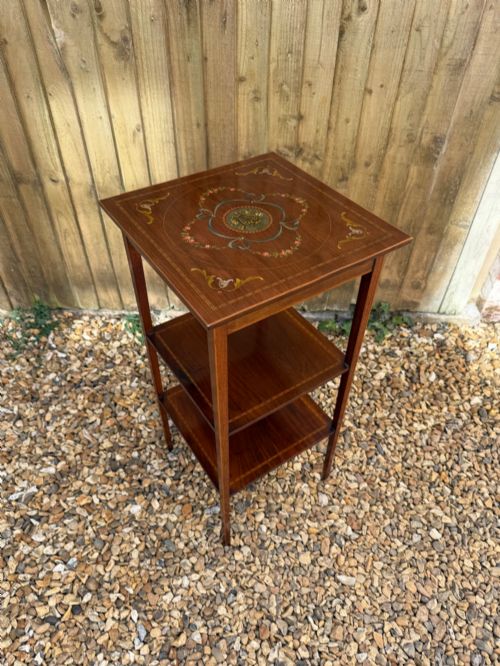
Makers utilised various forms, ranging from freestanding serpentine cabinets to corner units and small side tables with upper display shelves. The underlying structure remains consistently focused on vertical tiering, providing practical display space without dominating the floor area of a room.
Materials and construction
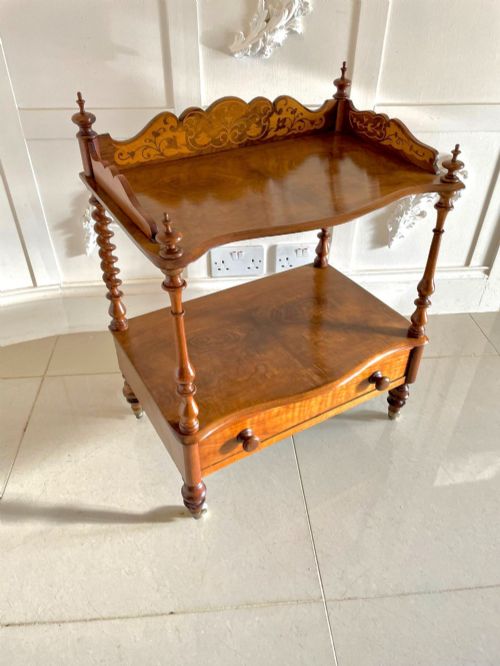
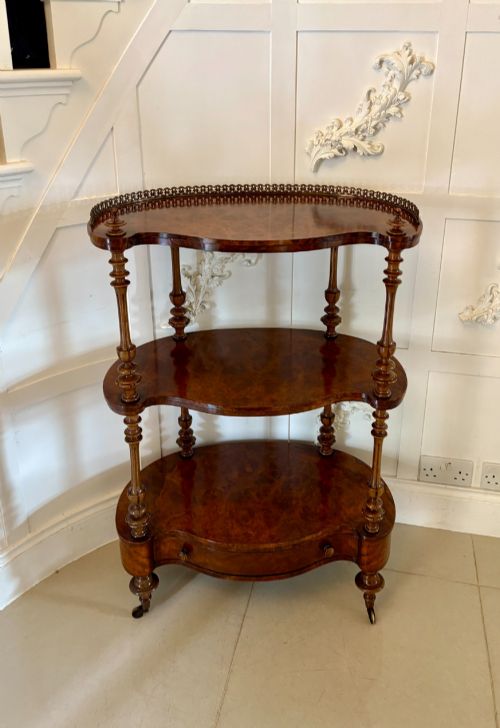
Cabinet makers relied heavily on rich timbers such as mahogany, rosewood and walnut, frequently selecting burr walnut veneers to create striking figured grain patterns on the shelves and tops. Secondary woods provided structural stability for the upright supports and tier framing.
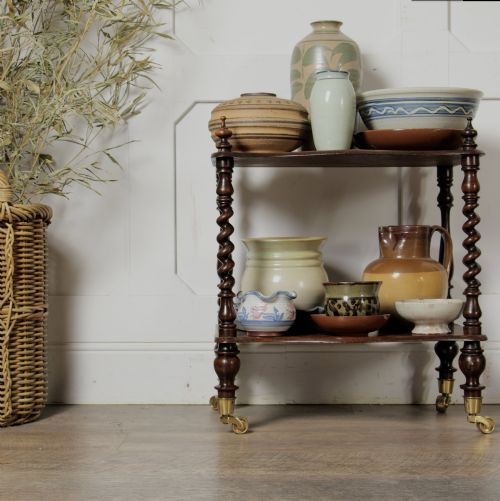
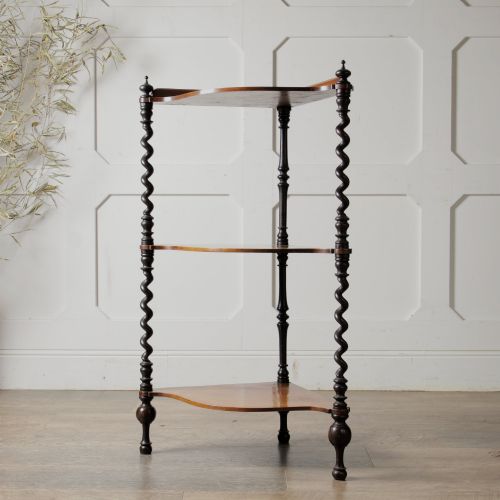
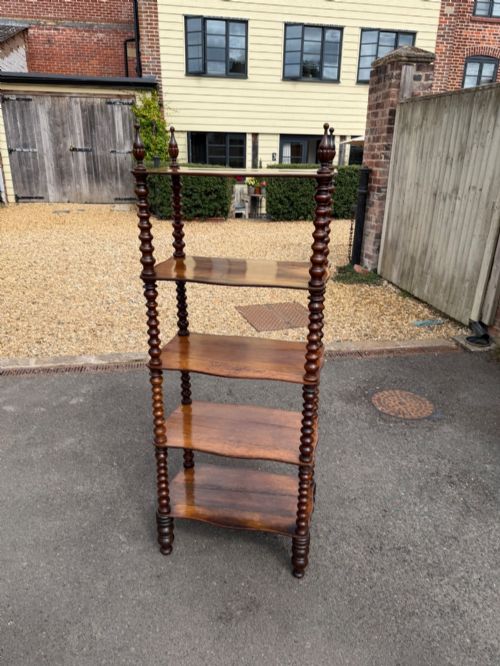
Turned wooden columns, barley twist pillars and brass or gilt metal accents define the vertical supports holding the tiers apart. More ornate examples incorporate marquetry inlay, ebonised finishes, parcel gilding or ormolu mounts to enhance the decorative impact of the tiered framework.
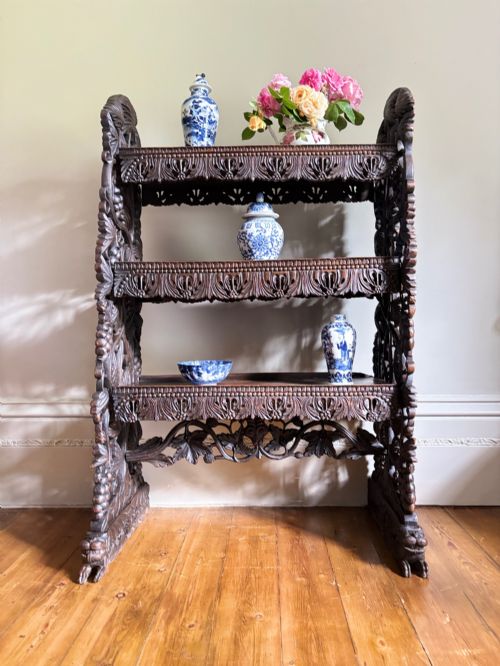
Recorded styles span George III, Regency, George IV, William IV, Victorian, French Napoleon III, Sheraton Revival and Anglo-Indian.
What separates the best pieces
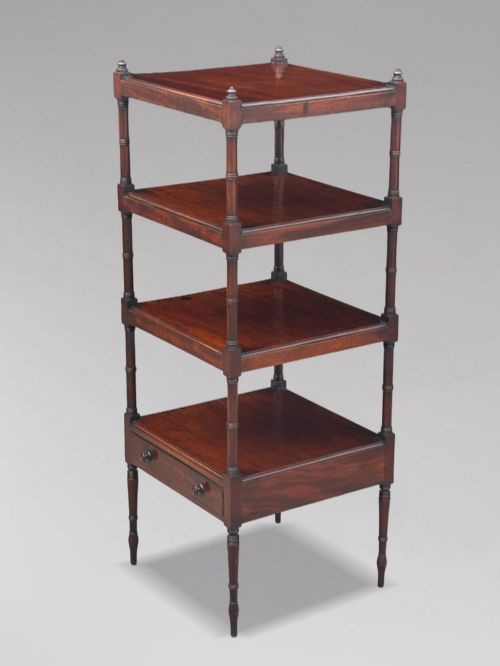
The choice of timber and veneer figure dictates much of the visual success, with highly figured burr walnut or rich rosewood marking out superior examples. Plain mahogany versions rely entirely on the crispness of the turning on the upright columns and the joinery of the tier corners.
Proportion and subtlety of detail distinguish finer workshops from standard production. Integrated additions such as lower Canterbury compartments, serpentine front edges, fine marquetry and quality brass casters elevate a standard shelving unit into a piece of high decorative merit.
Gillows·Leonard Wyburd for Liberty and Co
The Antique Whatnot Furniture Glossary
- Whatnot
- A piece of furniture consisting of a set of open shelves, one above the other, used for displaying ornaments or holding books. They became popular in the late 18th century and remained common through the Victorian era.
- Étagère
- A piece of furniture with a set of open shelves for displaying small objects or ornaments. The term is often used interchangeably with whatnot, particularly for French-influenced designs.
- Canterbury
- A low stand with partitioned sections for holding sheet music, books or portfolios, frequently incorporated into the base of Victorian whatnots. It often includes a small drawer for writing implements or accessories.
- Barley twist
- A type of turning in wood resembling a spiral or rope twist, commonly used for the vertical columns supporting the tiers of 19th-century pieces. This decorative turning adds texture and visual rhythm to the upright supports.
- Burr walnut
- Wood taken from a walnut tree outgrowth, producing intricate, swirling grain patterns highly prized for cabinet making. It was frequently used as a veneer on the top surfaces and shelves of mid-19th-century furniture.
Antique Whatnot Furniture: Frequently Asked Questions
What is an antique whatnot used for?
These tiered stands served primarily for displaying ornaments, ceramics, books and small decorative items in a drawing room or parlour. They kept valued objects accessible and visible while making efficient use of vertical space.
Over time, specific variants were adapted to hold sheet music, writing materials or jewellery, combining display space with practical domestic storage.
How do I date an antique whatnot?
Dating relies on timber selection, turning styles and overall structural design. Georgian and Regency examples generally feature clean lines, fine mahogany and simpler column supports.
Victorian pieces often introduce burr walnut veneers, ebonised finishes, marquetry and heavier turned elements like barley twists, reflecting the changing tastes of the mid to late 19th century.
Where should I place a whatnot in my home?
These pieces suit living rooms, hallways or studies where open vertical display is useful. Corner variants fit neatly into unused angles, providing display capacity without blocking walkways.
Freestanding versions work well against walls or beside seating, allowing decorative items to be viewed from multiple angles across the room.
What is the difference between a whatnot and an étagère?
The terms overlap significantly, but étagère often implies a French influence with a lighter decorative focus on display. Whatnot is the traditional English term for multi-tiered shelving units.
Both serve the same fundamental purpose of holding display items, though étagères more frequently incorporate glass, mirrors or gilt metal mounts.