


Antique West Country Art
Antique west country art captures regional life and landscapes through paintings, watercolours, and signs spanning the Georgian period to the mid-twentieth century.
Antique West Country Art
When you search for antique west country art, you are looking at visual records of south-west England created by local artists and craftsmen. These pieces capture the rural scenes, maritime heritage, and local commerce of counties like Devon and Cornwall.
The selections available here span from Georgian cartography to mid-century industrial signs and twentieth-century paintings. Most pieces you meet on this page take the form of framed watercolours and oil paintings depicting local harbours, ponies, and village scenes.
The dates range from the Georgian period through Victorian and Edwardian times up to the 1950s. This mix reflects both domestic artistry and functional objects associated with the region's history.
Materials and Construction
Painters working in the region utilised oil paint and watercolour on canvas and paper substrates to capture coastal light and moorland atmosphere. These works are typically housed in period wooden frames that complement the medium.
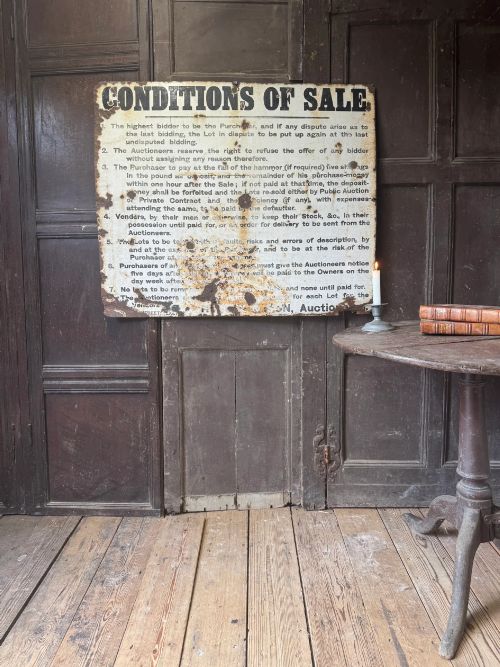
Beyond fine art, the material record includes painted metal and iron utilised for functional wall signs and auction notices. Paper also appears in the form of Georgian cartography, showing the region through early printed maps.
Dartmoor ponies occasionally share wall space with auctioneers' conditions of sale.
Assessing Quality and Execution
Quality in these works rests upon the precision of the draughtsmanship and the artist's handling of regional light and atmosphere. Stronger examples demonstrate a confident command of medium, whether laying out a watercolour wash or applying oil paint to canvas.
In functional items such as painted metal signs, quality lies in the legibility of the lettering and the preservation of the original surface. For maps and paper goods, the crispness of the printing and the integrity of the sheet determine the standing of the piece.
Charles Walter Simpson·Richard Harry Carter·Fred Stead·Robert Morden·Henry Charles Fox·Walter Henry Sweet·John Baragwanath King
The Antique West Country Art Glossary
- Cartography
- The science or practice of drawing maps. In this context, it refers to period printed maps of counties like Devon.
- Watercolour
- A paint whose liquid medium is water and binder is gum arabic, applied to paper. It is particularly common in maritime and landscape depictions of the south-west.
- Canvas
- A closely woven fabric used as a surface for oil painting. It is stretched over a wooden frame before work begins.
- Maritime Art
- Artworks depicting ships, the sea, and coastal scenes. This includes paintings of trawling luggers and harbour villages.
Antique West Country Art: Frequently Asked Questions
What subjects do these artworks typically show?
The pieces record rural landscapes, coastal harbours, Dartmoor ponies, and local maritime activity.
They offer a direct visual connection to the topography and daily life of south-west England across various decades.
How should I display watercolour paintings?
Watercolours are sensitive to strong sunlight and can fade if placed in direct beams.
Keep them behind glass in stable indoor environments away from excessive moisture.
What periods do these pieces cover?
The selection includes items from the Georgian era through Victorian, Edwardian, and mid-century times.
Dates range from early mapmaking up to painted metal signs from the nineteen-fifties.
Are metal signs considered art?
Painted metal objects function as industrial artefacts and regional records rather than traditional fine art.
They reflect the commercial and administrative history of the West Country alongside canvas and paper works.