

Antique Welsh Painting
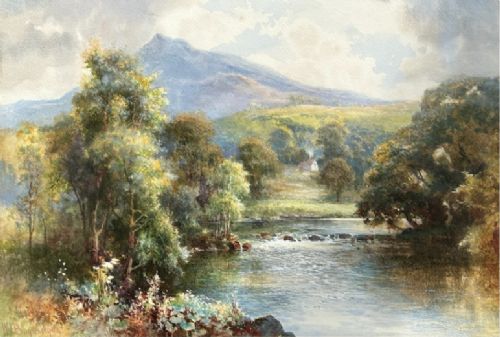
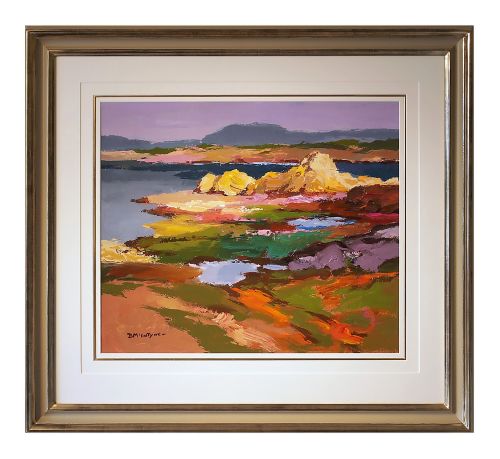
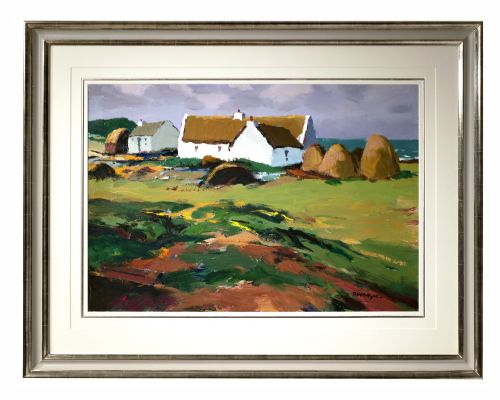
An antique welsh painting captures the topography and rural life of the principality through watercolours and oils on canvas.
Antique Welsh Painting
The term antique welsh painting covers original watercolours, oils on canvas, and wood panel works executed across the nineteenth and early twentieth centuries. Artists frequently documented specific locations such as Betws-y-Coed, the Conway Valley, and various river estuaries.
Landscapes form the core of the selection, depicting mountains, rural homesteads, and coastal views. Works range from intimate watercolour sketches to large framed oils by listed British and Welsh painters.
The pieces often feature traditional local framing or retain period mounts, reflecting the aesthetic standards of Victorian and Edwardian collectors who toured or resided in the region.
How they were made
Pigments were applied to stretched canvas, watercolour paper, or prepared wood panels using traditional brushes and binding media. Watercolour works relied on transparent washes layered over graphite or ink underdrawings to capture atmospheric light.
Oil paintings utilised dense oil-based pigments built up in opaque layers to achieve depth in mountain foliage and water surfaces. Canvases were secured to wooden stretcher frames, while panel paintings employed seasoned timber supports.
Several artists clearly braved persistent Welsh rain to capture misty river valleys without ruining their watercolours.
What varies in quality
Execution and tonal balance separate standard topographical records from superior artistic interpretations. Master painters achieved nuanced control over atmospheric perspective, rendering mist, mountain shadows, and running water with convincing weight.
Material preservation dictates overall integrity, including the stability of the original ground, the absence of heavy overpainting, and the preservation of paper or canvas against dampness and acid migration.
William Joseph Boyes·Henry Martin Pope·William Yale·Hubert Wellington·Cornelius Pearson·Arthur Wardle·Robert Gallon·Thomas Henry Thomas
The Antique Welsh Painting Glossary
- Watercolour
- A painting method in which the paints are made of pigments suspended in a water-based solution. These works are typically mounted behind protective glass.
- Oil on Canvas
- A technique using pigments bound in a drying oil applied to a woven fabric support. This medium allowed artists to build rich surface textures.
- Panel Painting
- An artwork executed on a flat piece of wood rather than canvas or paper. Wood panels provided a rigid ground favoured by artists working outdoors.
Antique Welsh Painting: Frequently Asked Questions
What subjects appear in these paintings?
Landscapes dominate the category, showing mountains, rivers, and coastal scenes across various Welsh counties. Artists also recorded rural homesteads, bridges, and local agricultural activities.
Specific geographical locations such as Betws-y-Coed and Snowdonia recur frequently in the titles and inscriptions.
How should these paintings be displayed?
Watercolours require protection from direct sunlight to prevent the fading of delicate pigments on paper. They are best hung on interior walls away from damp sources.
Oil paintings on canvas tolerate ambient indoor conditions better but still benefit from stable humidity levels and proper wall clearance.
How are periods identified?
Stylistic evidence combined with artist signatures and period framing helps establish the date of execution. Victorian works often display specific handling of light and romantic topography.
Exhibition labels, inscriptions verso, and original dealer stamps provide additional documentation for dating.
Are these works signed by the artists?
Many examples bear the artist signature, monogram, or initials directly on the front surface. Others remain unattributed or carry inscriptions on the reverse stretcher or frame.
Signatures are verified by comparing the handwriting and medium with documented examples from the same hand.