




Antique Weather Station Wall Mount
These antique weather station wall mount pieces measure atmospheric pressure, time, and temperature, bringing functional Victorian and Georgian craftsmanship directly into your hall or study.
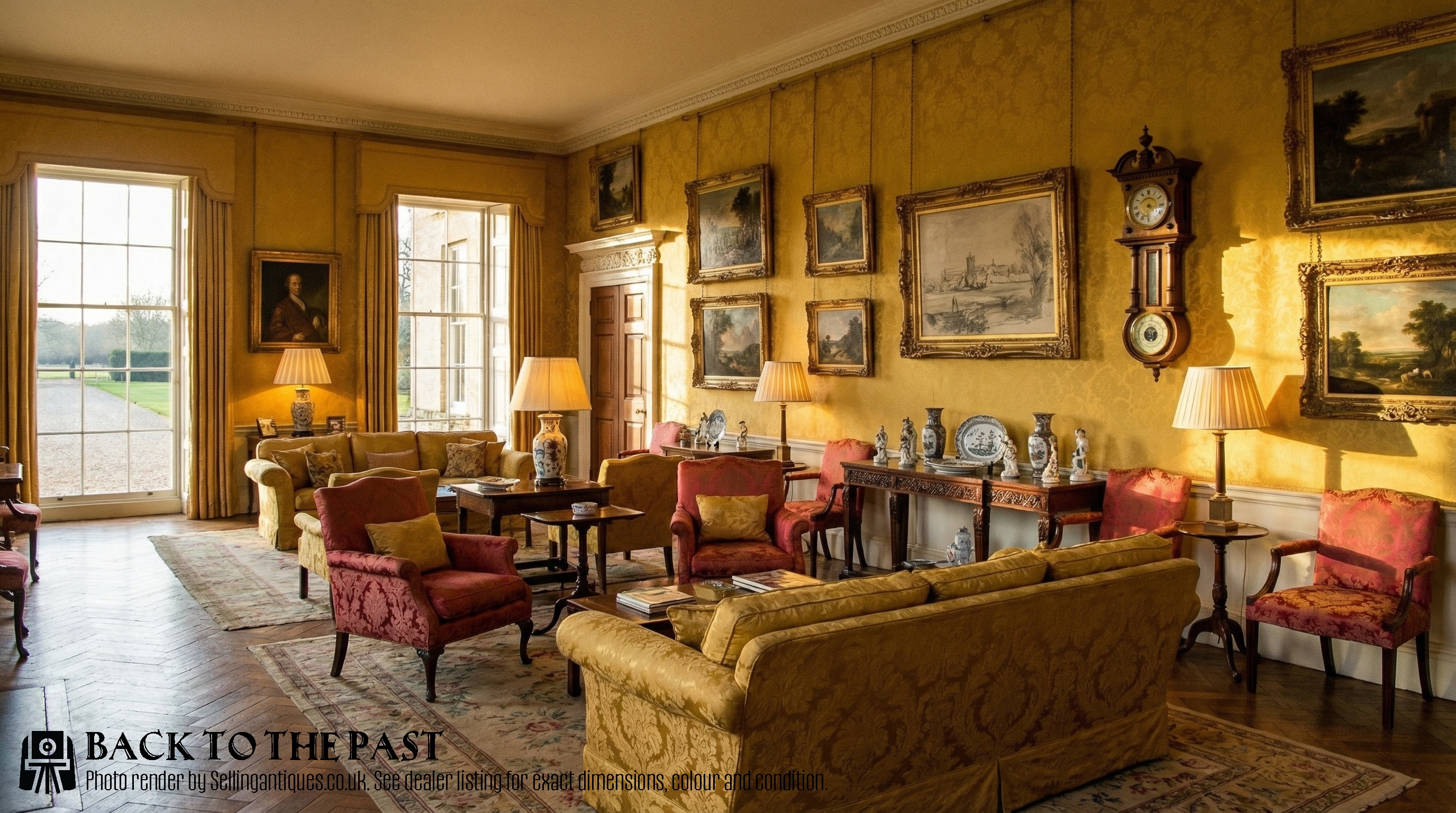
Antique Weather Station Wall Mount
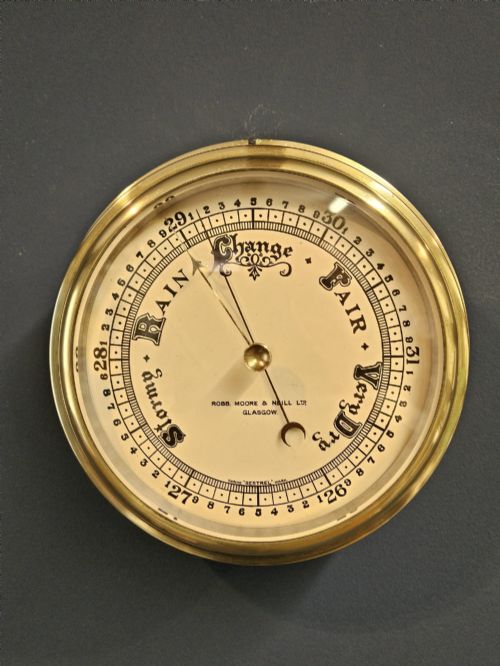
An antique weather station wall mount combines instruments such as barometers, thermometers, and clocks within a single wooden or metal enclosure designed to hang upon a wall. When searching for an antique weather station wall mount, buyers encounter various domestic and maritime instruments dating from the eighteenth to the early twentieth century. These pieces record atmospheric changes and ambient temperature while serving as decorative wall furniture.
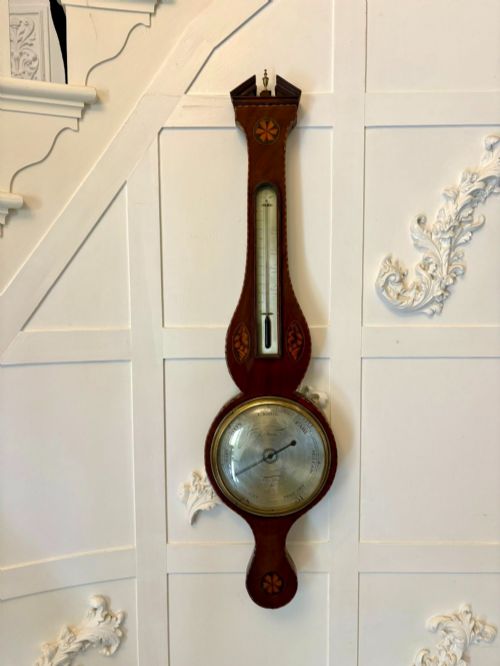
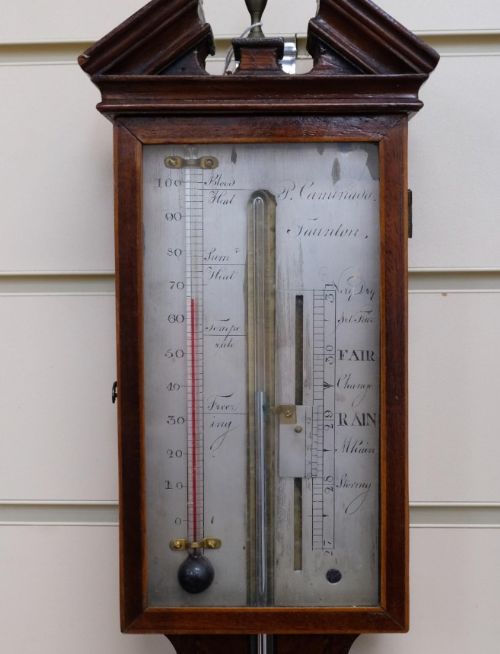
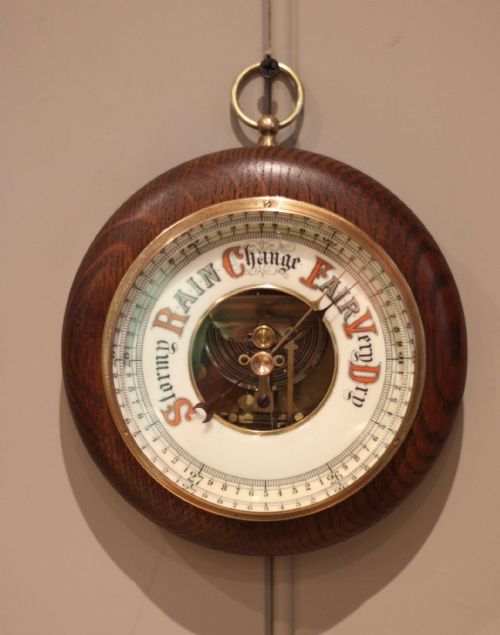
The selections available here span several distinct periods, including George III, Regency, Victorian, and Edwardian eras. Formats range from traditional banjo barometers and stick barometers to circular aneroid models and combined wall clock units. Originating from workshops across Britain and continental Europe, they utilise traditional mounting methods to secure heavy glass and brass components safely to vertical surfaces.
How they were made
Cabinetmakers constructed the primary housings using dense hardwoods such as mahogany, oak, walnut, and satinwood, frequently applying shell inlay or intricate hand-carved ornamentation. In styles like Black Forest or Victorian carved oak, artisans shaped the timber frames with deep relief work around the dial perimeters. Enclosures were finished with polished waxes or French polish to protect the timber grain.
Instrument faces incorporate silvered brass dials, engraved graduations, and protective curved glassbezels secured over delicate indicator needles. Aneroid and mercury mechanisms require precise calibration, utilising brass linkages, tubes, and thermometer scales mounted firmly within the wooden chassis. Heavy brass bezels and bulkhead casings provide durable framing for maritime and domestic installations alike.
The documented forms range from single-function thermometers and stick barometers to complex assemblies combining clocks, barographs, and weather dials.
What varies in quality
Quality separates simple utility pieces from exceptional decorative items through the precision of the timber carving and the refinement of the dial engraving. Finer examples feature figured mahogany veneers, delicate shell marquetry, and heavily carved walnut cases with crisp, undisturbed edges. Plain oak or utilitarian models focus strictly on mechanical legibility rather than elaborate cabinetwork.
The sophistication of the combined instruments also dictates distinction within the range, moving from basic standalone barometers to complex assemblies uniting clocks, thermometers, and barographs. Signed dials by known instrument makers add archival significance compared to unsigned workshop output. The clarity of the silvered brass and the preservation of the original glass bezels further distinguish superior survivals.
P. Caminada·Antoine Redier·Dollond London·Gilbert London
The Antique Weather Station Wall Mount Glossary
- Aneroid barometer
- An instrument that measures air pressure without liquid by using a flexible metal box that expands or contracts. It forms the basis of many domestic wall-mounted weather instruments.
- Banjo barometer
- A household weather glass housed in a distinctive vertical wooden case shaped like a banjo. It typically displays a circular dial at the top and a larger thermometer or hygrometer on the lower stem.
- Stick barometer
- A vertical wall instrument containing an exposed glass tube filled with mercury to measure barometric pressure directly. These pieces represent earlier, more traditional scientific formatting.
- Barograph
- A recording meteorological instrument that draws a continuous line of atmospheric pressure onto a revolving drum of paper. These desk or wall-mounted units feature clockwork mechanisms.
- Bulkhead clock and barometer
- Heavy maritime instruments originally designed for ship interiors, housed in circular metal cases. They are engineered to withstand damp environments and vessel movement.
Antique Weather Station Wall Mount: Frequently Asked Questions
How do I hang a heavy wooden barometer safely?
These wall instruments require secure fixing into solid masonry or direct wooden wall studs using appropriate screws and rawlplugs. Hanging them from simple picture wire or loose plaster hooks risks structural failure due to their substantial timber and glass weight.
Ensure the mounting bracket engages the designated hanging eyelet or keyhole slot on the rear of the case firmly. Once mounted, check that the unit hangs completely plumb so the internal mechanical linkages operate without friction.
Can I calibrate an antique aneroid barometer myself?
Most aneroid barometers feature a small adjustment screw accessible through the back or through a small aperture on the dial face. By turning this screw while comparing the reading to a known local meteorological measurement, you can align the indicator needle.
Adjustment should be done gradually to avoid placing sudden tension on the delicate internal vacuum capsule and brass spring mechanism. If the instrument lacks an external adjustment port, professional recalibration may be necessary.
What is the difference between a stick and a banjo barometer?
A stick barometer displays the mercury column directly within a long, narrow vertical wooden trunk, offering a straightforward scientific reading of air pressure. This form represents the earlier eighteenth-century approach to domestic meteorology.
A banjo barometer expands upon this by incorporating a large circular dial at the top connected to a mechanical pulley system inside an enlarged wooden case. This layout allowed makers to add secondary instruments like thermometers and decorative marquetry veneers.
How do I clean the wood and glass on my wall station?
Dust the timber case gently with a dry, soft lint-free cloth and apply high-quality beeswax sparingly to maintain the polished finish. Avoid modern liquid polishes or silicone sprays that can penetrate old cracked finishes and soften the underlying wood.
Clean the glass bezel using a mild glass cleaner applied to the cloth rather than sprayed directly onto the frame, preventing moisture from seeping behind the dial. Take care around engraved brass dials, as harsh abrasives will remove the traditional silvered finish.