

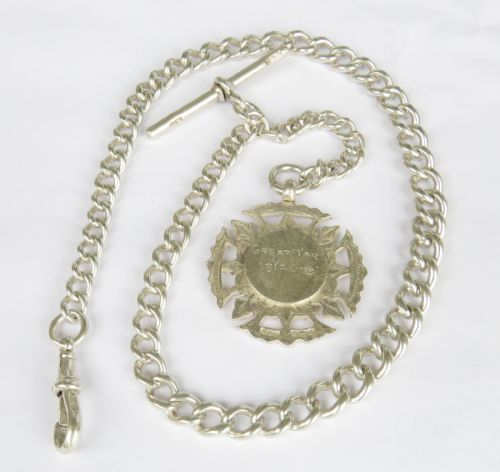


Antique Watch Fob Medal
These antique watch fob medal pieces are wearable markers of sporting and social history, prized for their intricate engraving and solid precious metals.
Antique Watch Fob Medal
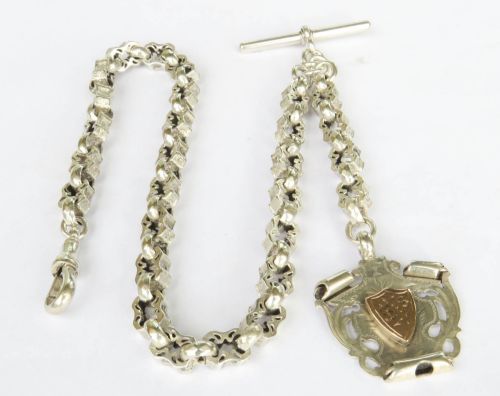
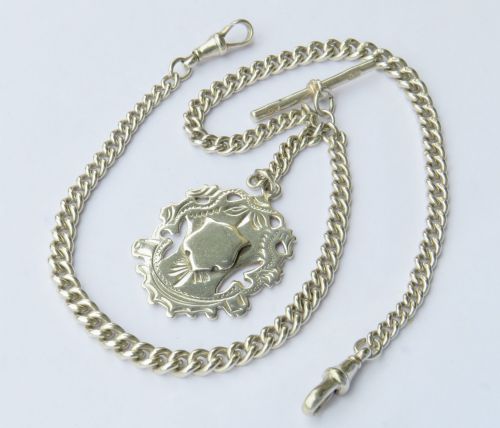
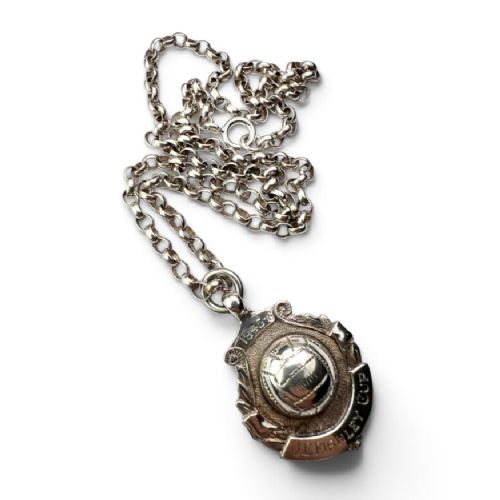
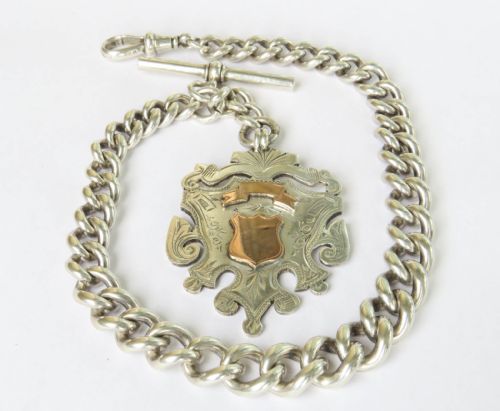
An antique watch fob medal serves as a tangible record of past athletic triumphs, club memberships, and personal achievements. You will frequently encounter these items attached to pocket watch chains or worn individually as pendants.
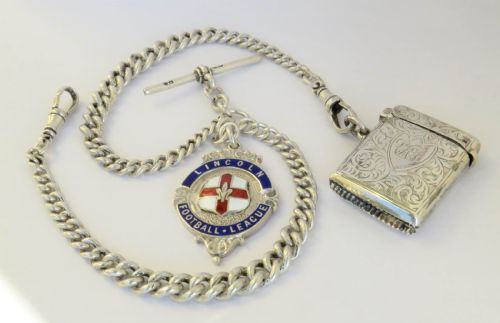
The pieces on this page span the late nineteenth century through to the early twentieth century, taking in the Victorian, Edwardian, and Art Deco periods. Football, cricket, tennis, cycling, and curling medals feature prominently among the sports and pastimes commemorated.
Masonic and general civic achievements also appear, showing that these items marked professional and social milestones alongside athletic ones. Most examples originate from British and Irish contexts, carrying hallmarks that date their manufacture precisely.
Materials and construction methods
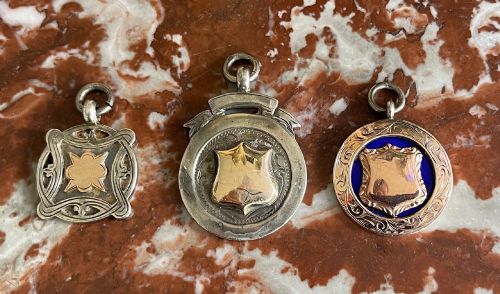
Metals form the core of these pieces, predominantly sterling silver and nine-carat gold, occasionally supplemented by silver plate, rose gold detail, and nickel. Hallmarks stamped into the metal reveal the assay office, standard of purity, and year of creation.
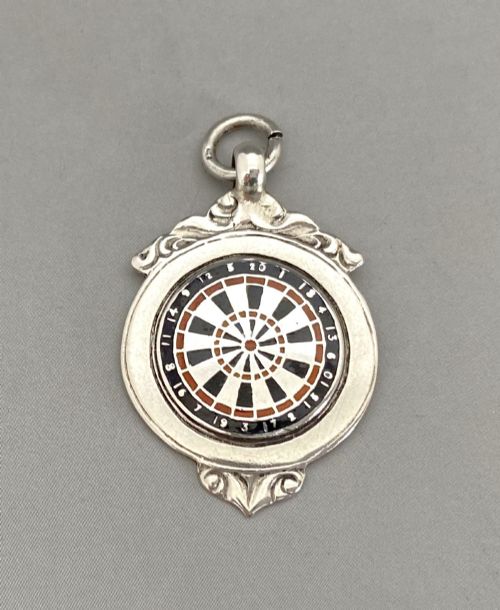
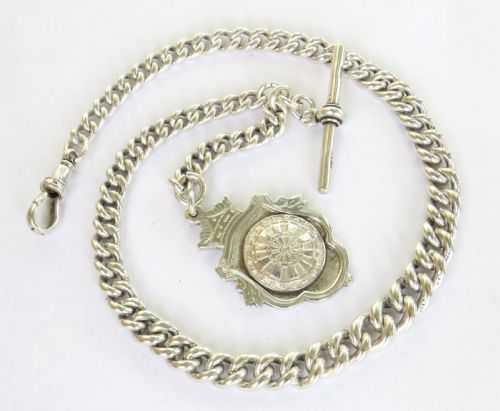
Enamel work frequently adds colour and contrast to the metallic surfaces, especially in sporting designs like dartboards and football insignia. Hand-engraving provides the lettering and decorative borders that personalise each medallion.
Antique Watch Fob Medal Retail Price Guide 2026
Typical asking prices for watch fob medal among the pieces listed under this phrase on Sellingantiques today, from the lower quarter to the upper quarter. They describe what is for sale here now, not the wider market.
Someone once won a curling match in Perth and went home with a gleaming silver medal that survived a century to sit on this page.
Differentiating quality across the range
The depth and clarity of the hand-engraving distinguish finer medallions from simpler production pieces. Crisp lettering and sharp floral motifs demonstrate superior craftsmanship by the silversmith.
The presence of undamaged enamel and heavier gauge metal indicates a higher tier of manufacture. Pieces that retain their original suspension loops and crisp hallmarking carry greater integrity as historical objects.
David McGregor
The Antique Watch Fob Medal Glossary
- Hallmark
- Official stamps struck into precious metals to guarantee their purity and origin. These marks identify the maker, the assay office, and the year of testing.
- Albert chain
- A type of pocket watch chain designed to pass through a waistcoat buttonhole. Fob medals were commonly suspended from the centre drop of this chain.
- Dog clip
- A spring-loaded swivel clasp attached to watch chains and fobs for secure fastening. This mechanism allows medals to be easily removed or rearranged.
- Medallion
- A large, flat, medal-like pendant worn to commemorate an event or award. Many fob medals take this substantial form.
Antique Watch Fob Medal: Frequently Asked Questions
How were antique watch fob medals worn?
These medals hung from the centre drop of a pocket watch albert chain, suspended across a waistcoat or pocket. They moved with the wearer as a public display of past athletic or social achievements.
Today, many people remove them from chains to wear them as pendants on modern necklaces. Their substantial weight and flat backs make them well-suited to daily wear in this manner.
What sports appear on these medals?
Football, cricket, tennis, cycling, and curling feature frequently among the sporting designs on this page. Clubs and associations commissioned these pieces to honour tournament winners and champion players.
Non-sporting subjects also exist, including Masonic insignia and novelty items like dartboards. Each design reflects the specific leisure pursuits of the Victorian and Edwardian eras.
How do I date an antique fob medal?
Assay office hallmarks stamped directly onto the silver or gold provide the most reliable dating evidence. A specific letter stamp corresponds to the exact year the piece was tested and marked.
Stylistic clues such as Art Deco geometric lines or Victorian floral engraving also help narrow down the period. Inscribed dates on the front or reverse often record the exact year of the sporting victory.