

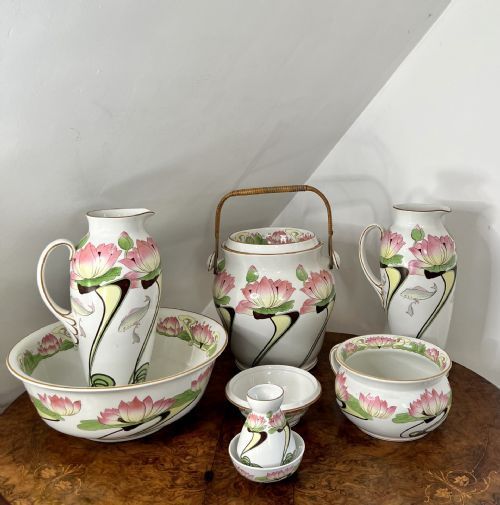


Antique Wash Jug
An antique wash jug brought water to the bedroom before plumbed bathrooms, combining utility with decorative ceramic art.
Antique Wash Jug
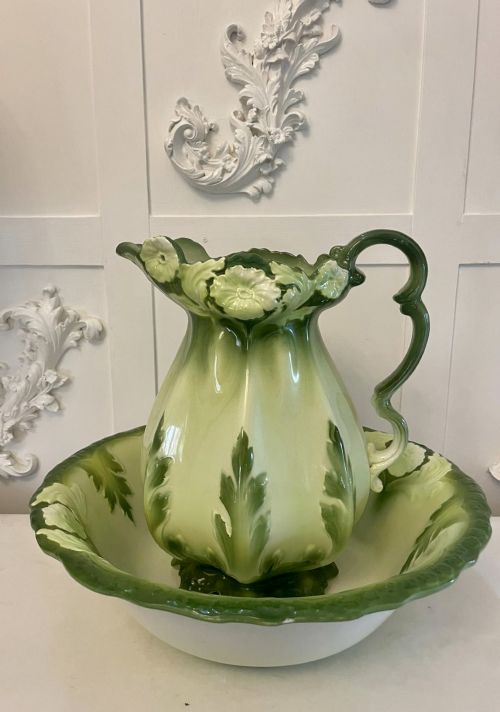
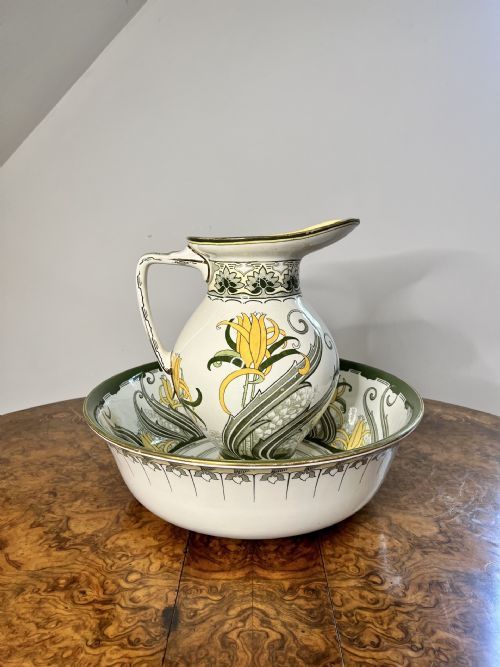
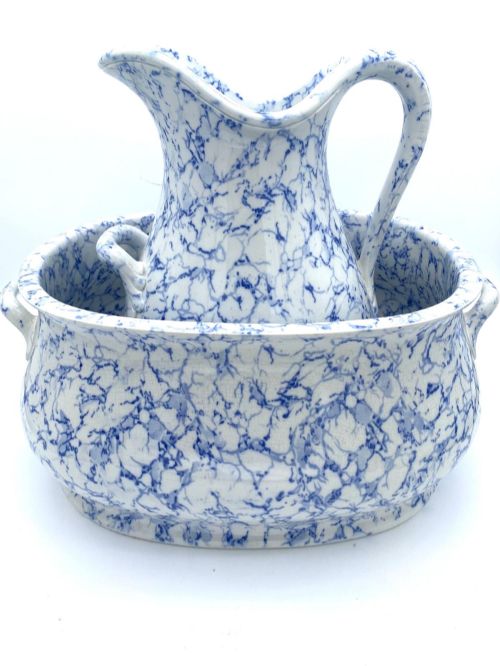
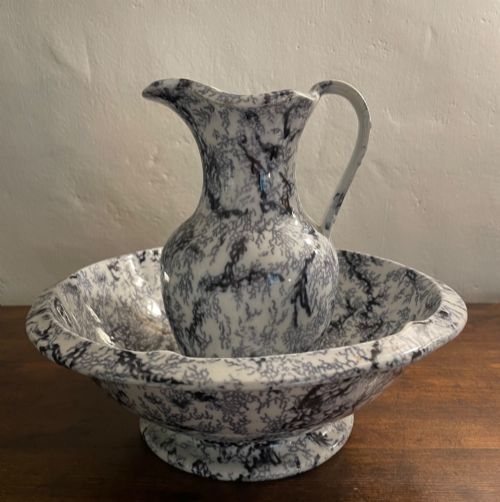
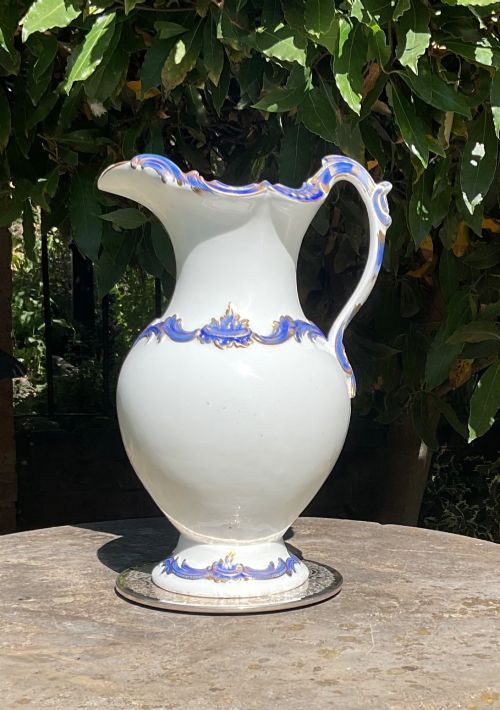
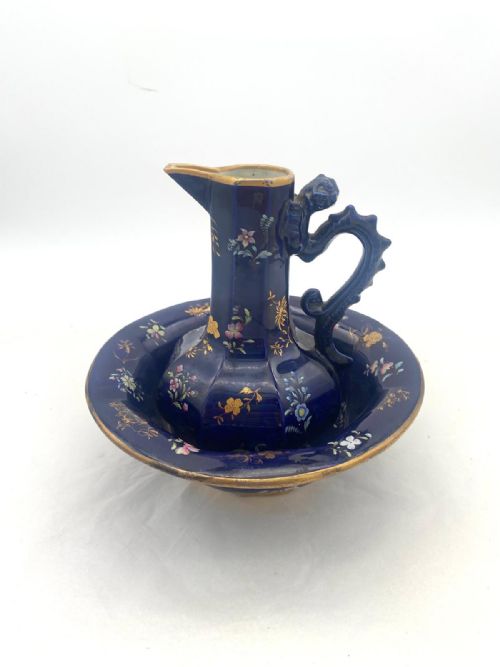
An antique wash jug is a household vessel designed to hold water for personal hygiene, frequently found paired with a matching basin in sets dating from the Georgian, Victorian, and Edwardian eras. Buyers exploring this category encounter earthenware, porcelain, and ironstone forms that once sat upon washstands in bedrooms.
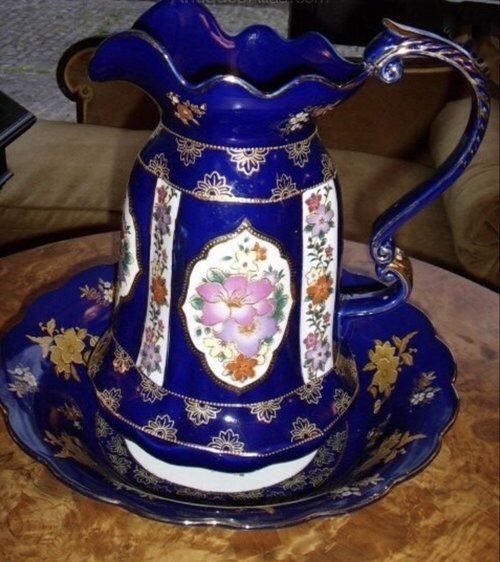
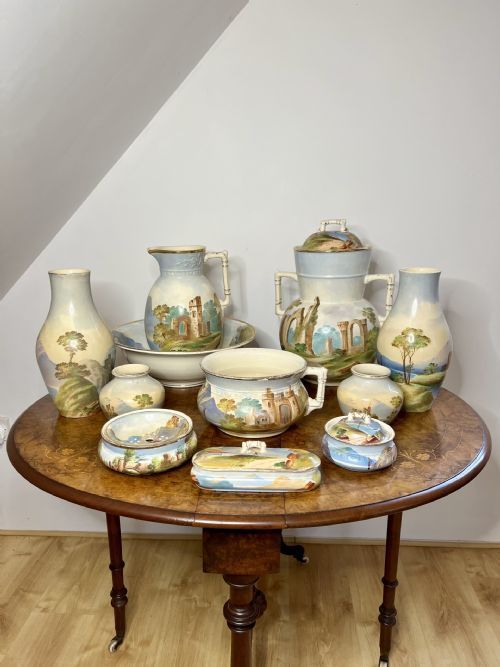
The most common examples on this page hail from the Edwardian and Victorian periods, often decorated with transfer-printed patterns or cobalt glazes. These pieces range from standard bedroom pitchers to larger sets incorporating soap dishes and chamber pots.
Materials and Manufacture
Potters shaped these vessels from earthenware, ironstone, or porcelain, applying liquid glazes to seal the porous clay before kiln firing. Many examples feature flow blue or transfer-printed floral and architectural motifs applied beneath or over the glaze.
Certain high-end pieces incorporate gilt accents, gold leaf, or silver plating on ceramic or metal bodies, particularly those produced by prominent factories in the nineteenth and early twentieth centuries.
Miniature wash sets allowed Victorian children to practice their morning ablutions with appropriately scaled ceramic pitchers.
Distinctions in Quality
Quality in these vessels rests upon the crispness of the transfer printing, the complexity of the glaze effects, and the weight and refinement of the ceramic body. Porcelain and ironstone examples generally exhibit finer detail and greater durability than standard earthenware.
Minton·Doulon Burslem·Masons Ironstone·Christofle·Shelley
The Antique Wash Jug Glossary
- Wash set
- A matching group of bedroom ceramics comprising a large water jug, a basin, and smaller accessory vessels. These sets formed the centrepiece of personal washing routines before the widespread adoption of indoor plumbing.
- Flow blue
- A cobalt blue transfer printing style where the colour blurred slightly into the white glaze during firing. This technique created a soft, atmospheric effect popular on nineteenth-century earthenware.
- Ironstone
- A dense, durable type of earthenware patented in the nineteenth century. It offered the strength of stoneware with the refined appearance of porcelain.
- Transfer printing
- A decoration method where an engraved copper plate transferred a design onto paper, which was then pressed onto the ceramic surface. This allowed intricate patterns to be reproduced consistently across multiple vessels.
Antique Wash Jug: Frequently Asked Questions
How were wash jugs used originally?
These jugs sat upon wooden washstands in bedrooms, holding water carried from the kitchen or pump for morning washing and shaving.
Servants filled them daily, and the water emptied into the matching basin below after use.
What periods do these jugs date from?
The pieces span from the Georgian era through the Victorian and Edwardian periods up to the early twentieth century.
Victorian and Edwardian examples represent the largest portion of available items.
Can I use an antique wash jug for flowers?
Many collectors utilise these large pitchers as decorative vases for dried or fresh floral arrangements in living spaces.
Their substantial volume and wide handles accommodate large bouquets easily.
How do I identify ironstone from earthenware?
Ironstone feels heavier and rings with a clearer tone when tapped gently compared to softer earthenware bodies.
It also resists crazing more effectively over decades of exposure to moisture.