


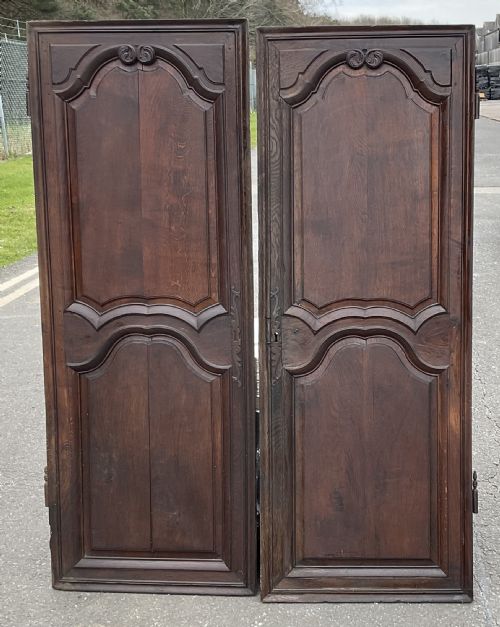


Antique Walnut Closet
An antique walnut closet offers generous storage housed in richly figured timber, bringing warmth and presence to a room.
Antique Walnut Closet
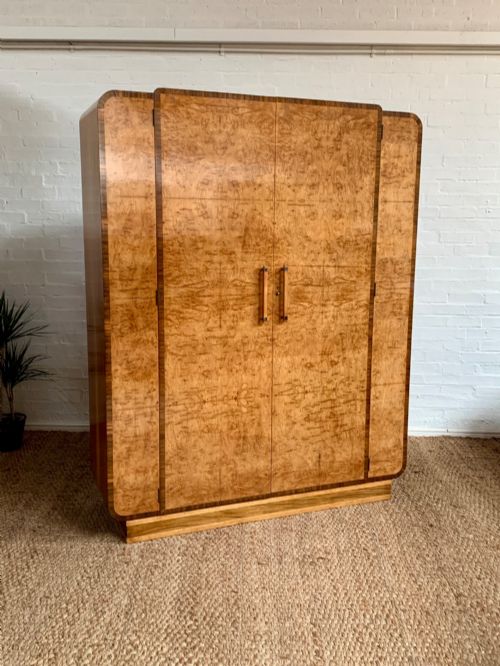
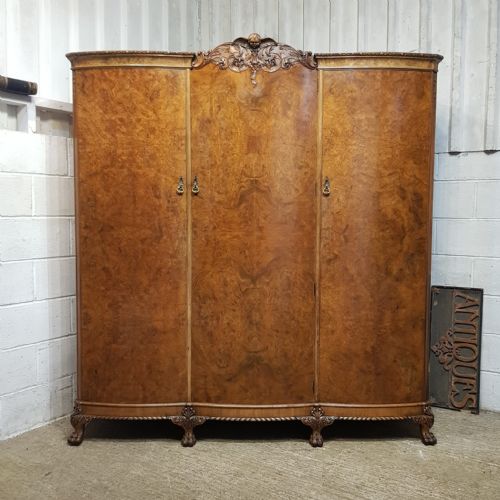
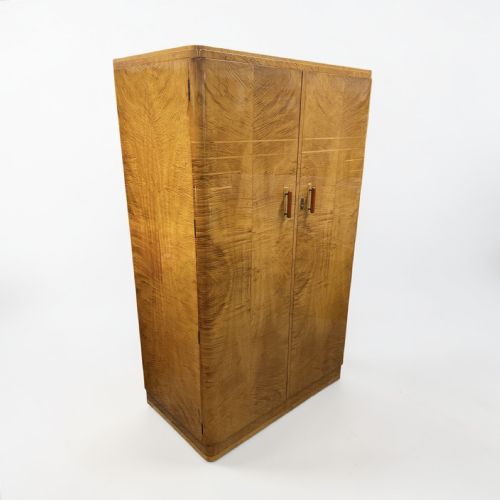
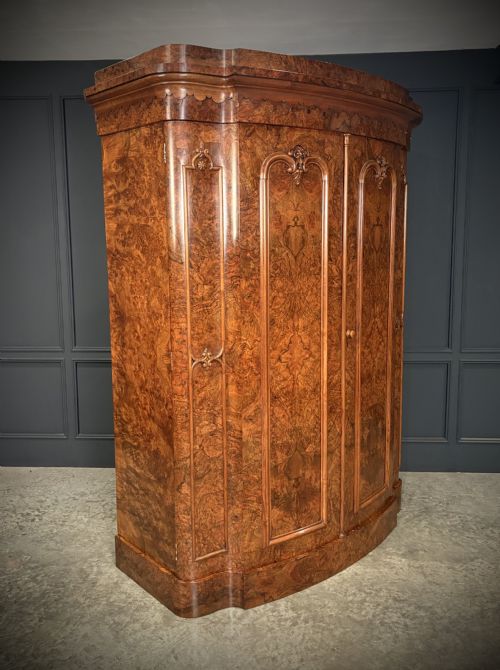
When you search for an antique walnut closet, you encounter substantial freestanding storage furniture designed for hanging and shelving garments. These pieces span from the mid-nineteenth century through the Edwardian era and into the robust forms of the 1930s.
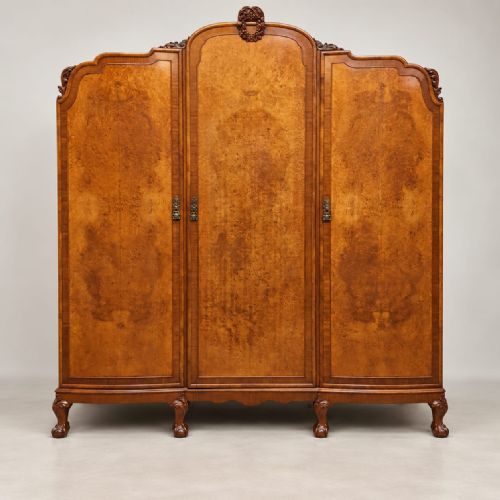
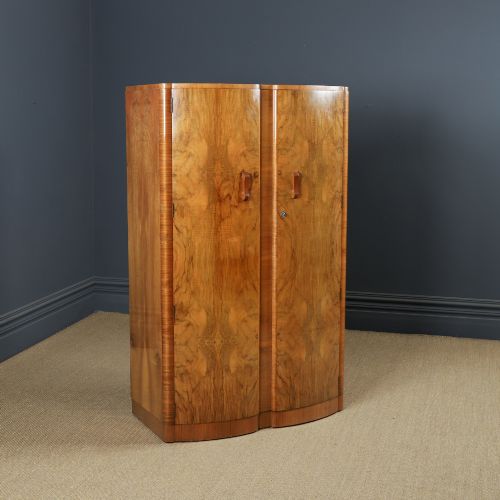
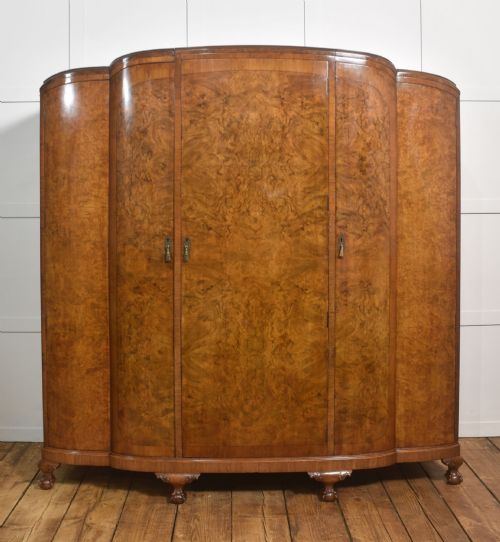
The versions most commonly met on this page include Art Deco wardrobes with bowed or breakfront profiles, alongside earlier Victorian and Edwardian examples. Alongside full-height wardrobes and armoires, the selection includes related items such as fitted display cabinets and structural doors.
Origins stretch from English workshops to French provincial and Dutch makers, yielding diverse silhouettes. Buyers select these closets for their combination of architectural presence and deeply figured grain patterns.
How they were made
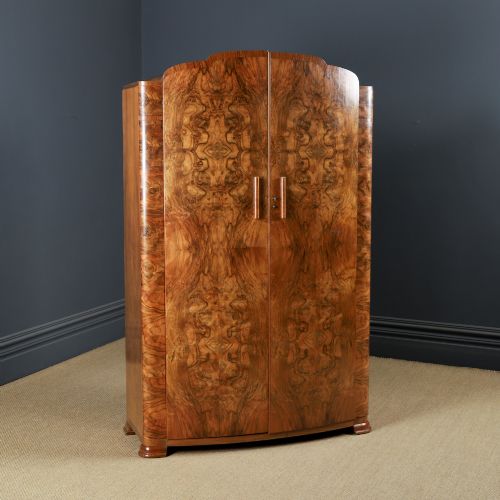
Construction relies upon solid timbers such as oak and fruitwood providing structural integrity while walnut and burr walnut veneers form the visible exterior surfaces. Cabinetmakers utilised book-matched veneers to create symmetrical patterns across large wardrobe doors.
Metal fittings such as brass handles, hinges and locking mechanisms complete the construction, often paired with fitted internal compartments, hanging rails and mirrored panels. Marquetry inlay appears on select Dutch examples, combining fruitwood and walnut to form intricate decorative motifs.
Antique Walnut Closet Retail Price Guide 2026
Typical asking prices for walnut closet among the pieces listed under this phrase on Sellingantiques today, from the lower quarter to the upper quarter. They describe what is for sale here now, not the wider market.
Materials recorded include solid oak, fruitwood, brass, glass, and highly figured burr walnut veneer.
What varies in quality
The visual strength of the timber grain marks the distinction between standard examples and superior pieces, particularly where burr walnut or figured veneers display striking natural patterns. Superior execution shows in the precision of cabinet joinery, especially around serpentine, bow-front and breakfront curves.
Original fitted interiors and signed maker attribution elevate the standing of a piece, whereas later alterations or replaced hardware diminish historical integrity. The balance of proportions across large triple or double wardrobes dictates how successfully the piece sits within a room.
Jean Faure·Harry and Lou Epstein
The Antique Walnut Closet Glossary
- Burr walnut
- A veneer sliced from the gnarly growths of a walnut tree, prized for its swirling, highly decorative grain pattern. It appears frequently on high-end cabinet doors and drawer fronts.
- Breakfront
- A piece of furniture whose central section projects forward from the flanking wings. This architectural arrangement creates depth and shadow on large wardrobes.
- Marquetry
- The art of applying small pieces of wood veneer to a structure to form decorative pictures or patterns. Fruitwood is often contrasted against walnut in this technique.
- Serpentine front
- A furniture front shaped with a central convex curve flanked by two concave curves. This fluid line requires skilled carpentry to execute cleanly.
- Armoire
- A tall, traditional cupboard or wardrobe, usually featuring double doors enclosing hanging space or shelves. French and continental examples often display distinct regional styling.
Antique Walnut Closet: Frequently Asked Questions
How do I date an antique walnut closet?
Dating relies upon examining the overall design style, construction methods, and secondary timbers used inside the carcass. Art Deco pieces from the 1920s and 1930s display geometric lines and burr veneers, whereas Victorian and Edwardian examples show heavier cornices or inlaid ash.
Hardware such as brass locks and hinges also provides clues to the period of manufacture. Comparing these elements with documented examples helps establish the likely decade of origin.
Can these wardrobes be dismantled for moving?
Many large wardrobes from this period were constructed to be taken apart into sections, including the cornice, base, and side panels, to ease transport and installation. However, construction methods vary considerably between the nineteenth century and later Art Deco interpretations.
Checking the internal joints and fixing bolts reveals whether a piece is designed for modular breakdown. Professional assembly is often advisable to maintain structural alignment.
What is the difference between a wardrobe and an armoire?
While both terms describe large cupboards for clothing, armoire traditionally refers to continental European designs, often featuring deep proportions and decorative paneling. Wardrobe is more commonly applied to British freestanding closets developed from the eighteenth century onward.
On this page, both designations appear for tall storage units with hinged doors. The distinction rests primarily on regional terminology and stylistic heritage.
How should I care for walnut veneer?
Walnut veneer benefits from being kept away from direct sunlight and steady heat sources, which can dry out the timber and lift the glue beneath the surface. Regular dusting with a soft, dry cloth preserves the polished finish.
Occasional application of appropriate furniture wax helps nourish the wood and maintain its deep lustre. Avoid excess moisture during cleaning.