


Antique Walnut Breakfront
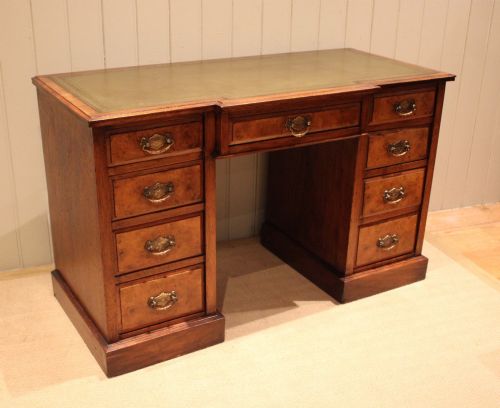
When searching for an antique walnut breakfront, a buyer is examining large architectural cabinets and bookcases featuring a projecting central section, most commonly originating from the Victorian period.
Antique Walnut Breakfront
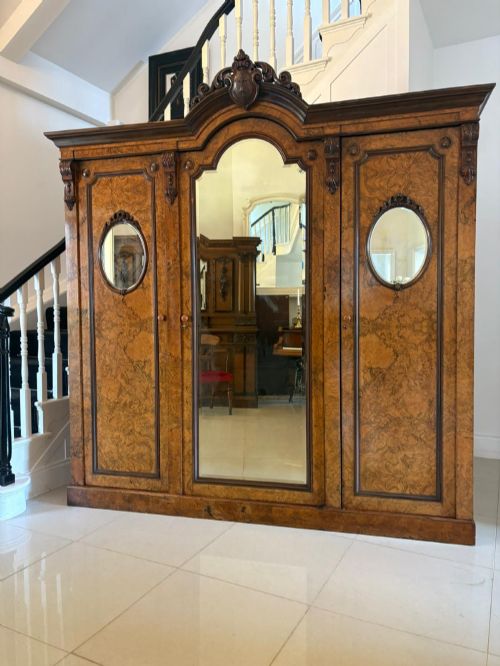
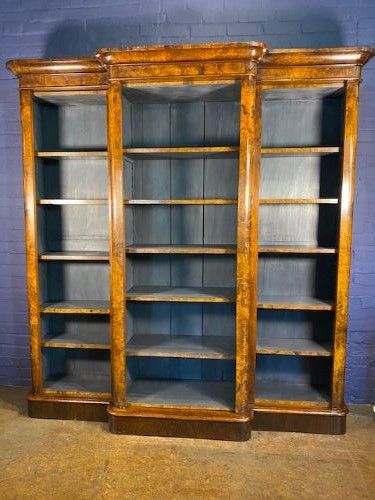
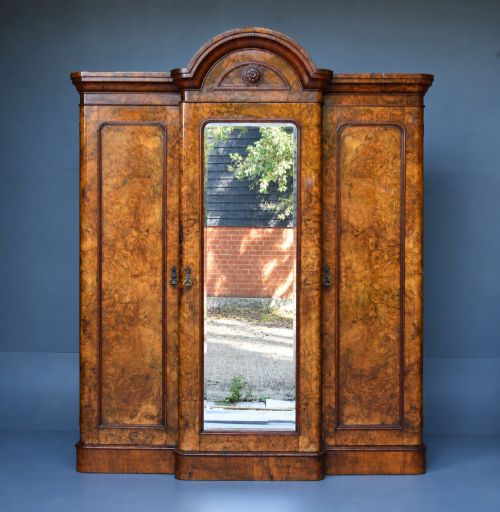
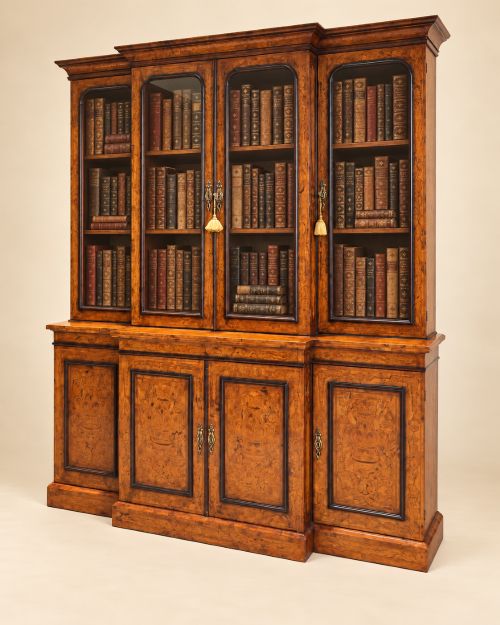
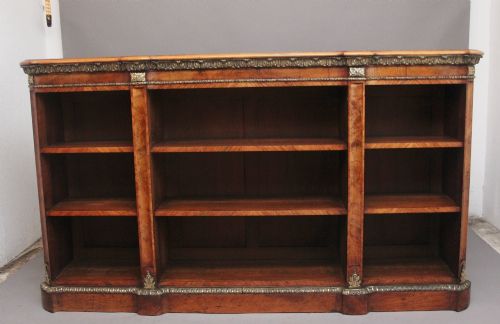
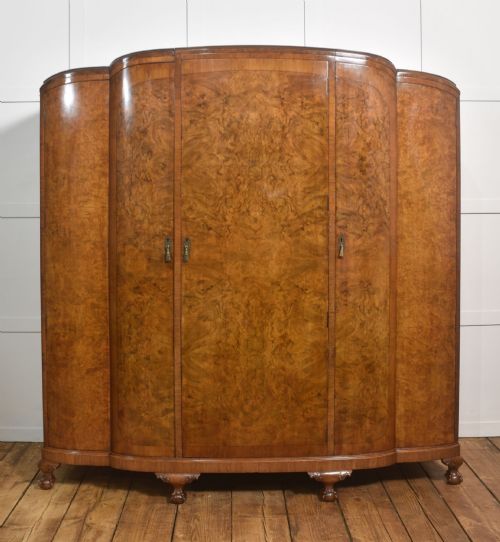
An antique walnut breakfront is defined by its tripartite facade, where the central section projects forward from the flanking wings to create visual depth and architectural interest. On this page, these pieces predominantly appear as substantial libraries, glazed bookcases, and large wardrobes dating from the nineteenth century.
The form encompasses open bookcases with adjustable shelves alongside multi-door display cabinets fitted with glass panels. Makers of the Victorian and Edwardian eras utilised this configuration for domestic storage, pairing the recessed and projecting sections to break up long expanses of timber in a room.
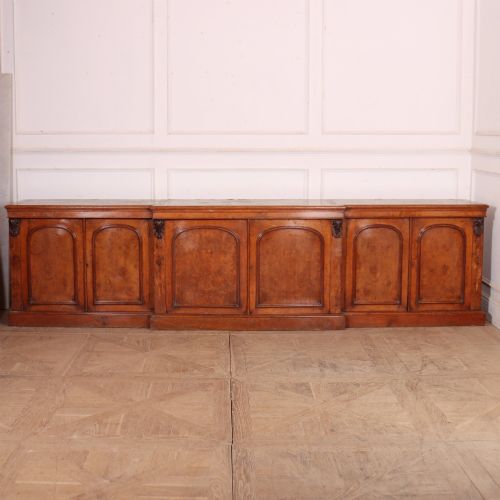
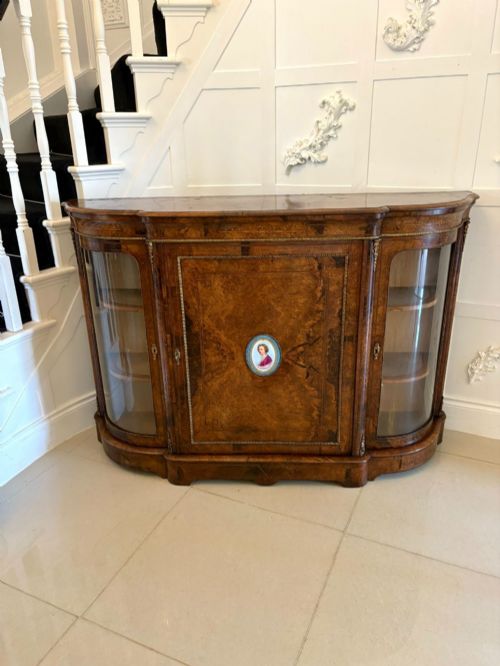
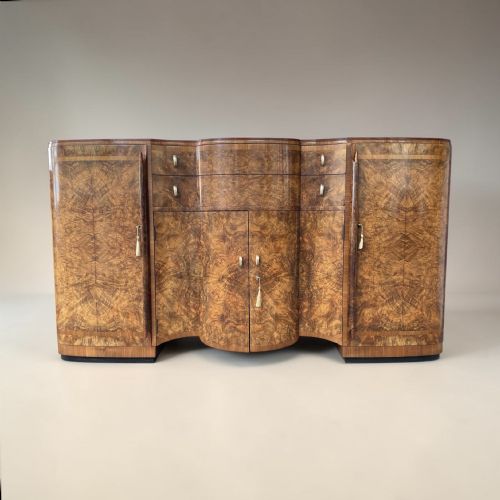
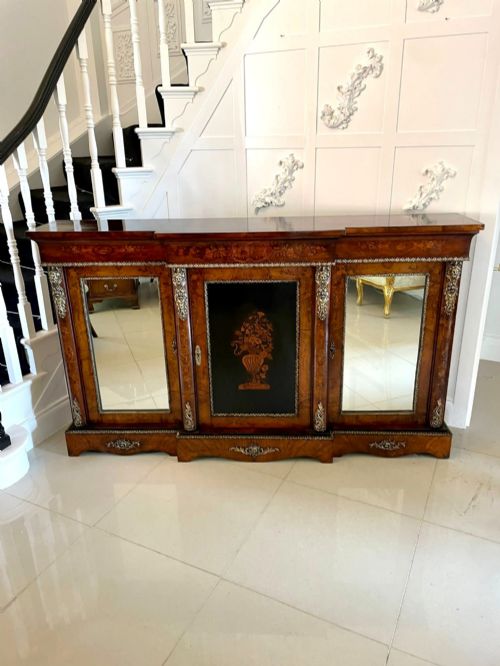
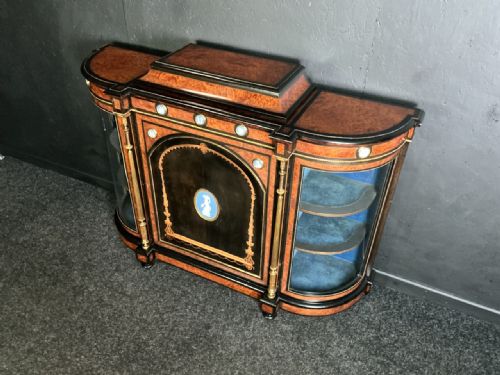
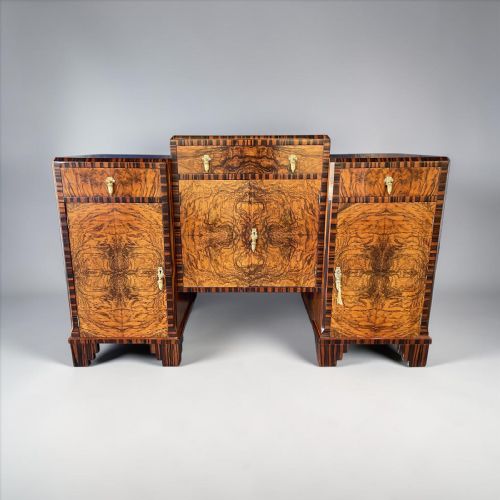
Buyers will also encounter sideboards and credenzas adopting the breakfront footprint, often in burr walnut with marquetry detailing. These lower formats retain the characteristic stepped front line while serving dining rooms and sitting rooms rather than libraries.
How they were made
Cabinet makers constructed these pieces using solid pine or oak carcases as a stable foundation, onto which figured walnut and burr walnut veneers were applied. Veneering allowed workshops to display the swirling, highly decorative grain patterns characteristic of burr timber across wide cupboard doors and drawer fronts.
Many examples incorporate decorative mounts cast from ormolu, alongside intricate brass hardware and marquetry inlay using lighter fruitwoods. Glazed doors feature individual panes held within wooden glazing bars, whilst open bookcase sections typically include adjustable wooden shelving supported by brass pins.
Materials recorded across the archive include burr walnut, ormolu mounts, glass, and inlaid fruitwoods applied to large architectural carcases.
What varies in quality
The distinction between standard commercial output and exhibition pieces rests primarily in the selection of the burr walnut veneer and the precision of the marquetry. Superior examples exhibit matched grain patterns that mirror across the central breakfront section, whereas lesser pieces show random timber selection.
Mounting hardware and internal fittings also mark out the grade of a piece, with fine nineteenth-century examples featuring heavy fire-gilt ormolu mounts, stamped cabinet maker signatures, and robust brass lock mechanisms. The integration of the projecting central section requires precise joinery that remains stable across seasonal humidity changes.
Johnstone and Jeanes·Gillows·Lamb of Manchester·Maurice Adams
The Antique Walnut Breakfront Glossary
- Breakfront
- An architectural furniture design where the central section projects forward relative to the flanking left and right wings. This layout creates three distinct vertical planes across the front of a bookcase or cabinet.
- Burr walnut
- A specialised timber veneer harvested from walnut tree growths or burls, yielding highly intricate and swirling grain patterns. It was heavily utilised by nineteenth-century cabinet makers for decorative door panels.
- Ormolu
- Gilded bronze mounts applied to furniture for decorative effect, commonly seen on Victorian and French pieces. The technique involves applying a gold amalgam to cast brass or bronze.
- Marquetry
- The art of applying thin slices of various woods to a structural panel to create pictorial or geometric designs. It frequently appears on the friezes and door panels of credenzas and cabinets.
- Credenza
- A low cabinet form originating in Italy, often fitted with glass doors and used for display and storage in the Victorian parlour. On this page, they frequently incorporate the signature walnut timbers and ormolu mounts.
Antique Walnut Breakfront: Frequently Asked Questions
Are the shelves adjustable?
Most nineteenth-century open bookcases and glazed cabinets on this page include adjustable shelving supported by traditional wooden bearer strips or metal pins. This allowed owners to alter the internal height to accommodate varying book sizes.
When inspecting a piece, check that the original shelf supports remain intact within the interior walls. Fixed shelving is more commonly found in lower sideboard and credenza formats where display space is secondary to enclosed storage.
How do I date a walnut breakfront?
Dating relies on combining the overarching style, such as Victorian or Edwardian, with construction methods like drawer linings and backboards. Nineteenth-century examples often feature hand-cut dovetails and secondary timbers such as oak or mahogany behind the walnut veneer.
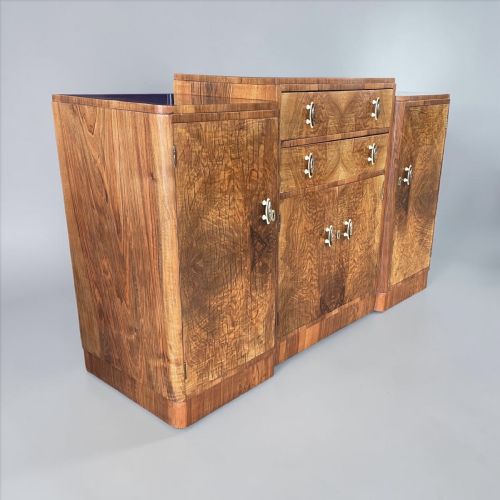
Later pieces from the early twentieth century or the Art Deco era display cleaner geometric lines and different veneer matching techniques. Maker stamps, where present, provide a direct link to recorded workshop operational dates.
Where should I place a large breakfront?
These large architectural pieces require a substantial wall with adequate clearance to accommodate their depth and projecting central section. Libraries, high-ceilinged dining rooms, and spacious living areas provide the correct scale for triple wardrobes and bookcases.
Keep them away from direct sunlight and strong heat sources to prevent the burr walnut veneer from drying and lifting. Ensuring an even ambient temperature protects both the timber carcase and the delicate internal joinery.