
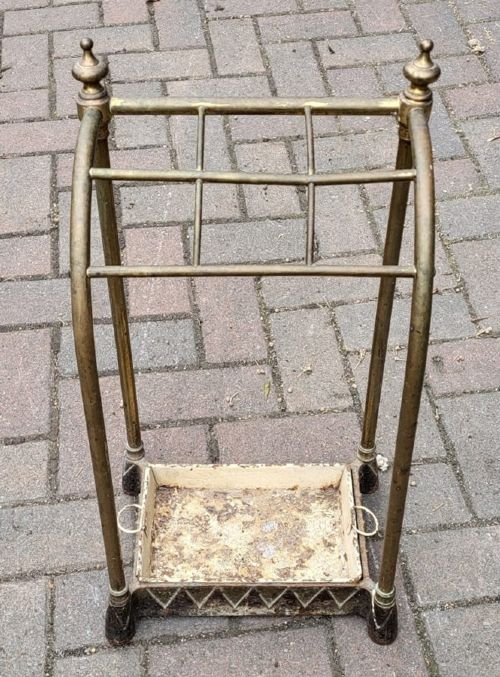
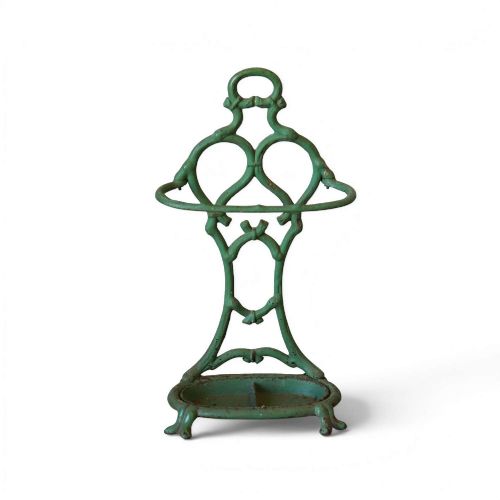
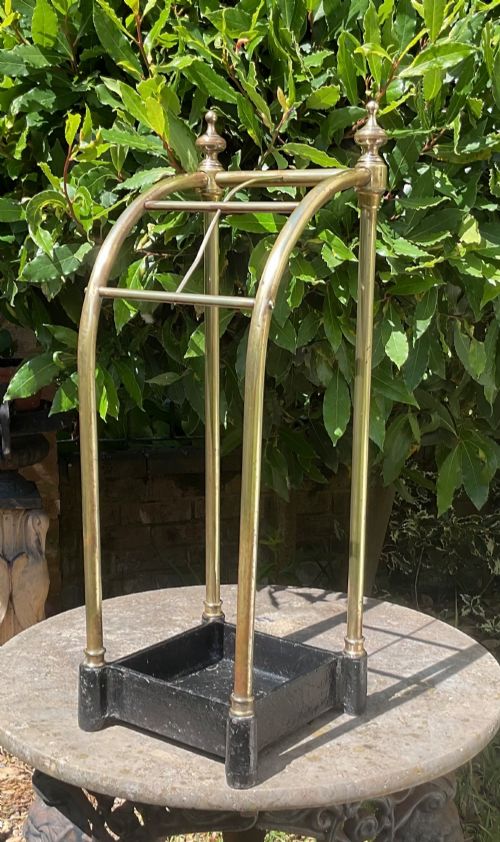
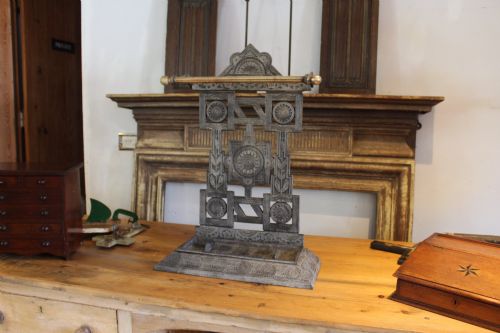
Antique Walking Cane Stand
An antique walking cane stand organises a hallway with the solid presence of Victorian and Edwardian craftsmanship.
Antique Walking Cane Stand
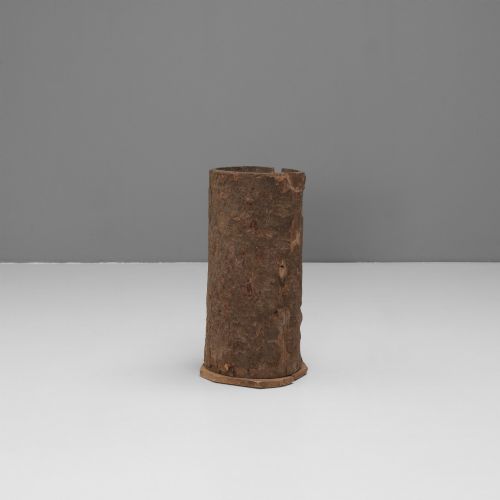
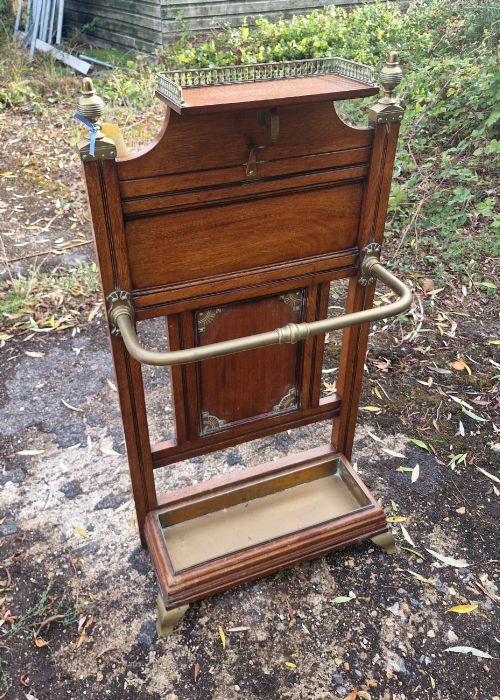
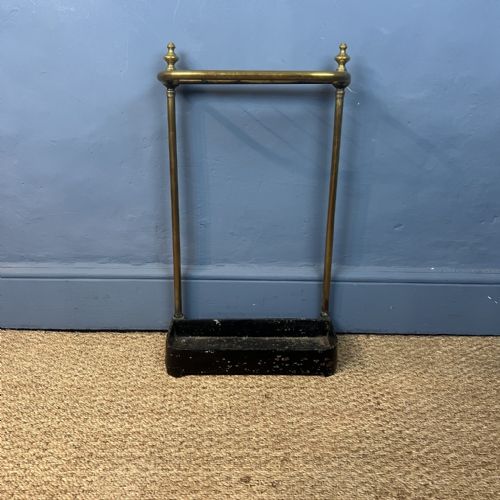
An antique walking cane stand is a piece of hallway furniture designed to hold walking sticks, canes and umbrellas neatly upright. When searching for an antique walking cane stand, buyers encounter sturdy hall furniture shaped from timber, cast metal and ceramic.
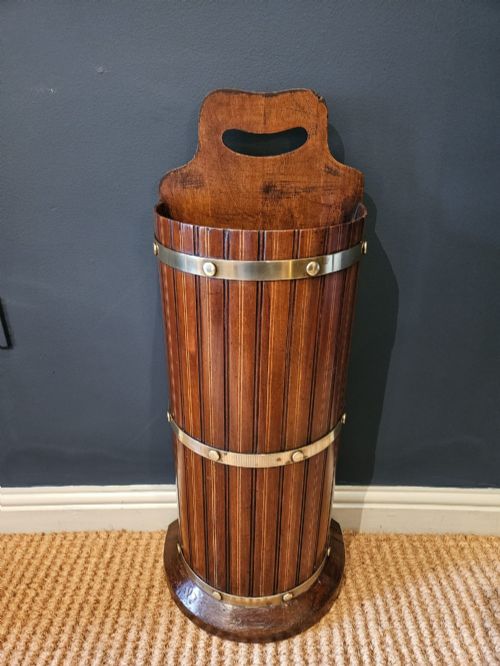
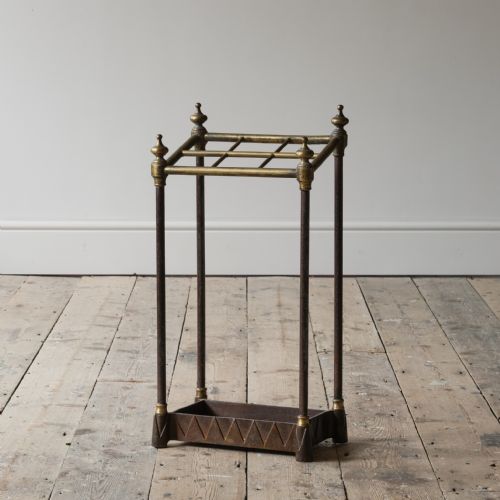
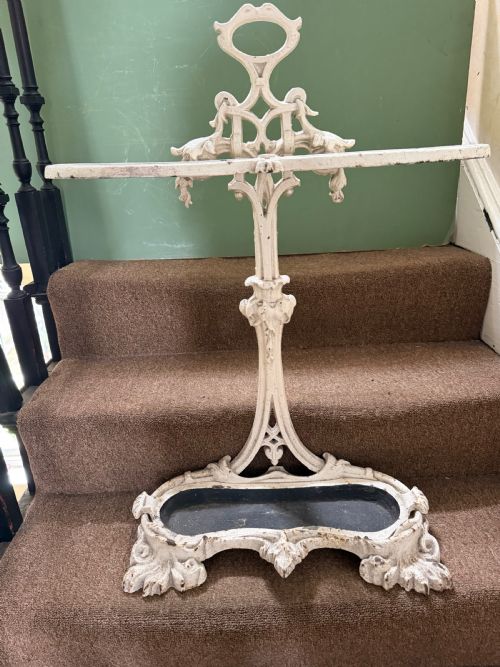
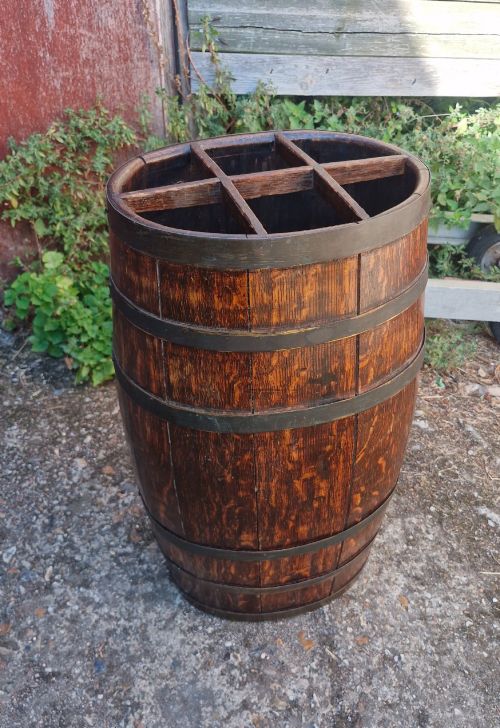
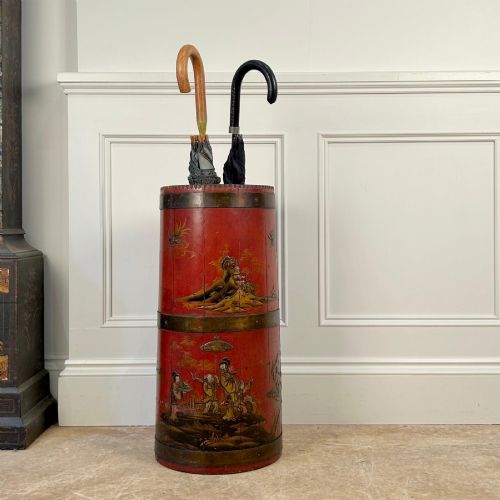
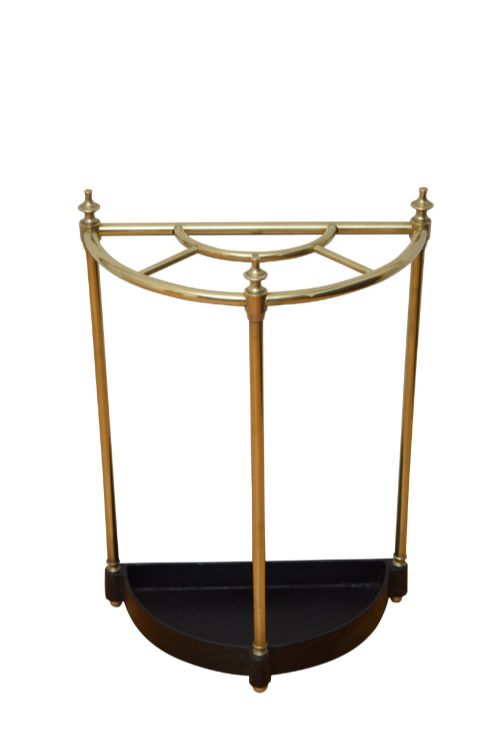
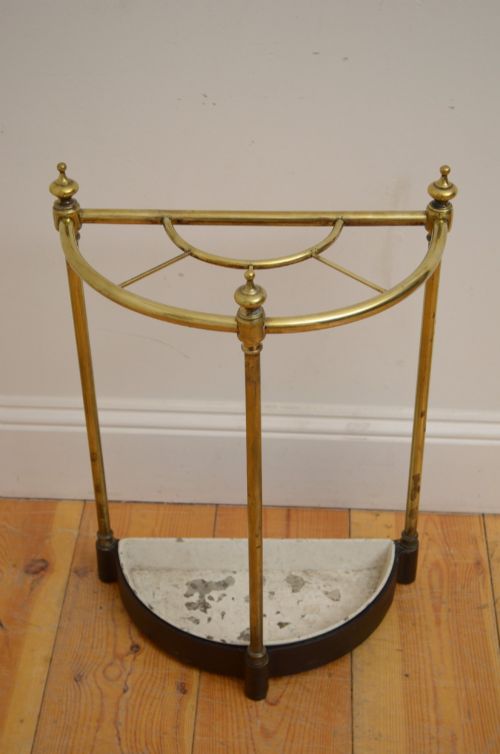
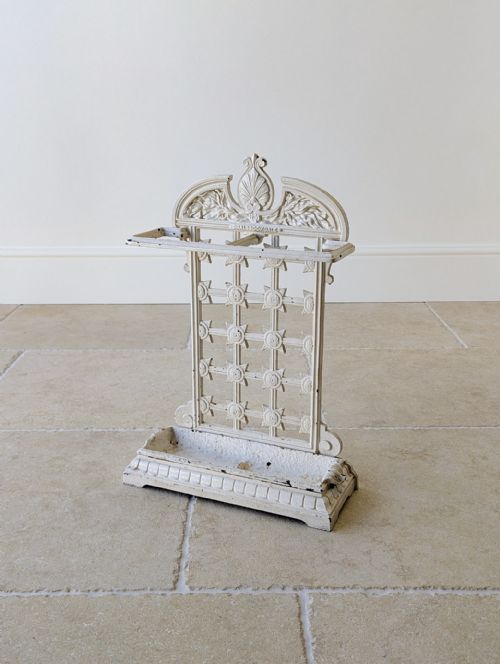
The pieces appearing most frequently on this page date from the Victorian and Edwardian eras, spanning the nineteenth and early twentieth centuries. These stands range from half-moon demi-lune hall fixtures to large cylindrical oak barrels and geometric cast iron frames.
Origins stretch across English country houses, Scottish halls and continental workshops, reflecting domestic habits of the period. Forms include dedicated narrow cane holders as well as dual-purpose umbrella and stick combinations built for heavy daily use.
Distinguishing quality in hall stands
Quality rests upon the integrity of the original construction and the survival of component parts like metal drip trays. Superior examples display crisp casting detail in ironwork or refined cabinetmaking in quarter-sawn oak and polished mahogany.
Design ambition separates standard utility pieces from exceptional commissions, particularly those bearing the influence of the Aesthetic Movement, Gothic Revival or Arts and Crafts styles. The presence of makers' marks or specific foundry stamps elevates historical interest.
A gun dog motif peers out from Victorian cast iron, watching over umbrellas with vigilant canine dedication.
Coalbrookdale·Thomas Jeckyll·Heals of London·Falkirk Ironworks
The Antique Walking Cane Stand Glossary
- Demi-lune
- A half-moon shape designed to sit flat against a hallway wall. This profile allowed large stands to occupy narrow corridors without obstructing movement.
- Drip tray
- A metal base insert positioned beneath the sticks to catch water and mud. Original trays complete the interior of nineteenth-century stands.
- Coopered
- Constructed from wooden staves bound with metal hoops, much like a traditional barrel. This technique appeared frequently in sturdy oak country house designs.
- Cast iron
- Molten metal poured into a mould to create decorative and heavy frames. This material supported intricate openwork designs including faux bamboo and botanical motifs.
- Barley twist
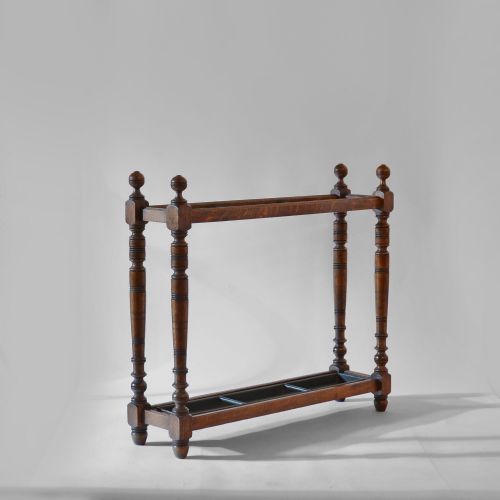
- A turned wooden column resembling a spiral rope. This decorative support appeared often on Victorian and Edwardian hall furniture frames.
Antique Walking Cane Stand: Frequently Asked Questions
How do I clean an antique brass stand?
Polishing brass depends on personal preference for bright surfaces or patinated age. Gentle dusting and mild soapy water preserve the original metal finish without stripping historical character.
Avoid harsh chemical abrasives that scratch the surface or remove the soft glow accumulated over a century of hallway use.
Where should I place a stick stand?
Halls and entranceways provide the traditional home for these pieces, keeping walking aids and umbrellas close to the door. Their narrow profiles suit tight corridors and vestibules effectively.
Ensure the floor surface tolerates occasional moisture from wet umbrellas, even when the stand includes a metal drip tray.
Are cast iron stands too heavy?
Cast iron provides substantial weight, which prevents the frame from tipping when heavy walking sticks or wet umbrellas lean against it. This structural heft represents a deliberate design choice for daily utility.
Moving these pieces requires care to protect flooring, though their stationary nature means they rarely need repositioning once placed.
How do I date an Edwardian stand?
Edwardian pieces, dating from roughly nineteen hundred to the First World War, often combine lighter oak timbers with simpler lines than heavy Victorian designs. Stylistic cues include restrained arts and crafts influences and lighter turned supports.
Comparing construction methods and hardware with documented examples helps narrow the production window further.