
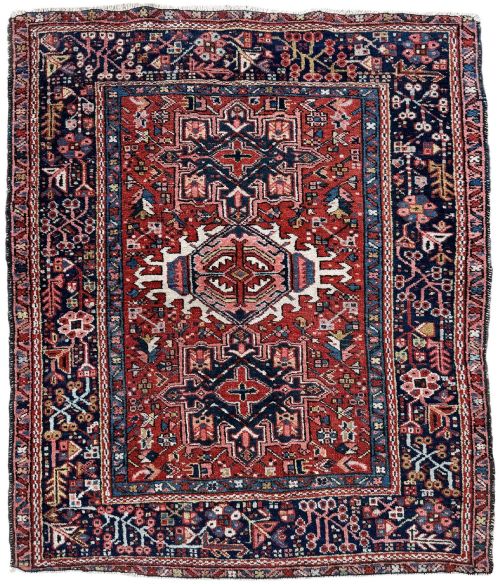
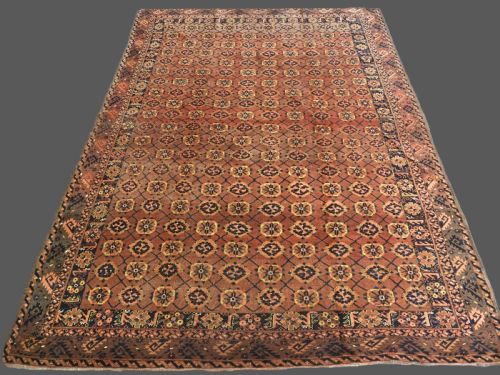
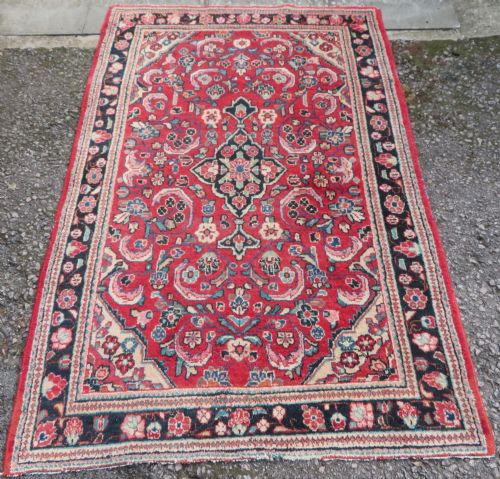
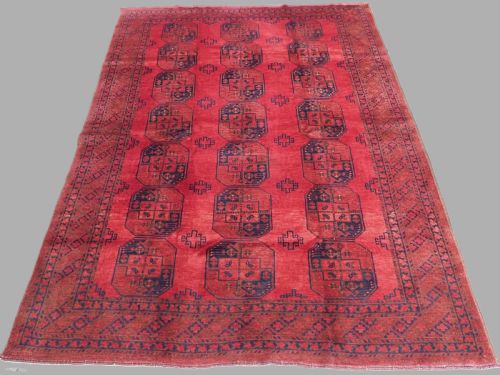
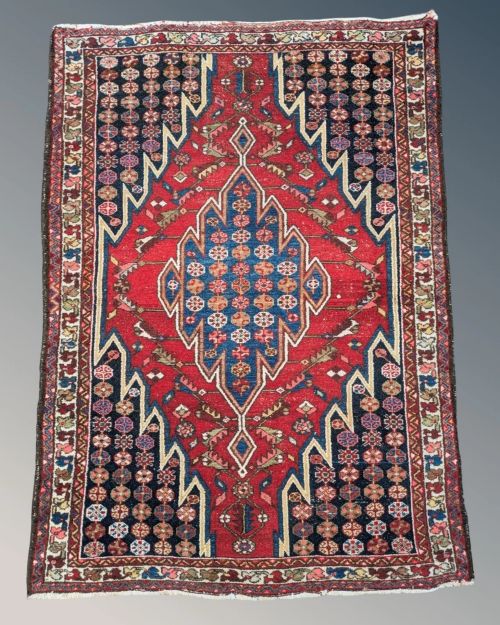
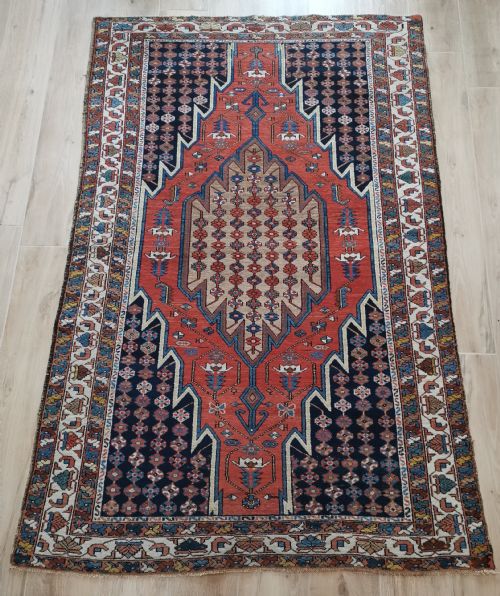
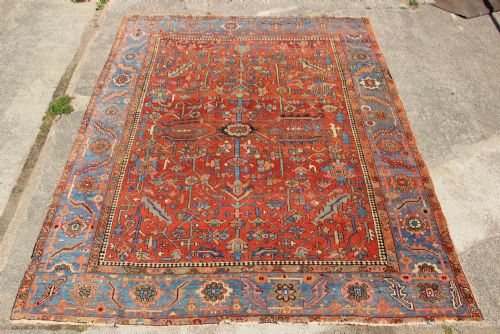
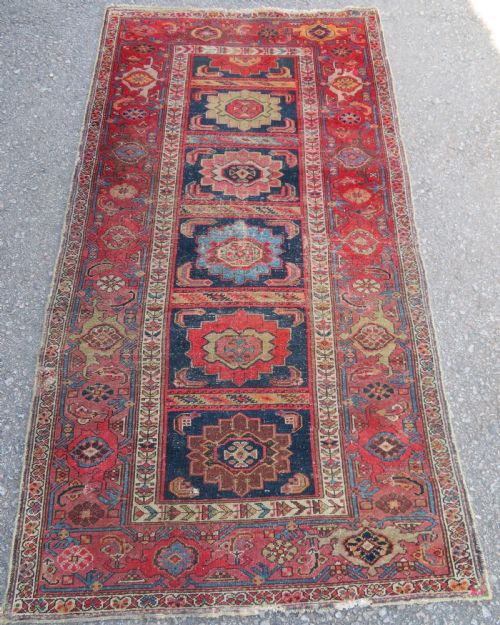
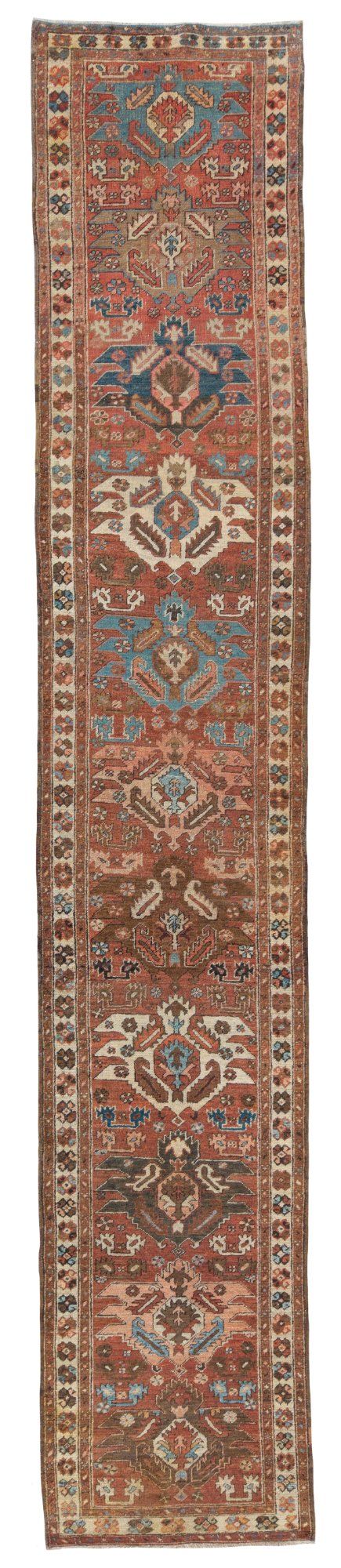
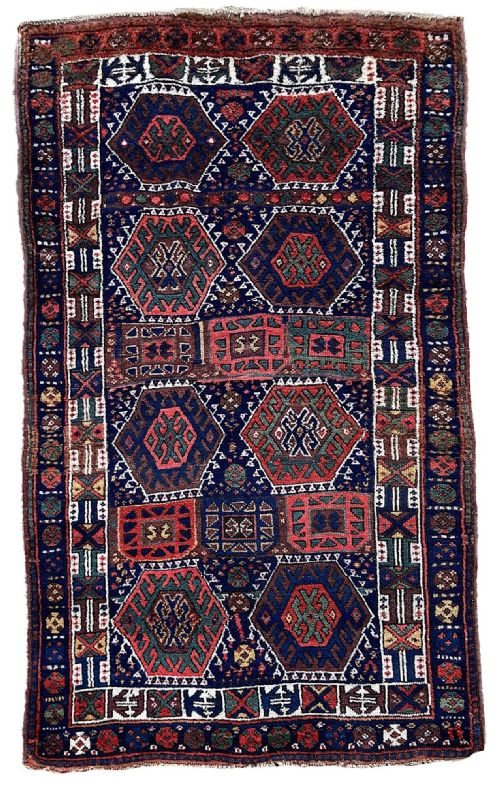


Antique Village Wool Rug
An antique village wool rug brings tactile warmth and enduring regional character into a room through hand-knotted pile and traditional designs.
Antique Village Wool Rug
When searching for an antique village wool rug, buyers encounter hand-knotted textiles originating from traditional weaving communities in Persia, Anatolia, the Caucasus, and Afghanistan. These pieces range from small scatter rugs and long runners to substantial carpets created for domestic use.
The selections available span periods from the nineteenth century through the early twentieth century, including pieces identified with specific regional traditions such as Mahal, Hamadan, Bakshaish, Kurdish, and Kazak styles.
Forms include standard area formats, prayer rugs featuring directional mihrabs, and specialised domestic textiles such as bread sofrehs and kelims with extended flatweave ends.
How they were made
These floor coverings rely on hand-spun wool pile knotted onto foundation structures typically built from cotton warp and weft threads.
Weavers utilised natural dyes to achieve rich palettes featuring warm reds, deep blues, and earthy tones that age gracefully over decades of use.
Several rugs arrive with delightfully uneven borders, reminding every owner that human hands guided every single knot.
What varies in quality
Quality rests upon the fineness of the knotting, the handling of the wool, and the depth achieved in the natural dyes.
A successful piece balances structural integrity with the vitality of its regional design, whether executed in a grand carpet or a smaller village runner.
The Antique Village Wool Rug Glossary
- Wool
- The primary pile material, prized for its natural resilience, lanolin content, and capacity to hold natural dye colours.
- Natural Dyes
- Colourants derived from plant, insect, and mineral sources prior to the widespread adoption of synthetic alternatives.
- Prayer Rug
- A devotional textile featuring a mihrab or arch design indicating the direction of prayer.
- Warp
- The vertical foundation threads stretched tightly on the loom through which the weft and knots are secured.
- Runner
- A long, narrow carpet format designed principally for corridors, hallways, or beside beds.
Antique Village Wool Rug: Frequently Asked Questions
Where were antique village wool rugs made?
These rugs were produced by tribal and village weavers across Persia, the Caucasus, Anatolia, and Afghanistan.
Production centres included regional hubs like Hamadan, Malayer, and Bakshaish, where families passed down local motifs through generations.
How do I care for an antique wool rug?
Regular gentle vacuuming without a rotating brush roll keeps dust from settling into the hand-spun wool pile.
Professional cleaning tailored to antique textiles ensures the natural dyes and cotton foundations remain preserved over time.
What is a village prayer rug?
A village prayer rug is a smaller format textile woven with a distinctive arch or niche motif known as a mihrab.
These pieces were traditionally utilised for personal daily devotions within the home.
How do I distinguish regional styles?
Distinctions rely on specific geometric or floral motifs, palette choices, and structural characteristics unique to each weaving origin.
For instance, Kazak and Caucasian pieces often display bold geometric polygons, while Mahal and Malayer rugs favour flowing village floral layouts.