





Antique Velvet Textile
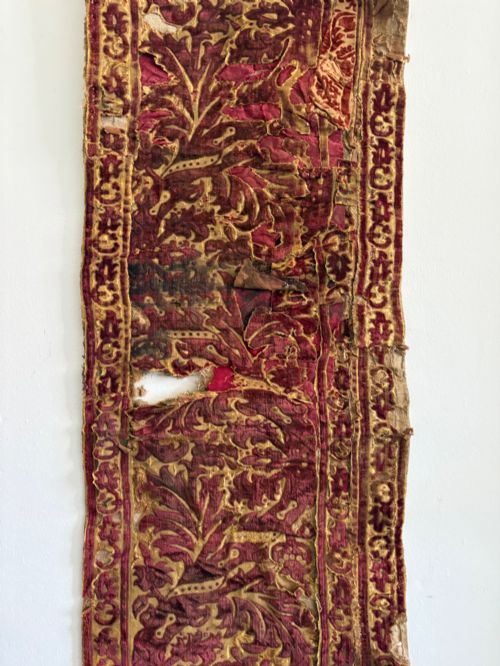
An antique velvet textile brings tactile depth and historic handwork into a room, spanning courtly Spanish Baroque vestments and tribal Central Asian wall hangings.
Antique Velvet Textile
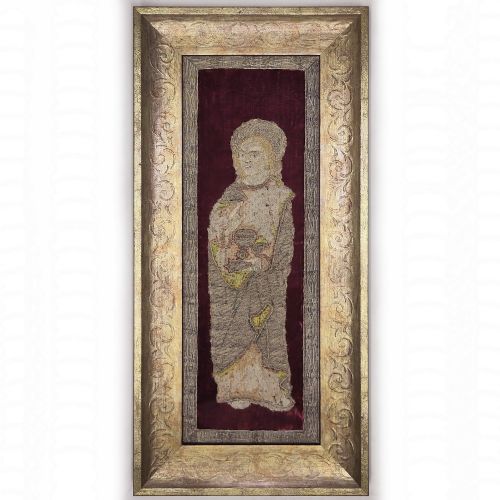
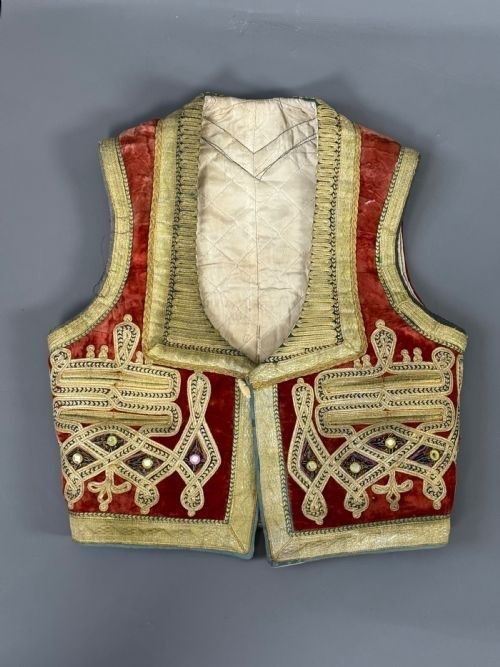
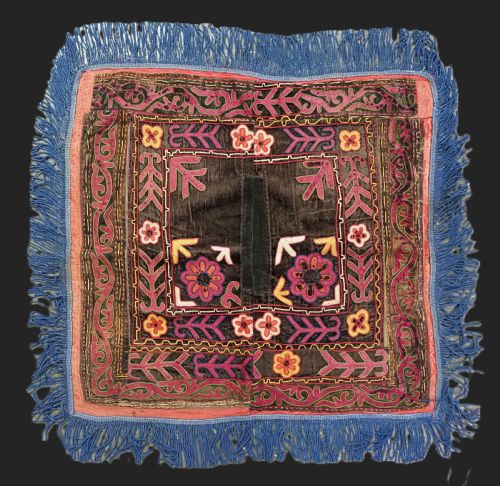
When you search for an antique velvet textile, you are looking at centuries of pile-woven fabrics, embroidered ground cloths, and preserved garments from diverse global traditions. The examples gathered here range from Spanish ecclesiastical vestments and French needlepoint panels to Ottoman waistcoats, Turkish jackets, and Uzbek tribal dowry embroideries.
You are most likely to meet 18th century ciselé silk velvet hangings and 19th century Ottoman or Central Asian garments and wall hangings on this page. These pieces vary greatly in their original function, moving from sacred church copes to domestic coverlets and tribal wall decorations.
The geographical spread is wide, taking in Turkish, Kurdish, Indian, French, and Spanish origins alongside Central Asian tribal work. Each region brings distinct dyeing methods, loom techniques, and motifs to the heavy pile ground.
Assessing quality and preservation
Quality rests primarily on the density and integrity of the velvet pile and the complexity of any metal-thread embroidery. Finer pieces maintain their original pile height and lustre without extensive bald patches or thinning ground fabric.
The precision of the handwork marks the distinction at the upper end, visible in the tight execution of needlepoint or the secure couch of gold and silver threads. Provenance and original scale also elevate a piece, particularly matched pairs of pilaster hangings or complete traditional garments.
Antique Velvet Textile Retail Price Guide 2026
Typical asking prices for velvet textile among the pieces listed under this phrase on Sellingantiques today, from the lower quarter to the upper quarter. They describe what is for sale here now, not the wider market.
One framed 18th-century piece carries a direct provenance from the personal collection of the noted economist Lord Peter Bauer.
The Antique Velvet Textile Glossary
- Ciselé velvet
- A velvet technique where the pattern is formed by a combination of cut and uncut pile loops. This method creates low-relief designs against a contrasting background.
- Cope
- A long ecclesiastical vestment resembling a cloak, worn by clergy during processions and ceremonies. These garments often utilised heavy historic velvet and metallic embroidery.
- Pilaster hanging
- A long, narrow decorative textile designed to hang against an architectural pilaster or wall panel. They frequently appear in matched pairs from the eighteenth century.
- Brocade work
- A class of richly decorative shuttle-woven fabrics, often made with coloured silks and metallic threads. It sits on top of the velvet ground rather than integrating into the primary weave.
- Couching
- An embroidery technique where threads of gold or silver are laid across the surface of the velvet and fastened down with small, nearly invisible stitches.
Antique Velvet Textile: Frequently Asked Questions
How do I hang an antique textile?
Heavy velvet panels and wall hangings require even weight distribution to prevent distortion of the historic fabric. Conservation-grade mounting involves velcro attachment to a padded, fabric-covered wooden batten rather than direct nailing.
Smaller framed pieces like needlepoint panels can be hung using standard picture hooks, provided they are kept away from direct sunlight and damp walls.
How are these textiles cleaned?
Historic pile fabrics and metal-thread embroidery demand extreme caution and generally cannot be laundered or dry-cleaned safely. Surface dust should be removed very gently using low-suction vacuum through a protective mesh screen.
Professional textile conservators should handle any deeper cleaning or stabilization to prevent loss of fragile silk pile and tarnished metallic threads.
Can I wear antique garments?
Most antique velvet garments and tribal dresses on the market are structurally delicate due to age and fibre degradation. Wearing them risks splitting the silk ground fabric and stressing historic metal-thread brocade work.
These pieces are best appreciated and preserved as display objects, textile art, or museum-quality study items.
What defines a ciselé velvet?
Ciselé refers to a specific cut-and-uncut velvet weave that produces a pattern through varying pile heights and textures. The term derives from the French for chiselled, reflecting the carved appearance of the surface.
This technique requires great skill on the loom and typically indicates higher-status domestic or ecclesiastical furnishings.