



Antique Uzbek Carpet
An antique uzbek carpet brings bold Central Asian tribal geometry and rich natural dyes into a modern interior.
Antique Uzbek Carpet
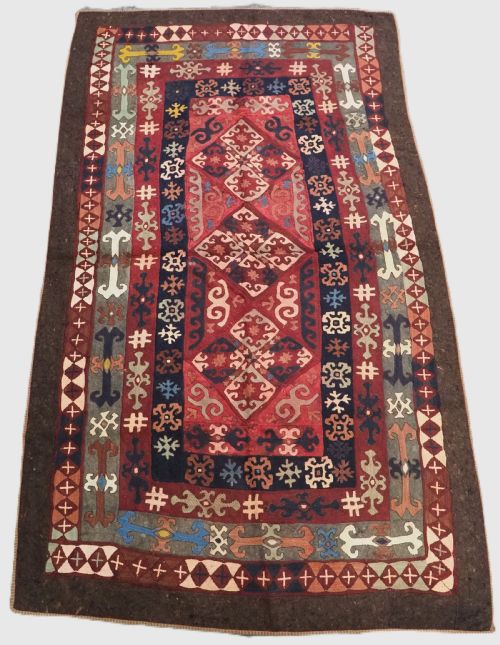
When a buyer searches for an antique uzbek carpet, they are looking at textiles born from nomadic and village traditions across Central Asia. These pieces range from heavy yurt rugs and pile carpets to flatwoven kilims, panels, and dowry hangings made around the late nineteenth and early twentieth centuries. The examples encountered on this page display the strong graphical sensibility of regional makers working within established tribal patterns.
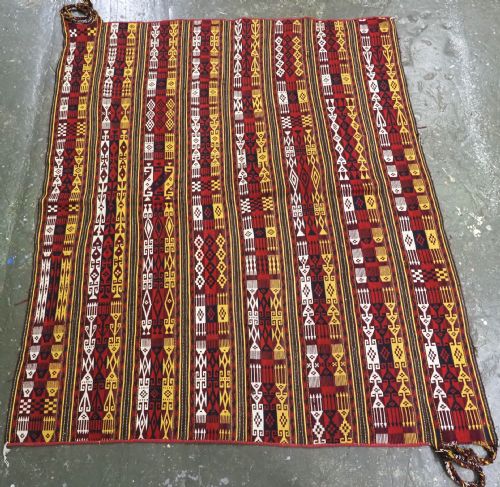
The most common formats include flatwoven gajeri kilims, multi-strip constructions, and specialised tent furnishings like the julkyrs or uut kap ilgich. Many of these textiles were constructed in narrow panels and joined together to create larger floor coverings or wall hangings. Their origins span distinct regional groups such as the Lakai, Kungrad, and Karakalpak tribes.
The aesthetic is defined by bold geometric repeats, banded designs, and occasionally large secondary motifs borrowed from neighbouring traditions. Buyers find these textiles used both as floor rugs and as striking wall art that grounds a room with texture and history. Each piece reflects the utilitarian roots of nomadic life adapted for domestic warmth and decoration.
How they were made
The materials recorded in these textiles rely primarily on handspun wool, cotton foundations, and occasionally camel hair or silk highlights. Felt and embroidered elements also appear in specific regional types like yurt rugs and wall hangings. These organic fibres provide the heavy handle and durable structure expected of nomadic weavings.
Techniques centre on flatweaving, pile knotting, and intricate needlework, often executed in narrow strips that were later stitched together to form a cohesive whole. Gajeri kilims and multi-strip kilims demonstrate this segmented method of production, which accommodated the portable looms used by weavers. Natural dyes supply the palette, yielding soft faded reds and earthy grounds that age with distinct character.
Antique Uzbek Carpet Retail Price Guide 2026
Typical asking prices for uzbek carpet among the pieces listed under this phrase on Sellingantiques today, from the lower quarter to the upper quarter. They describe what is for sale here now, not the wider market.
Listings span the decades around nineteen hundred, featuring wool, cotton, felt, silk, and camel hair across tribal formats.
What varies in quality
Quality in these textiles rests upon the strength of the graphic design and the clarity of the composition. Pieces with striking, well-balanced repeats and crisp geometric contrasts stand apart from simpler utility work. The visual rhythm across multi-panel joins also dictates the success of the overall piece.
The handling of natural dyes and the depth of the wool contribute significantly to the visual impact. Softer, integrated colour palettes and sound structural integrity in the stitching of multi-strip formats elevate a textile from a standard regional weaving to a compelling collector piece.
The Antique Uzbek Carpet Glossary
- Julkyrs
- A long-pile yurt rug woven for domestic warmth and utilitarian use inside nomadic dwellings. These shaggy carpets often feature dramatic, expressive pile and bold field designs.
- Gajeri
- A traditional flatwoven kilim style associated with Central Asian nomadic weavers. These pieces frequently display strong banded patterns and graphic layouts.
- Uut kap ilgich
- A specific type of storage bag face or tent hanging produced by tribal groups for organising belongings inside a yurt. They are celebrated for their rich embroidery and dense ornamentation.
- Kilim
- A flatwoven textile produced without a pile, resulting in a lightweight, durable fabric suitable for floor coverings or wall panels. These versatile pieces rely on the interplay of warp and weft threads to form geometric patterns.
- Gol
- A repeating medallion or octagonal guls motif found in Central Asian and Turkmen weaving traditions. These primary design elements anchor the field of the carpet.
Antique Uzbek Carpet: Frequently Asked Questions
How were these carpets used?
Nomadic families used these heavy textiles primarily as floor coverings, bedding, and insulating wall hangings inside circular felt tents known as yurts.
Specialised pieces also served as dowry items, storage bags, or decorative tent furnishings to mark important familial milestones.
What materials make up these rugs?
The primary material is handspun wool, often supported by cotton foundations, camel hair, or felt.
Natural dyes provide the colour palette, while some specialised wall pieces incorporate detailed silk embroidery.
Why are some woven in strips?
Portable nomadic looms restricted the width of the textile that could be woven at one time.
Weavers addressed this by producing several narrow strips and stitching them together side by side to create a larger carpet or panel.
How do I care for an antique textile?
Keep these pieces out of direct sunlight to protect the natural dyes from fading over time.
Gentle vacuuming without a rotating brush roll helps remove dust while preserving the fragile wool or flatwoven structure.