
Antique Urns on Plinths
These antique urns on plinths combine classical forms with solid metal and stone, bringing architectural presence to any interior or garden.
Antique Urns on Plinths
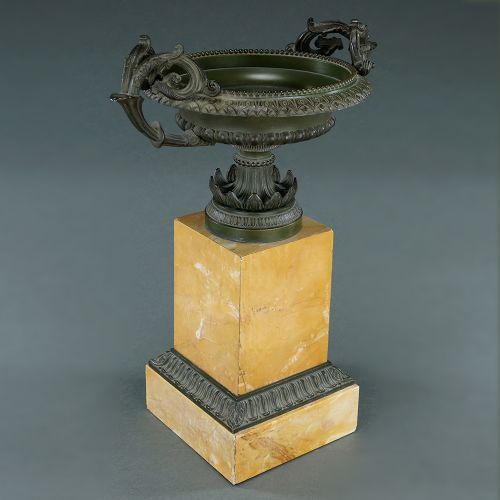
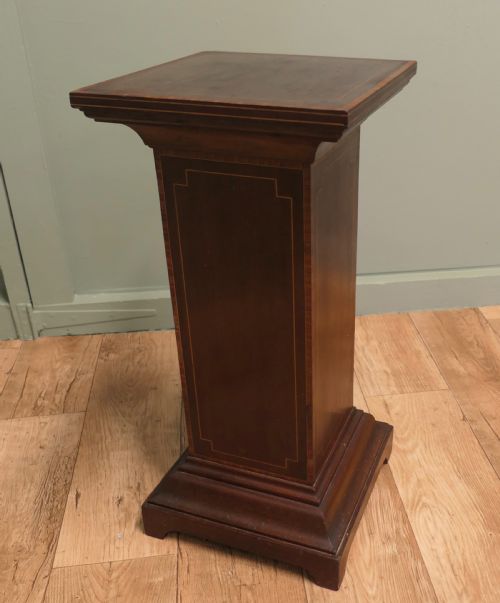
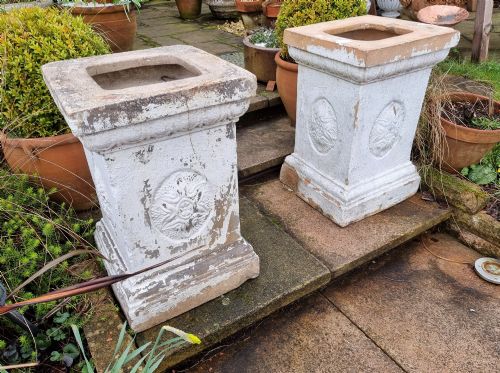
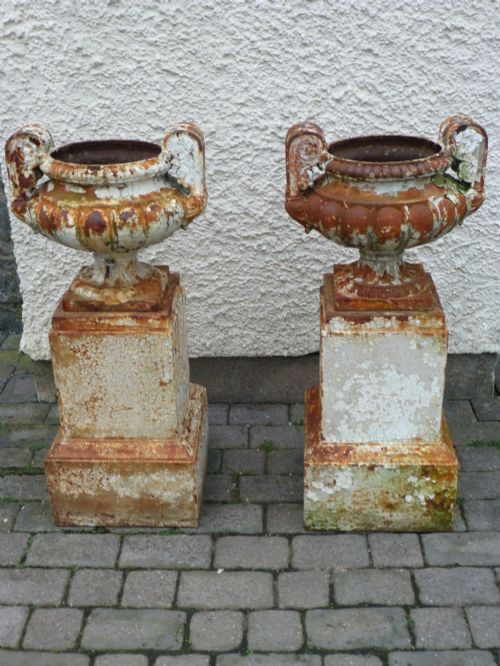
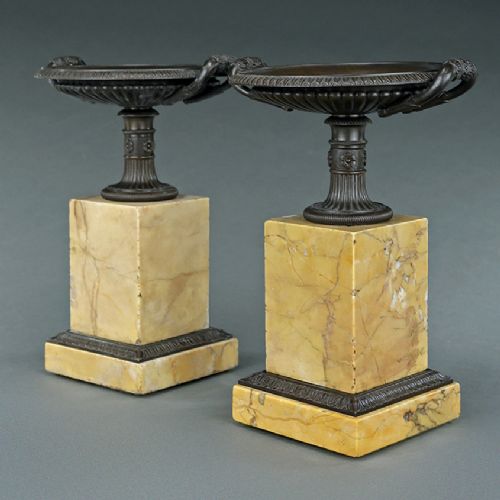
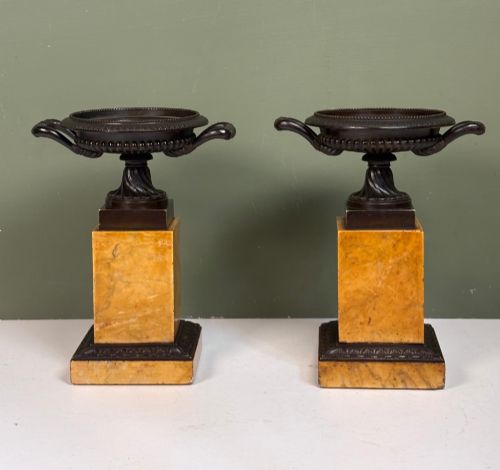
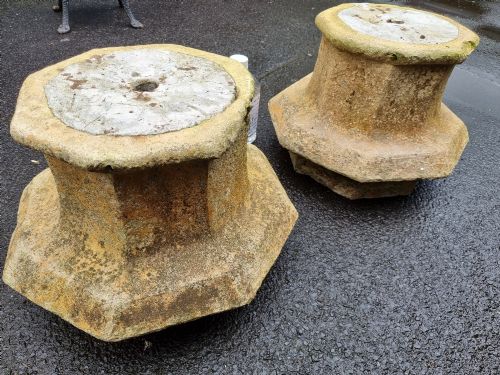
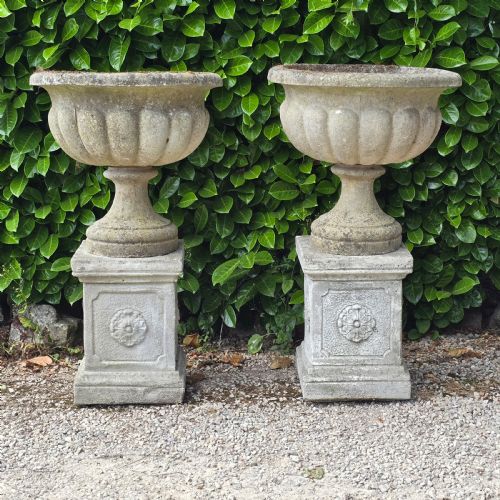
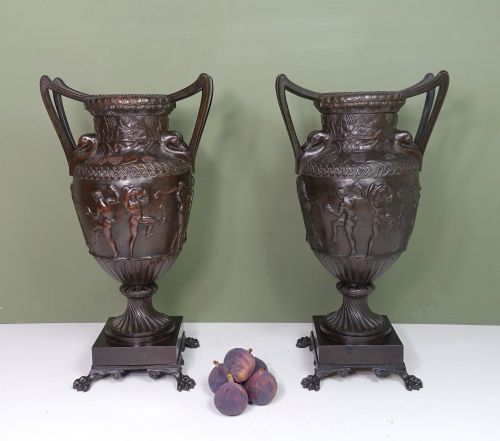
When you search for antique urns on plinths, you encounter a distinct pairing of elevated display stands and classical vessel forms designed for both interior and garden settings. The selections available encompass cast iron, bronze, and marble compositions originating primarily from the nineteenth century, including Victorian and Edwardian periods.
How they were made
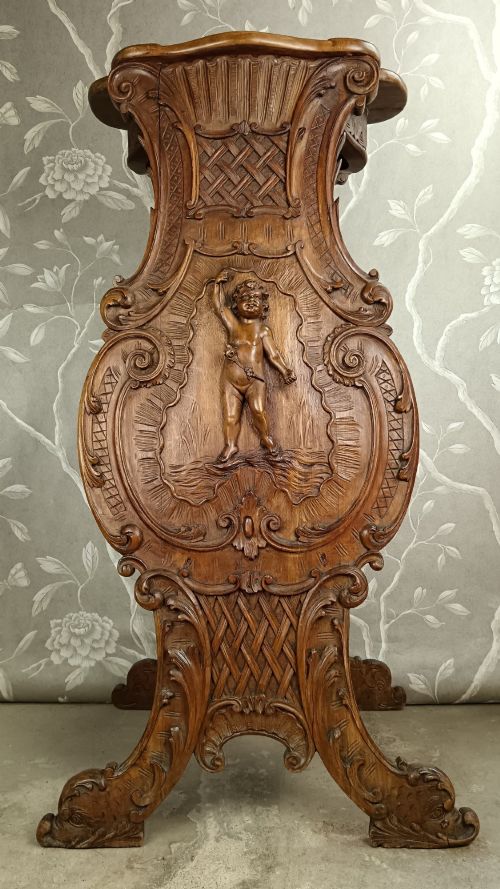
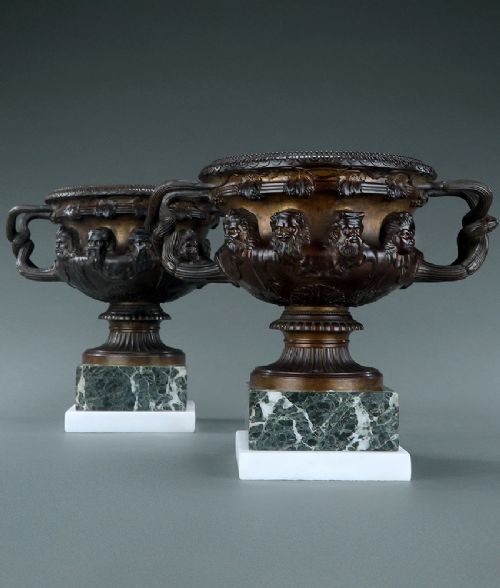
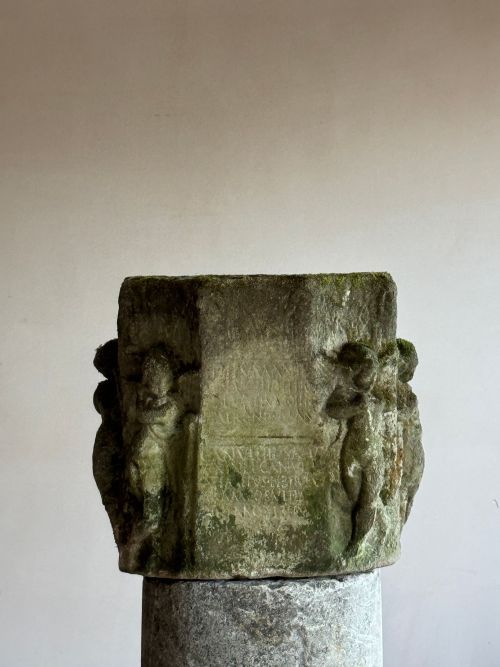
Cast iron and bronze pieces utilise traditional foundry methods, resulting in crisp surface details like gadrooning and acanthus leaf motifs. Stoneware and composite stone items rely on moulds, while marble and walnut examples show hand-carved execution.
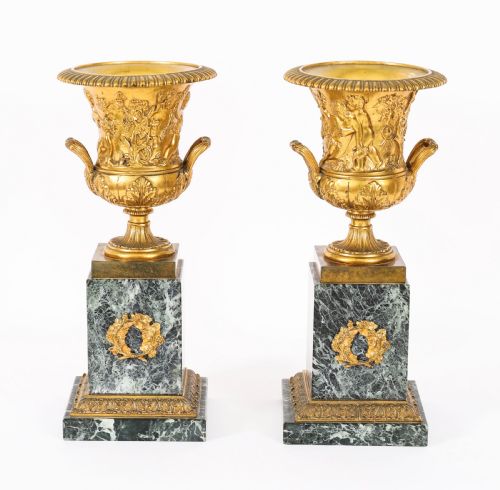
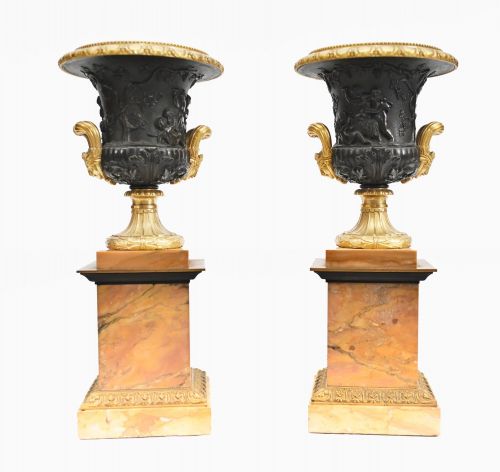
Gilt bronze and ormolu mounts are frequently applied to marble and bronze bodies, adding contrasting metallic highlights to the natural veining of green and variegated stone.
Listings feature nineteen-century materials including cast iron, bronze, marble, and terracotta alongside wood.
What varies in quality
Quality rests upon the crispness of the casting and the depth of the chasing on metal surfaces, where finer examples retain sharp architectural details rather than softened edges. The choice of material also dictates distinction, separating standard cast items from finely figured marble or heavy gilded bronze.
Originality of the pairing between vessel and base defines the piece, as matched sets sharing identical period patination outrank later combinations assembled from disparate parts.
Dunfermline Clay Company·Falkirk Carron foundry·Andrew Handyside·Selim Bright
The Antique Urns on Plinths Glossary
- Campana urn
- A bell-shaped vessel with a flared rim and footed base, frequently cast in iron or bronze for garden or interior display.
- Grand tour
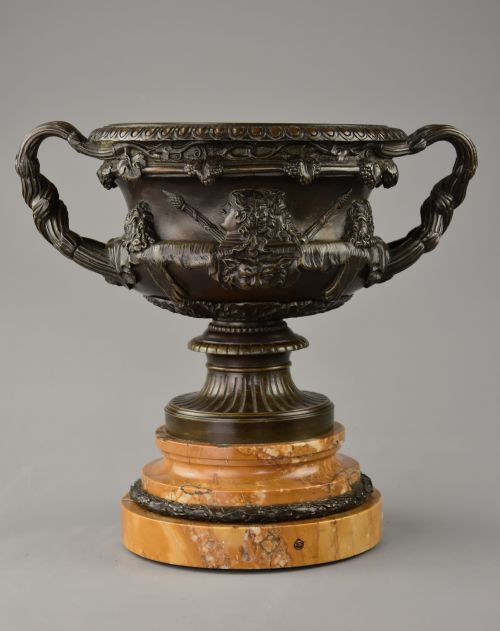
- A nineteenth-century educational journey across Europe that inspired miniature bronze copies of classical antiquities such as the Warwick Vase.
- Ormolu
- Finely ground high-carat gold applied to a bronze base, creating a rich golden surface finish on decorative mounts.
- Gadrooning
- A decorative carved or cast band of convex curves or fluting running along the edge of a vessel or plinth.
Antique Urns on Plinths: Frequently Asked Questions
Where were these urns originally placed?
These pieces sat upon garden terraces, grand hallways, and library tables during the nineteenth and early twentieth centuries.
They served as decorative focal points, often mimicking classical monuments seen during European travels.
Are cast iron urns suitable for outdoor use?
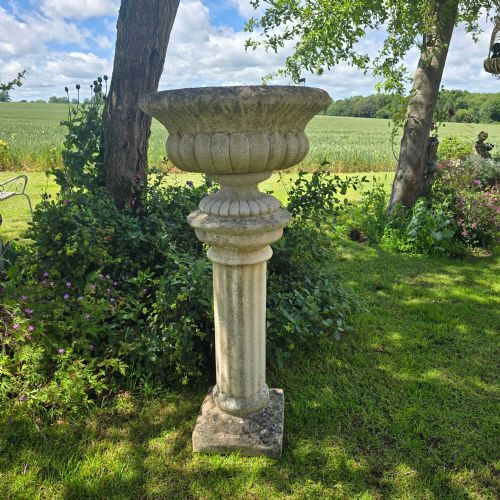
Cast iron versions were specifically manufactured to withstand external garden environments across Victorian estates.
Over decades, exposure develops a stable protective surface oxidation that collectors appreciate.
How do I identify a grand tour piece?
Grand tour items replicate famous ancient Roman or Greek monuments, such as the Warwick Vase or Albani Vases.
They were produced in smaller bronze scales as souvenirs for travellers returning from Italy.
What is the difference between a plinth and a pedestal?
Plinths generally provide a low, stepped base supporting an individual urn, whereas pedestals act as taller standalone columns.
Both serve to elevate the vessel to a commanding viewing height.