






Antique Urn Box
An antique urn box brings classical proportion to a dining room, holding silver or cutlery with discreet elegance.
Antique Urn Box
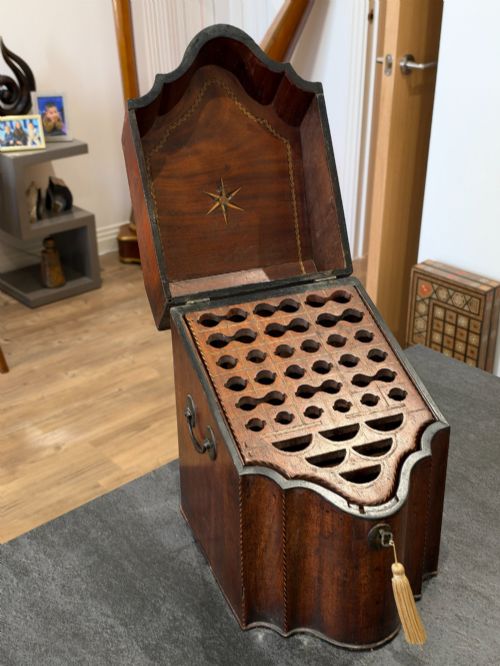
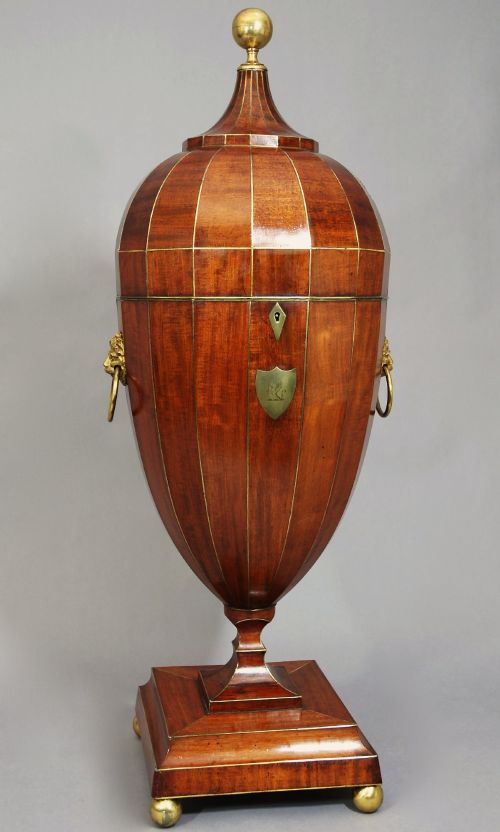
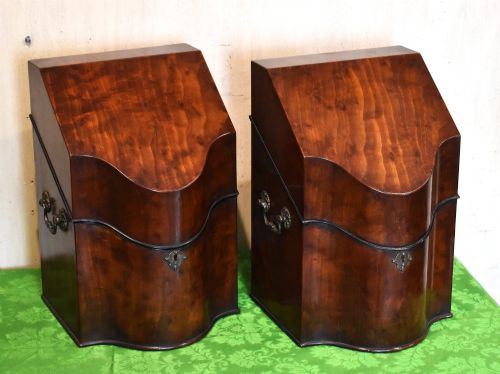
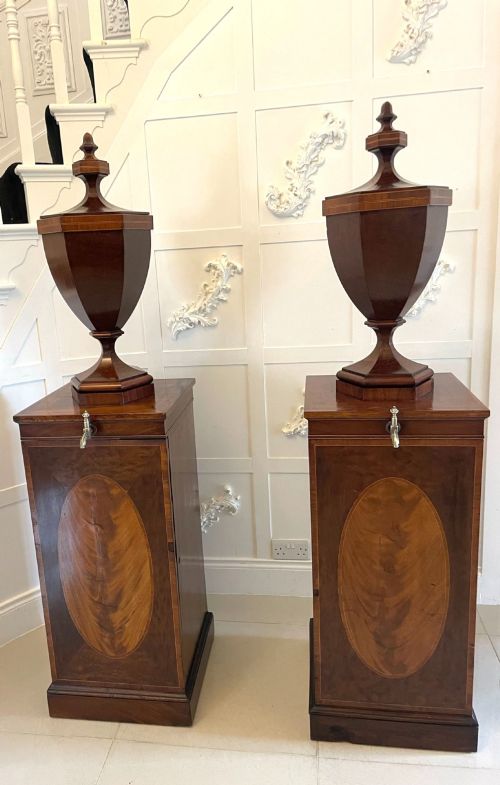
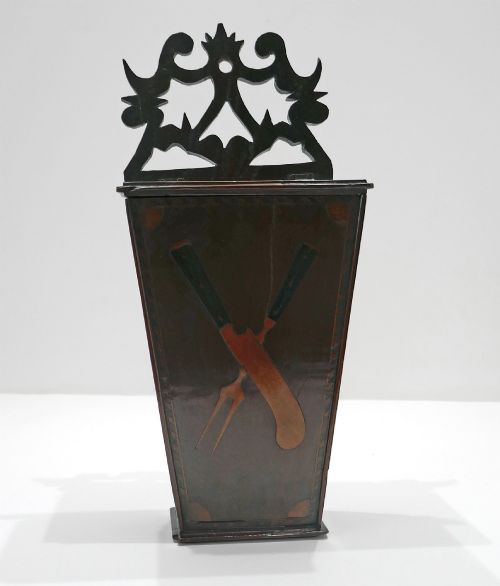
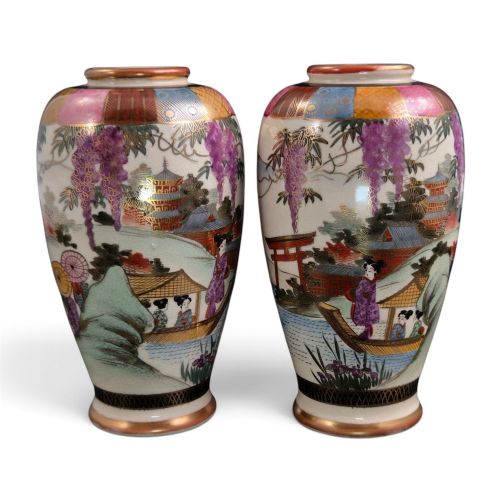
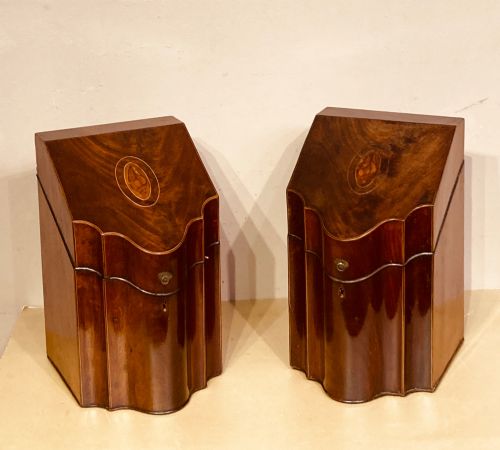
When you search for an antique urn box, you meet formal vessels and lidded containers designed to hold cutlery, wine, or dry goods. The selection here leans heavily towards Georgian and Victorian dining table accessories, particularly mahogany knife boxes and tall wine urns.
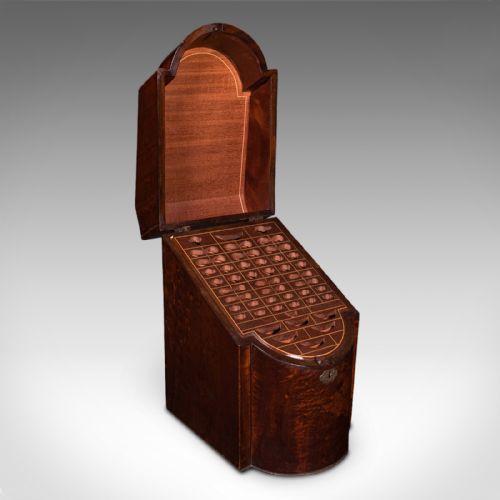
Most examples date from the eighteenth and nineteenth centuries, taking the form of campana vessels, serpentine knife boxes, or pedestals with fitted interiors. These pieces served practical domestic functions in wealthy households before evolving into purely decorative items for the sideboard.
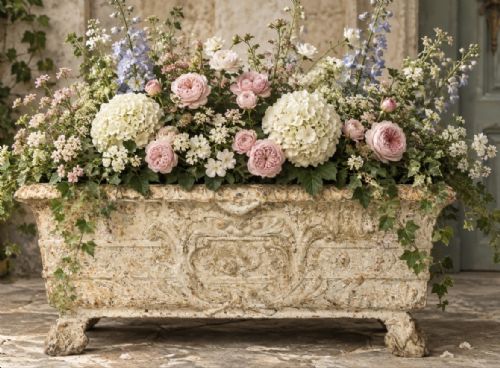
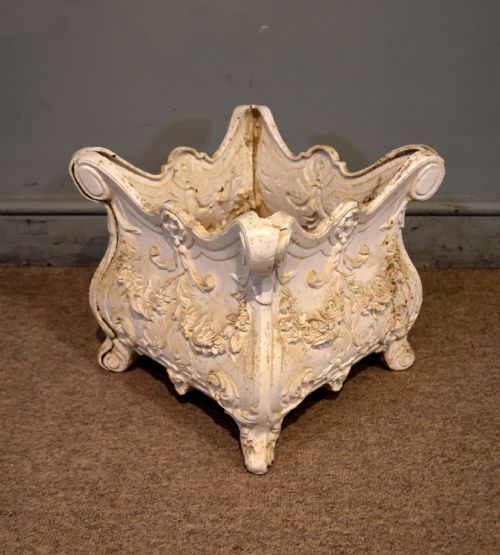
Makers shaped these objects from dense timbers such as mahogany and satinwood, often pairing them with brass fittings or delicate boxwood inlay. The resulting forms range from slender knife boxes to sturdy cast iron planters and silver pot pourri boxes.
Materials and construction
Cabinetmakers relied on figured mahogany, satinwood, and fruitwood to build the bodies of these containers, frequently employing curved sawing techniques to achieve serpentine or bow fronts. They reinforced joints with meticulous woodworking methods, ensuring the timber could withstand daily handling.
Surface decoration involved precise boxwood and ebony stringing, contrasting light and dark veneers in geometric or neoclassical patterns. Many examples incorporate cast silver handles, brass escutcheons, or strapwork to secure the lids and mounts.
Antique Urn Box Retail Price Guide 2026
Typical asking prices for urn box among the pieces listed under this phrase on Sellingantiques today, from the lower quarter to the upper quarter. They describe what is for sale here now, not the wider market.
Listings feature mahogany, satinwood, and boxwood alongside cast iron and silver, spanning the Georgian, Victorian, and Edwardian periods.
Judging the standard
Quality rests upon the selection of the timber, where dense, highly figured mahogany or well-matched satinwood veneer separates standard vessels from finer commissions. The crispness of the inlay and the symmetry of the curves reveal the cabinetmaker's skill.
Original hardware, including brass hinges, locks, and silver mounts, elevates the standing of a piece. Retaining internal fittings, such as original cutlery dividers or velvet linings, indicates that the box preserves its intended function.
The integrity of the structural joinery dictates durability, with tight mitres and smooth-operating lids marking superior workshop practices. Subtle patination developed over centuries indicates honest age and minimal intrusive restoration.
Walker And Hall·Julius Dressler
The Antique Urn Box Glossary
- Campana
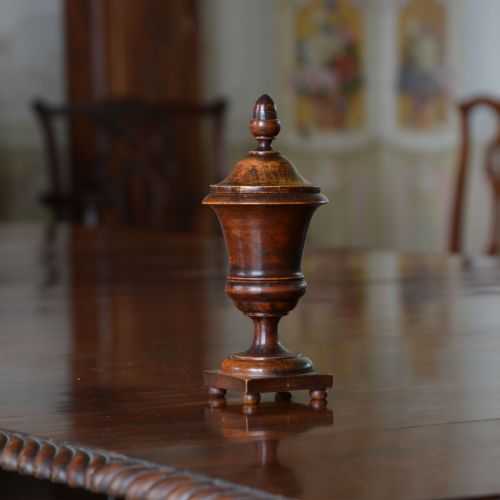
- A bell-shaped vessel with a flaring rim and a pedestal foot. This classical silhouette inspired many wooden and cast iron urns.
- Serpentine
- A curved shape featuring a convex centre flanked by concave wings. Cabinetmakers applied this profile to the fronts of knife boxes to catch the light.
- Stringing
- Thin lines of contrasting wood inlay used to outline panels and drawers. It requires exact hand-carving into the primary timber.
- Treen
- Small handmade wooden domestic objects. These items are valued for their smooth patination and simple turned forms.
- Escutcheon
- A protective plate surrounding a keyhole, usually fashioned from brass or silver. It prevents the surrounding wood from wearing down.
Antique Urn Box: Frequently Asked Questions
What did they store inside an antique urn box?
These vessels originally held steel-bladed table knives, wine bottles, or dry spices depending on their specific form. Taller urns sat on pedestals to chill wine, while smaller boxes kept cutlery organised on sideboards.
Over time, owners repurposed many of these containers to hold stationery, tea, or pot pourri. Their fitted interiors made them versatile storage chests for valuable household items.
How do I distinguish George III pieces from Victorian copies?
George III pieces typically exhibit lighter timber construction with hand-cut dovetails, subtle secondary woods, and delicate string inlay. The proportions reflect eighteenth-century neoclassical design standards.
Victorian iterations often feature heavier carcasses, machine-sawn components, and brighter internal hardware. Examining the underside and interior reveals the age of the wood and the tools used.
Where should I place an antique urn box in my home?
These boxes sit well on sideboards, console tables, or pedestals where their architectural proportions can be appreciated. Their dark mahogany or satinwood tones contrast effectively against lighter walls.
Keep them away from direct heat sources and strong sunlight to prevent the timber and delicate veneer from drying out or splitting.
Are the silver mounts on these boxes hallmarked?
Many silver mounts and escutcheons carry maker's marks and date letters, particularly on nineteenth-century pieces. These stamps help verify the exact year of manufacture and the silversmith's workshop.
Unmarked mounts are common on earlier Georgian examples, where brass was the preferred metal for functional hardware rather than precious silver.