

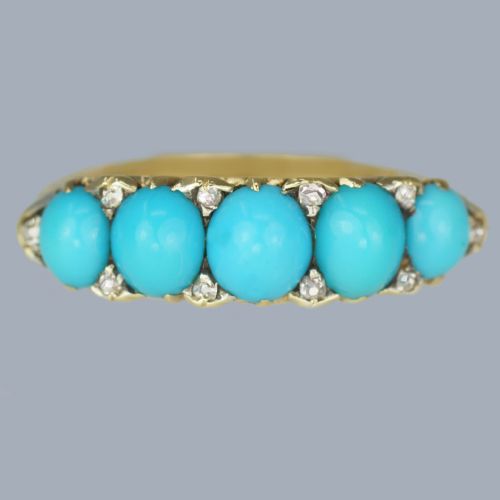


Antique Turquoise Dress Ring
An antique turquoise dress ring brings a bright robin-egg blue to the hand, combining deep historical character with vibrant colour.
Antique Turquoise Dress Ring
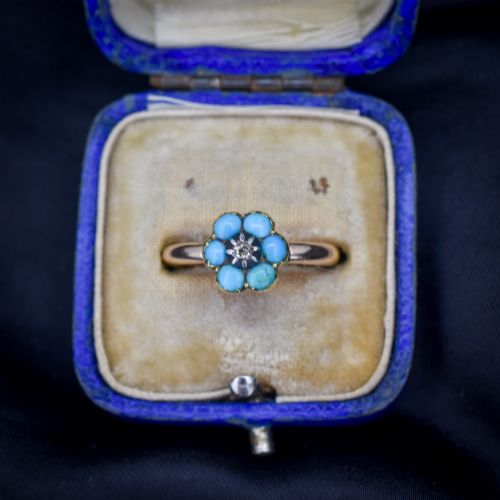
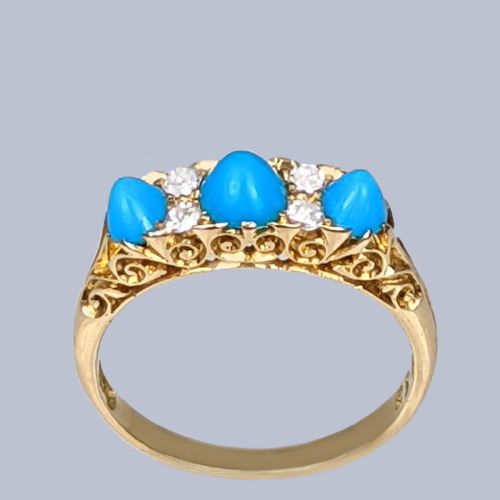
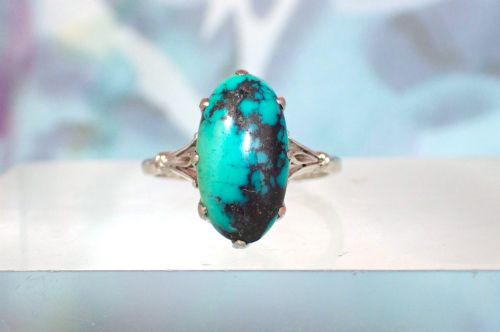
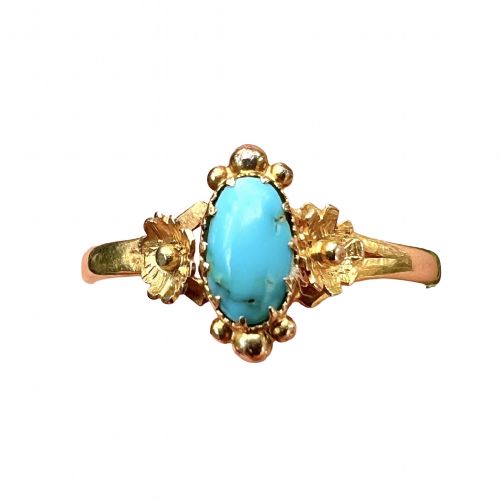
An antique turquoise dress ring is a distinct piece of jewellery designed primarily for decorative wear on the hand, frequently emerging from the Victorian and Edwardian eras. These rings showcase small, vibrant blue stones, sometimes paired with diamonds or pearls, set into rich yellow or white gold bands.
How these rings were made
Goldsmiths of the nineteenth and early twentieth centuries typically utilised 9ct, 12ct, 15ct, and 18ct gold to mount the turquoise stones. These metals were cast and hand-wrought into detailed bands, boat settings, and navette clusters.
Craftspeople frequently combined turquoise cabochons with old cut diamonds and split pearls, securing them within claw or bezel settings. Hallmarks stamped into the metal often record regional assay offices such as Chester and Birmingham.
Antique Turquoise Dress Ring Retail Price Guide 2026
Typical asking prices for turquoise dress ring among the pieces listed under this phrase on Sellingantiques today, from the lower quarter to the upper quarter. They describe what is for sale here now, not the wider market.
The periods represented stretch from late Victorian times through Edwardian designs to the Art Deco era.
What varies in quality
The choice of gold purity significantly alters the character of the piece, with higher carat yellow gold and white gold providing a heavier, more substantial setting for the gems. The selection and matching of the turquoise stones themselves, alongside any accompanying diamonds, dictate the visual harmony of the face.
Finely executed details, such as intricate scrollwork, star engravings, or secure claw settings around delicate stones, separate standard production pieces from finer examples. The preservation of the original polish on the gold and the surface integrity of the turquoise stones also shape the overall standard.
The Antique Turquoise Dress Ring Glossary
- Cabochon
- A gemstone shaped and polished with a smooth, rounded surface rather than faceted. This cut highlights the opaque, robin-egg blue colour typical of antique turquoise.
- Navette
- A boat-shaped gemstone setting that tapers to points at both ends. It creates an elongated silhouette across the finger on cluster rings.
- Trilogy ring
- A ring featuring three primary stones set in a row. These often combine turquoise with old cut diamonds.
- Old cut diamond
- A hand-faceted diamond cut before the standardisation of modern brilliant cuts. It possesses a smaller table and wider facets that catch candlelight warmly.
- Split pearl
- A small pearl cut in half and mounted flush against a backing. These are frequently paired with turquoise in Victorian and Edwardian clusters.
Antique Turquoise Dress Ring: Frequently Asked Questions
How do I clean an antique turquoise ring?
Turquoise is a softer, porous stone that absorbs moisture and oils readily. Wipe it gently with a dry, soft cloth after wearing rather than submerging the ring in liquid cleaners.
Harsh chemicals and ultrasonic cleaners damage both the stone and the gold setting. Keep the ring away from perfumes and cosmetics to preserve the colour.
Can I wear a turquoise dress ring daily?
These rings survive from the Victorian and Edwardian periods, meaning they require gentle treatment during everyday wear. Removing the ring before gardening, exercising, or washing hands protects the softer turquoise stones and delicate gold claws.
Gold settings from the nineteenth century can wear thin over decades of use. Periodic checks by a jeweller ensure the stones remain secure in their mountings.
How do I tell Victorian from Edwardian rings?
Victorian pieces often utilise higher carat gold, such as 15ct and 18ct, alongside warm yellow tones and ornate motifs like buckle bands or star settings. The stones are frequently arranged in dense clusters or multi-stone rows.
Edwardian rings transition towards lighter aesthetics, frequently incorporating platinum, white gold, or lower carat yellow gold. Designs from this later period often feature delicate openwork, pearls, and millegrain detailing.
What does a boat shape mean?
A boat shape, or scroll boat setting, curves gently outward from the finger to cradle a row of stones. This nineteenth-century design lifts the turquoise and diamonds to catch the light effectively.
The curved profile allows the ring to sit comfortably alongside other bands while displaying a wider face of gems.