





Antique Turned Wooden Jar
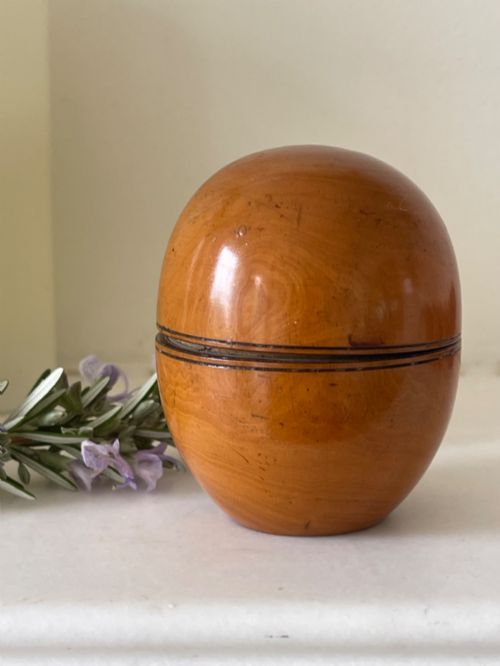
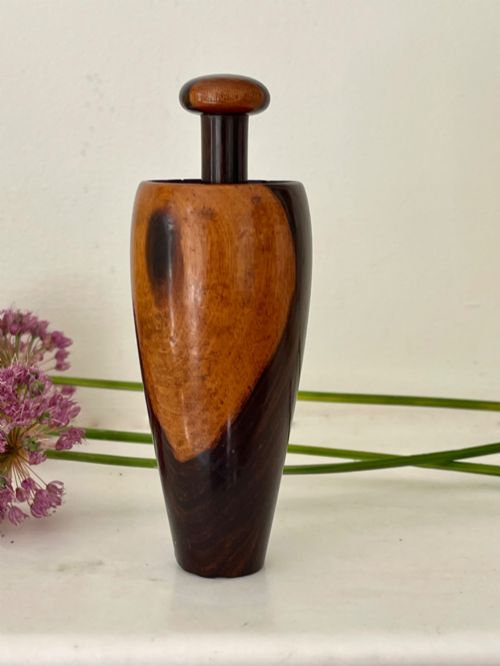
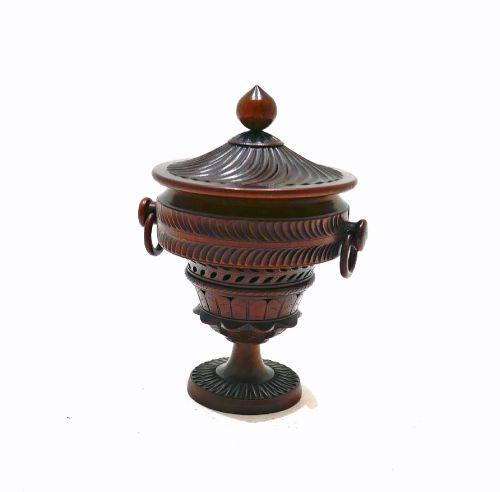
An antique turned wooden jar brings tactile warmth to a room, offering practical small storage shaped on a lathe from dense native timbers.
Antique Turned Wooden Jar
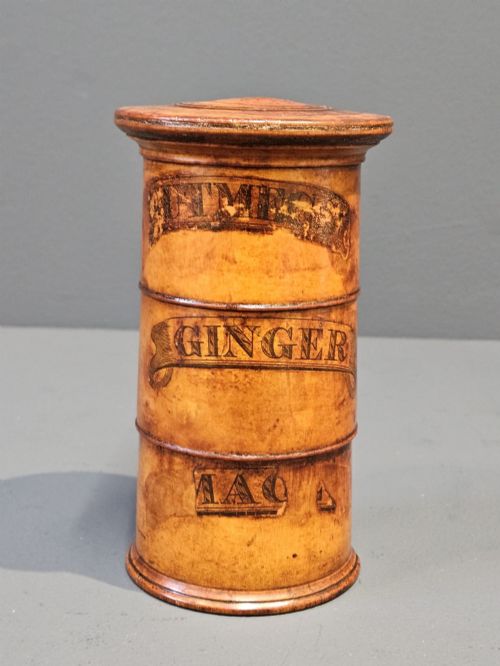
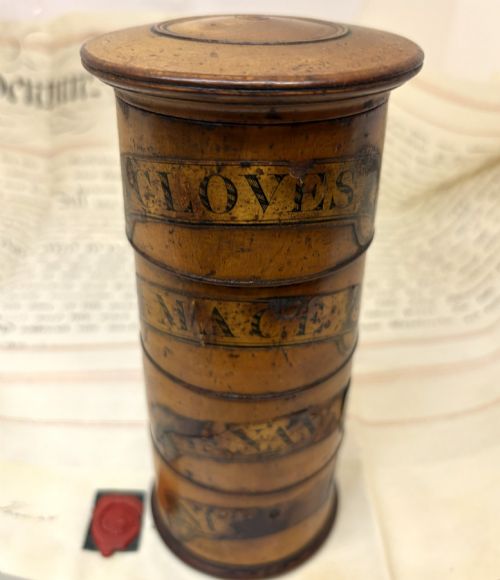
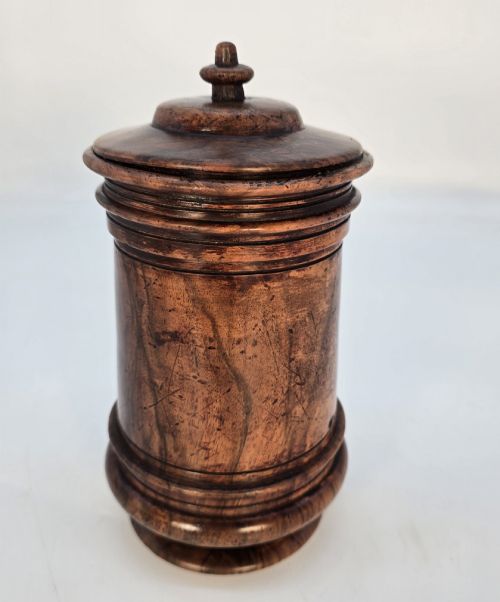
The most common examples on this page are multi-tiered spice towers and lidded containers dating from the Victorian and Georgian periods. These hollow turned vessels range from small desk containers to substantial kitchen and apothecary accessories.
Materials and turning methods
Makers utilised dense hardwoods such as boxwood, fruitwood, yew wood, beech, and mahogany, chosen for their tight grain and stability on the lathe. These timbers were turned while green or seasoned, depending on the desired finish, allowing the craftsman to hollow out deep compartments with thin, even walls.
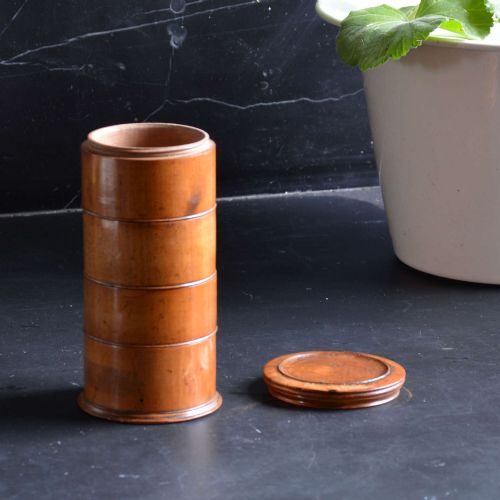
Lids and tiers were fitted with precision threads or simple overlapping flanges so that individual sections nested securely together. The exterior surfaces were finished simply, relying on wax and friction polishing to bring out the natural figures of the wood.
Antique Turned Wooden Jar Retail Price Guide 2026
Typical asking prices for turned wooden jar among the pieces listed under this phrase on Sellingantiques today, from the lower quarter to the upper quarter. They describe what is for sale here now, not the wider market.
Some multi-tiered spice towers separate into four distinct compartments, proving that Georgian kitchen storage could be remarkably modular.
Judging quality in turned treen
Quality rests on the crispness of the turning profiles and the balance of the proportions. A superior piece displays sharp mouldings, even wall thickness, and lids that retain their original snug fit without warping.
The choice of timber also dictates the character of the vessel. Finely figured yew wood, dense boxwood, and rich fruitwood command greater appreciation than plain utility beech or softwoods, particularly when the grain shows rich natural chatoyancy.
The Antique Turned Wooden Jar Glossary
- Treen
- Small handmade wooden domestic objects. The term encompasses everything from kitchen utensils to desk accessories and lidded containers.
- Spice tower
- A multi-tiered turned wooden vessel featuring stacked compartments that lift off a central spindle or fit flush together. These held various culinary spices on the Georgian or Victorian table.
- Pomander
- A lidded container designed to hold aromatic substances such as herbs, spices, or scented powders. They often feature small turned perforations or simply seal the fragrance within.
- Boxwood
- A dense, pale yellow hardwood with a very fine grain. Turners favoured it for small intricate items requiring precise detail.
- Coopered
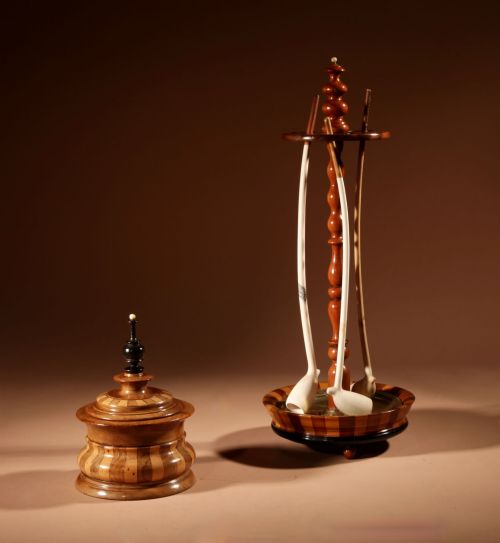
- Built from parallel staves bound with wooden or metal hoops rather than turned from a solid block. This method was used for larger tobacco boxes and pipe stands.
Antique Turned Wooden Jar: Frequently Asked Questions
What were spice towers used for?
Spice towers served domestic kitchens by storing multiple ground spices in a single vertical stack. Each tier lifted away to access a different ingredient.
Their compact footprint made them practical for keeping flavourings close at hand on the table or sideboard during meals.
How do I date an old turned wooden jar?
Dating relies on timber choice, tool marks left on the interior, and the stylistic profiles of the turnery. Georgian examples often display finer mouldings and denser native hardwoods.
Later Victorian pieces tend to be heavier and may incorporate simpler lines or different jointing methods where tiers meet.
Can I store food in an antique wooden jar?
Dry goods such as tea leaves or whole spices can be kept inside, provided the interior is clean and dry. Avoid storing moist items.
Old wood absorbs oils and aromas, so modern food storage might alter the historic interior scent or damage the dry porous surface.