
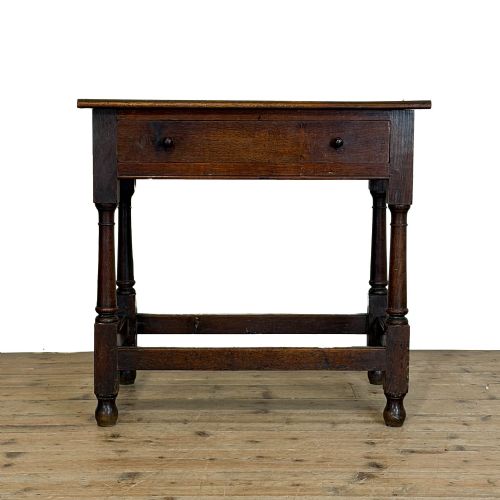
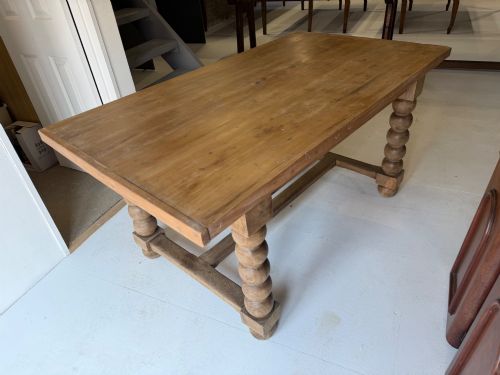
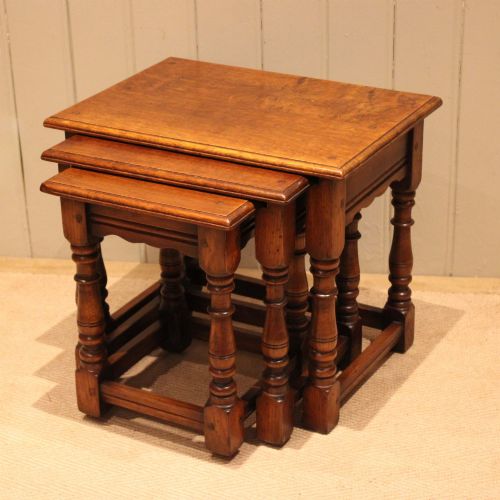
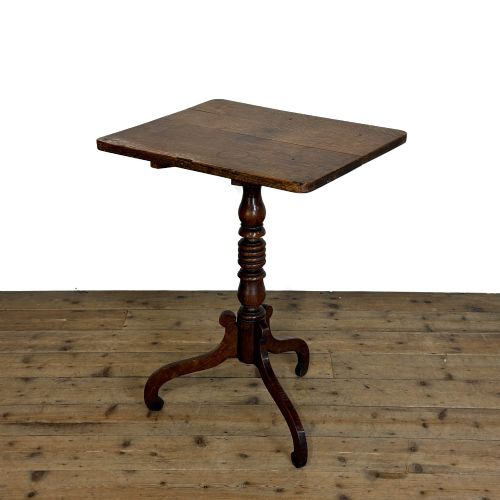

Antique Turned Oak Table
An antique turned oak table brings centuries of sturdy domestic timber and rhythmic lathe work directly into a room.
Antique Turned Oak Table
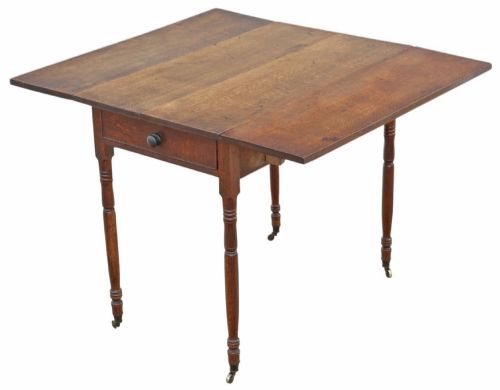
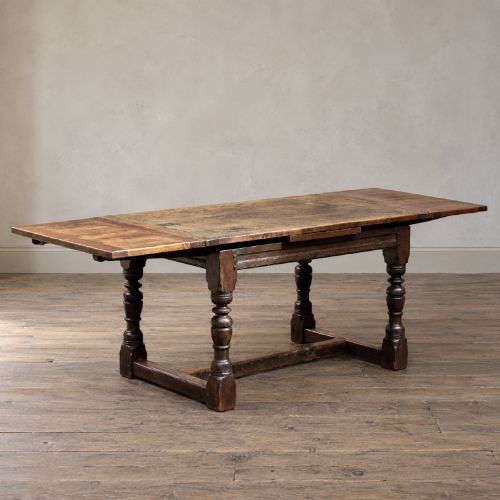
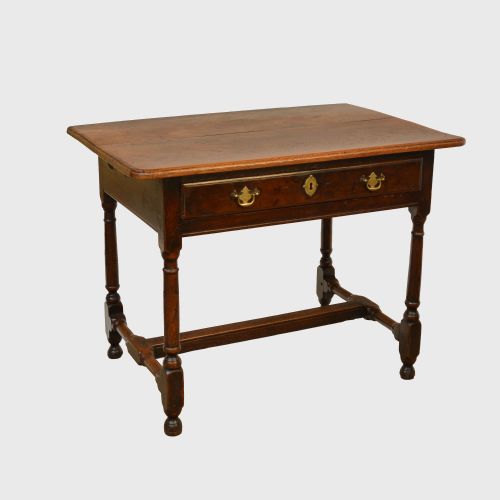
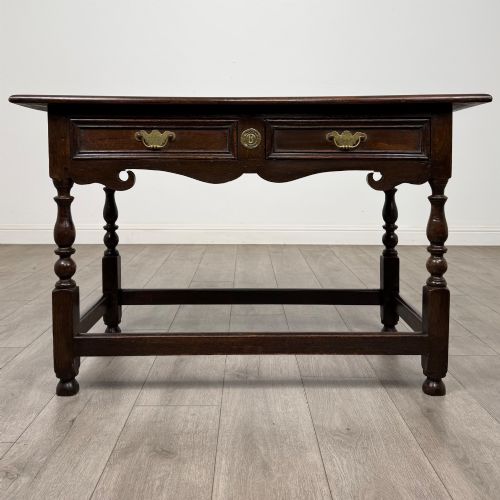
An antique turned oak table encompasses heavy seventeenth-century side pieces with bobbin supports, eighteenth-century gateleg forms, and later revival dining tables. The pieces on this page span from the seventeenth century through the Georgian, Victorian, and Edwardian eras, utilising solid oak alongside supporting timbers like elm, beech, and yew.
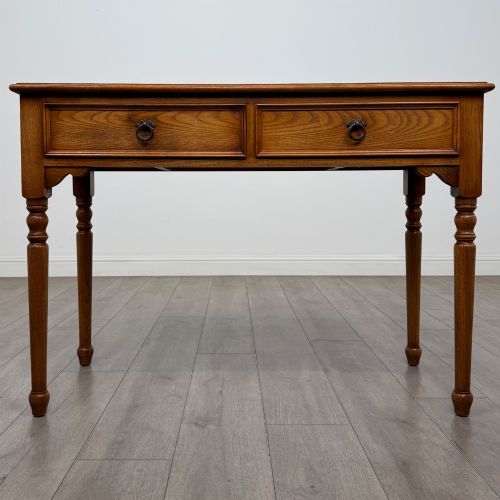
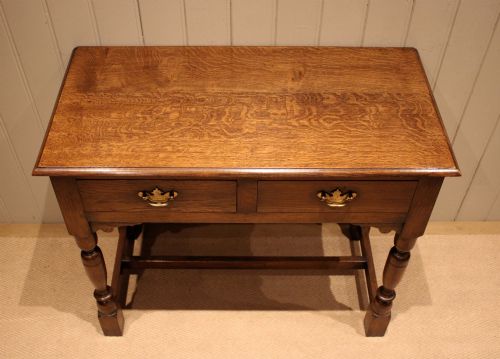
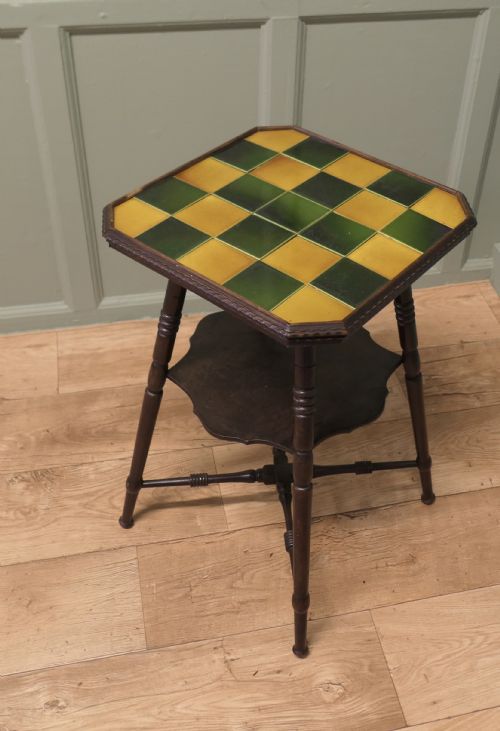
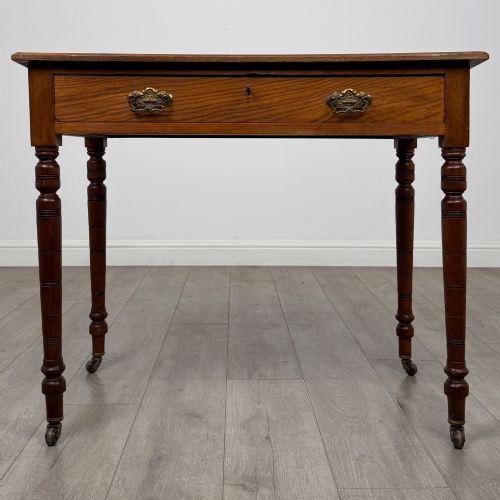
Buyers encounter numerous side tables, occasional tables, and extending dining tables, as well as specialised writing desks, coffee tables, and tripod wine tables. These range from rustic farmhouse formats to formal Jacobean Revival and Arts & Crafts designs.
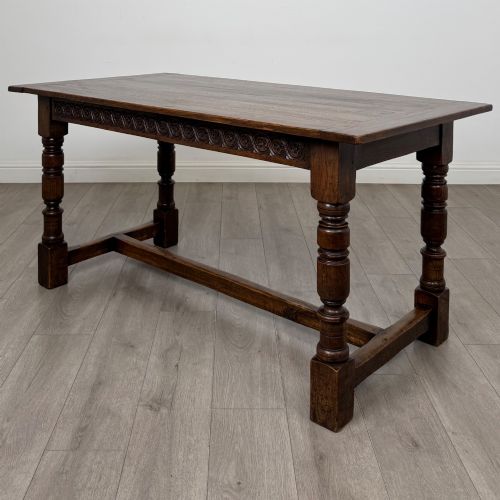
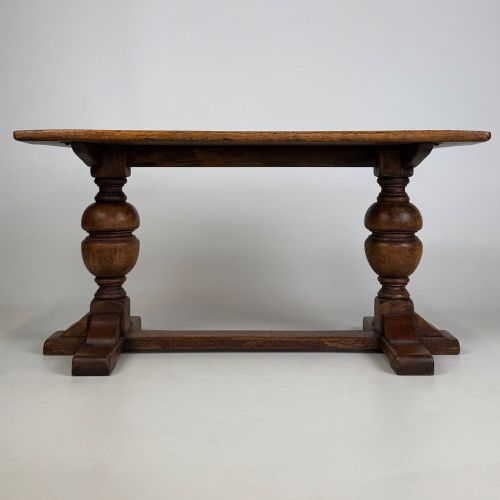
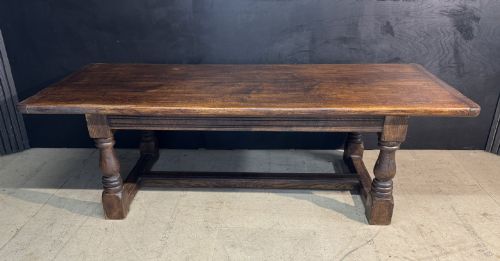
The turned elements dictate the character of the piece, appearing as bobbin legs, pedestal columns, or stretcher supports shaped on a lathe. Whether handling a compact wine table or a long refectory dining board, the fundamental structure relies on heavy regional carpentry.
How they were made
Carpenters constructed these tables using solid oak planks for tops and structural frames, frequently integrating secondary native woods such as elm, beech, or yew for drawers, secondary framing, or turned components. Joints were pegged or mortised to withstand daily domestic use.
Turning the legs and stretchers required a lathe to shape cylindrical sections into bobbin, spiral, or baluster profiles. Metal fittings like brass handles or iron brackets appear on later variants, while ceramic tiles occasionally surface in Arts & Crafts tops.
Materials recorded across the inventory include solid oak, elm, beech, brass, iron, and ceramic.
What varies in quality
Quality depends on the crispness of the timber turning and the proportion of the structure, where bold, well-balanced bobbin legs outrank weak or overly slender replacements. The selection of the oak grain, whether figured burr oak or straight planks, alters the visual weight.
Integrity of construction marks the division between standard utility items and finer regional workshop output, visible in tight joints and the preservation of original timber surfaces rather than heavy later stripping or bleaching.
Shapland & Petter
The Antique Turned Oak Table Glossary
- Bobbin leg
- A turned furniture support shaped on a lathe to resemble a string of rounded bobbins or spools. This decorative profiling appears frequently on seventeenth-century pieces and later Victorian revivals.
- Draw leaf
- An extending table mechanism featuring two pull-out leaves hidden beneath the main top. These slide outward to lengthen the surface without removing the central board.
- Gateleg table
- A table with hinged drop flaps supported by legs that swing outward like a gate. This form allowed smaller tables to expand significantly for dining.
- Tilt top
- A table mechanism where the top pivots vertically on a central pedestal for storage against a wall. This format is common on eighteenth-century tripod wine tables.
- Refectory table
- A long, narrow dining table traditionally used in communal halls and characterised by sturdy stretcher rails. Later revivals replicated these heavy proportions for domestic kitchens.
Antique Turned Oak Table: Frequently Asked Questions
How do I date an antique turned oak table?
Dating relies on examining the construction methods, tool marks, and timber selection visible across the frame. Earlier pieces from the seventeenth century display pegged mortise and tenon joints with hand-riven boards, whereas Victorian and Edwardian revivals utilise machine-cut elements and standardised hardware.
Style indicators also help establish age, as heavy bobbin turning and square edges dominate seventeenth-century examples, while lighter proportions and carved panels frequently point toward Edwardian Jacobean Revival workshops.
Can I use an antique oak table every day?
These tables were built for heavy domestic service, utilising durable solid oak and sturdy joined frames that easily accommodate daily modern use. Routine care involves using placemats and avoiding excessive moisture on the historical timber surface.
Many examples function effectively as kitchen dining tables, writing desks, or coffee tables within contemporary spaces. Their robust construction ensures they absorb normal household activity without structural strain.
What is bobbin turning?
Bobbin turning is a decorative lathe technique that shapes cylindrical wood into a sequence of rounded spheres or discs resembling textile bobbins. This tactile profile creates strong vertical rhythm on table legs and stretchers.
The technique gained popularity during the seventeenth century and saw substantial revivals during the Victorian and Edwardian periods on side tables and writing desks.
How do I care for bleached or waxed oak?
Maintaining these surfaces requires gentle dusting with a soft cloth and occasional application of traditional beeswax to nourish the dry timber. Avoid placing tables near direct heat sources or strong sunlight to prevent warping or fading.
Different finishes, from waxed golden oak to bleached farmhouse surfaces, respond best to minimal intervention. Preserving the natural grain prevents the accumulation of heavy modern polishes.