
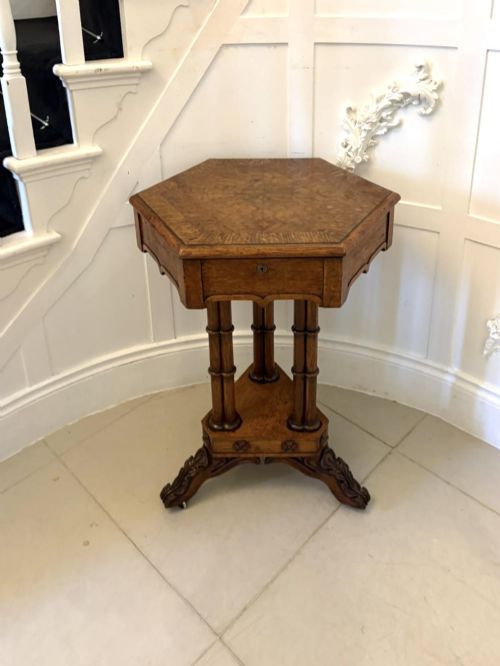
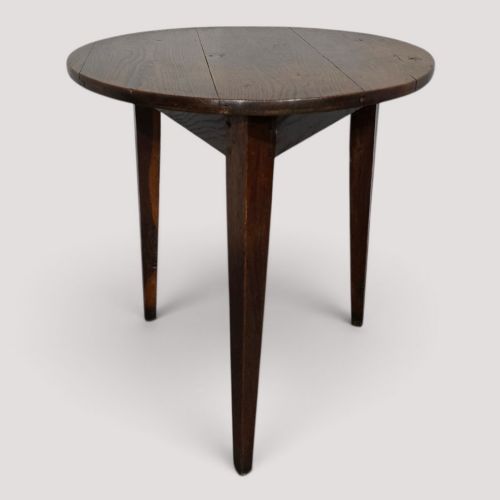
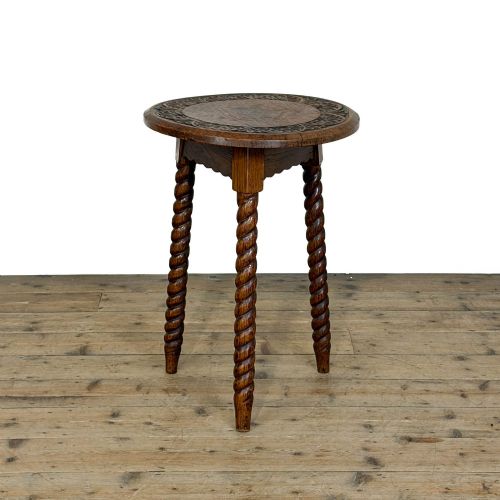
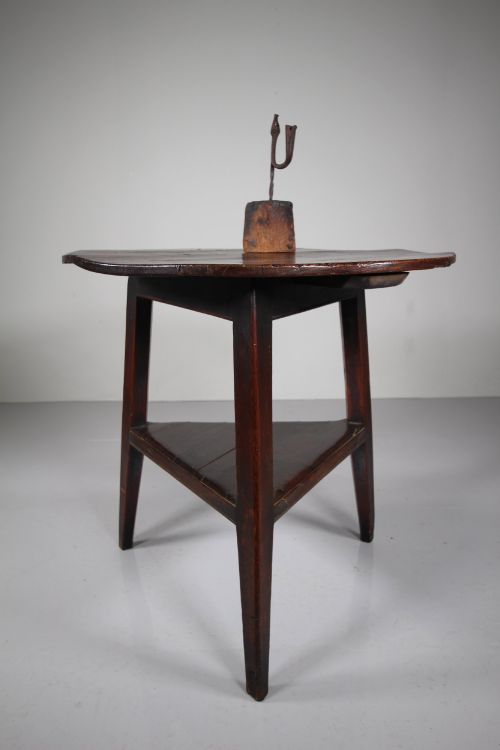



English Oak Tripod Table
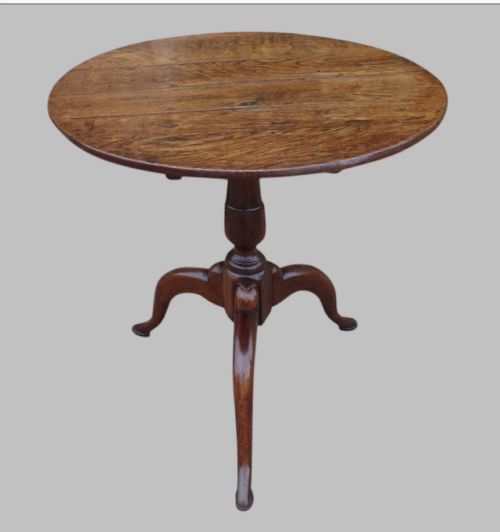
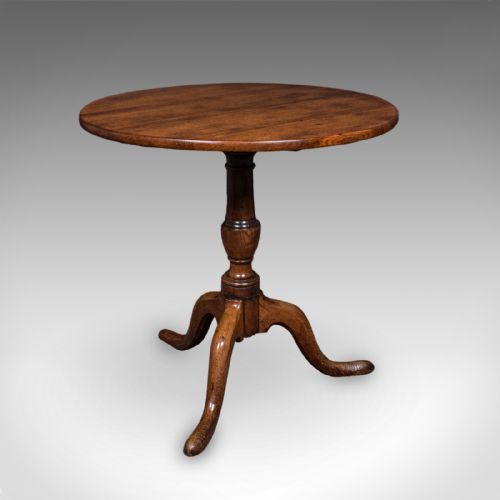
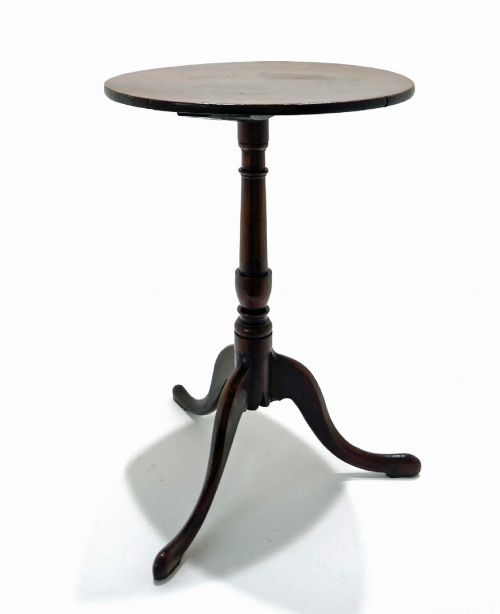
An english oak tripod table brings three-legged utility and robust vernacular character to a room, offering a stable surface with deep historical grain.
English Oak Tripod Table
An english oak tripod table is a compact occasional or side piece supported by a three-legged base and a central column, appearing frequently in 18th-century and Georgian forms.
Buyers encounter versions spanning simple country cricket tables with round tops to tilt-top and revolving designs utilised for dining, wine, or parlor games.
Origins stretch from vernacular country workshops to refined Georgian parlours, incorporating occasional elements like satinwood, elm, and fruitwood alongside primary oak.
How they were made
Construction relies heavily on solid timber, pairing primary oak bodies with secondary hardwoods such as beech, fruitwood, and elm for turned columns and legs.
Joinery methods utilise pegged tenons, turned spindles, and tilting mechanisms that allow circular tops to fold flat when not in service.
One Victorian variant arrives carved with mystical zodiac signs, ready to host an evening of Victorian parlor divination.
What varies in quality
Quality separates in the elegance of the column turning, the proportion of the three legs, and the thickness of the quarter-cut or solid single-board top.
Superior examples display balanced proportions with slender columns and attractive patination on the timber surface, whereas utilitarian versions remain heavier and simpler in execution.
The English Oak Tripod Table Glossary
- Cricket table
- A small three-legged round table with a low slung shelf or sturdy stretchers, traditionally associated with vernacular English country houses.
- Tilt-top
- A hinged tabletop mechanism allowing the surface to swivel vertically for storage against a wall when not in use.
- Bird cage
- A rotating wooden box frame beneath a tilt-top table that permits both tilting and revolving actions on the central column.
- Patina
- The deep surface sheen and colour acquired by aged timber through decades of handling, polishing, and light exposure.
- Vernacular
- Furniture designed by local craftsmen for practical domestic use rather than following strict high-style metropolitan architectural orders.
English Oak Tripod Table: Frequently Asked Questions
What rooms suit an english oak tripod table?
These compact tables fit beside armchairs as lamp stands or serve as small side surfaces in hallways and libraries where floor space is limited.
Their sturdy three-legged footprint provides steady placement on older uneven floorboards without wobbling.
How do tilt-top mechanisms work?
A catch or wooden block beneath the circular top releases to let the surface pivot ninety degrees upright against the central pillar.
This clever design allowed homeowners to tuck the furniture away neatly against the perimeter of a parlour.
Can I use an english oak tripod table for daily dining?
Smaller circular variants function well for intimate drinks or casual sitting, though historical examples were often designated as wine or occasional tables rather than heavy dining furniture.
Their light frame makes them easy to reposition around a room as daily needs shift.
How do I distinguish 18th-century pieces from later revivals?
Early pieces show authentic tool marks, pegged joinery, and natural timber shrinkage, while 19th-century and revival items often display heavier machine finishing or different secondary woods.
Examining the underside of the top and the peg construction reveals the primary age of the framing.